Legal Aid, Court Self-Help, and the Line Between Information and Legal Advice
Navigating the legal system can be difficult without prior experience or representation. Tennessee legal-aid organizations and court self-help resources can help people locate information and understand basic procedures, but it is important to understand the limits of those services and the difference between general legal information and personalized legal advice.
What Legal-Aid Organizations Do
Legal-aid organizations provide free or low-cost civil legal assistance to people who meet their eligibility requirements. Programs commonly focus on matters that affect housing, family stability, consumer issues, benefits, employment, or safety. In Tennessee, Legal Aid of East Tennessee and the Legal Aid Society of Middle Tennessee and the Cumberlands are among the organizations that offer civil legal services in their service areas.

Eligibility and available representation vary by organization, income, location, case type, staffing, and funding. A person seeking assistance should contact the organization directly and explain the issue accurately. A legal-aid provider may offer representation, a referral, educational materials, or an explanation of available services; it may also be unable to accept a matter.
What Court Self-Help Resources Provide
The Tennessee courts’ Self-Help Center provides public resources designed to help people understand court processes, locate forms, and find general information. These resources can be useful for people who are representing themselves. They may explain where a case is filed, what a court form requests, or how to locate a court’s published rules.

Self-help materials cannot decide what an individual should do in a particular case. Court employees and other non-lawyers generally cannot apply legal rules to a person’s private facts, recommend litigation strategy, predict an outcome, or tell someone which claim or defense to pursue. Those restrictions help preserve neutrality and guard against the unauthorized practice of law.
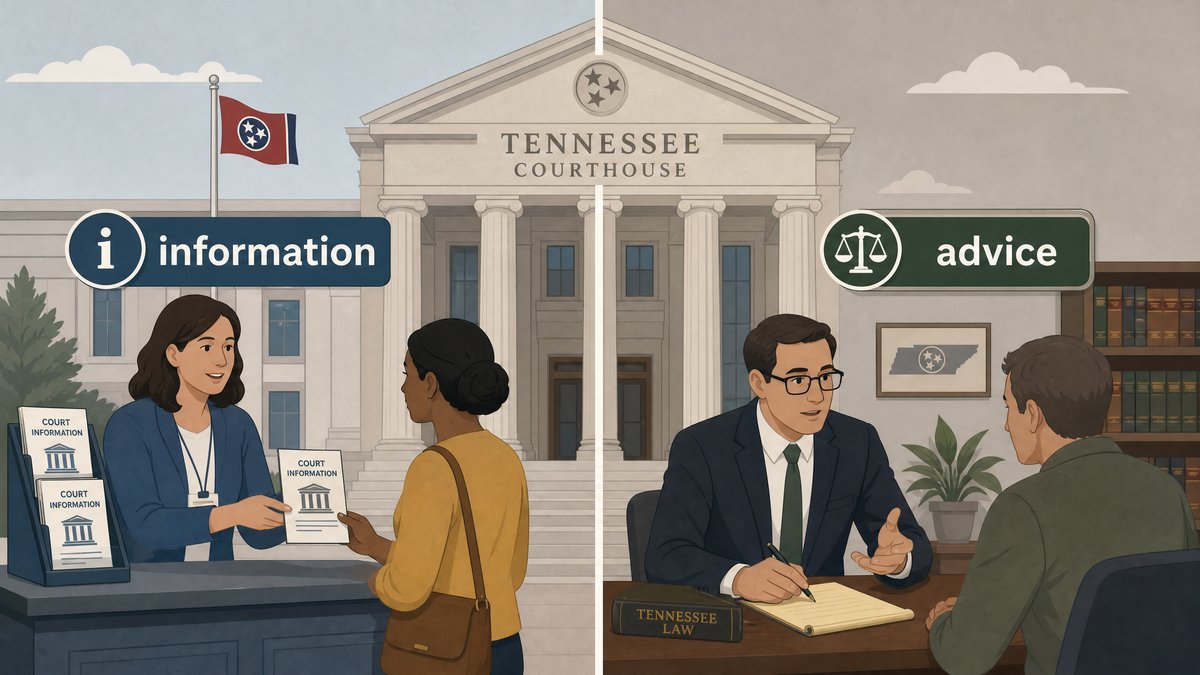
Information Versus Advice
Legal information is general and descriptive. It can include the text of a statute, a court rule, a filing deadline shown in a notice, a blank form, or an explanation of procedural terms. Legal advice applies law to a person’s specific circumstances and recommends a course of action. Advice may include evaluating the strength of a claim, deciding whether to sign an agreement, choosing a legal strategy, or interpreting how a rule affects a particular dispute.

The distinction matters. A reliable public resource can explain how to find a complaint or order, but it should not tell a reader how to litigate their individual case. Readers who need tailored advice should consult a licensed attorney or a qualified legal-aid provider.
A Responsible Way to Use Public Resources
- Start with the court or legal-aid organization’s official website.
- Read the scope of any self-help material and note whether it applies to your court or case type.
- Keep copies of documents and notices, but avoid relying on a generic article as a substitute for individualized counsel.
- Ask a licensed lawyer or qualified legal-aid provider for advice about significant deadlines, rights, or strategy.
Access-to-justice resources are valuable precisely because they provide accurate, neutral information. Using them with a clear understanding of their limits helps people make more informed choices while respecting the role of qualified legal counsel.
Disclaimer
This article provides general information and is not legal advice. It does not create an attorney-client relationship. People with questions about their own circumstances should consult a licensed attorney or an appropriate legal-aid provider.

Sources
- Tennessee Courts Self-Help Center
- Legal Aid of East Tennessee
- Legal Aid Society of Middle Tennessee and the Cumberlands
- National Center for State Courts: Legal Advice vs. Legal Information
Related reading: tracking local courts and government records.
Leave a Reply