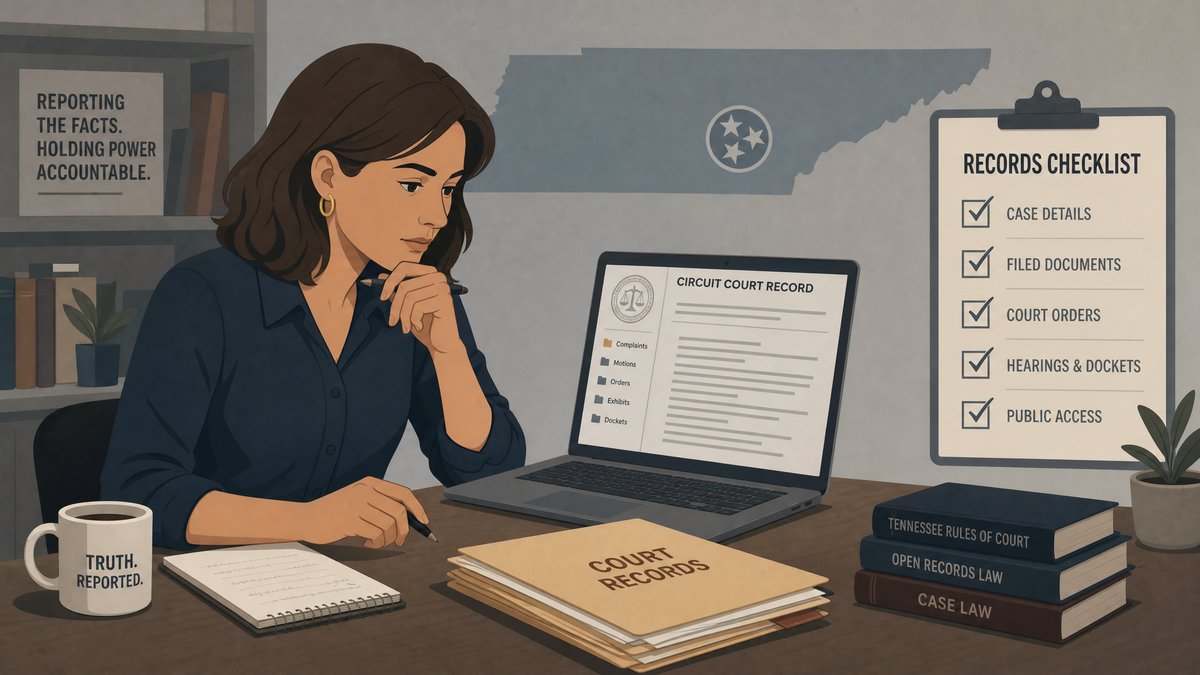
Court-Data Claims: Five Checks Before You Publish a Trend
Court data can illuminate important public issues, but it can also mislead when a count, rate, or chart is stripped of its source and context. Before publishing a claim about a legal trend, reporters should identify what is being measured, how the numbers were collected, and what alternative explanations may exist.
1. Identify the Source and Coverage
Start with the original data source. A statewide annual report, a county court management system, an appellate docket, and a commercial legal database do not measure the same things. Determine the court, time period, case type, and geographic coverage. A filing count in one county should not be presented as a statewide development without evidence that the sample is representative.

2. Ask How the Data Was Collected
Case-management systems may use different categories, coding rules, and closure practices. A change in a category label or reporting workflow can create an apparent increase or decrease that reflects administration rather than a real-world shift. The National Center for State Courts emphasizes the importance of reliability and integrity in case-file information. Journalists should ask whether missing entries, duplicate records, or changed definitions could affect a conclusion.
3. Add Legal and Institutional Context
Numbers do not explain themselves. A rise in filings can follow a new statute, a revised court rule, a fee change, an enforcement initiative, or a high-profile event. A decline in active cases may reflect settlements, dismissals, transfers, or altered reporting practices. Readers deserve context about the legal and administrative conditions surrounding a data point.

4. Avoid Overstating What the Numbers Show
Correlation is not causation. An increase in two variables does not prove that one caused the other. A statewide average may also conceal large differences among counties, courts, or case types. Report the denominator where possible, describe limitations, and use precise language: “the records show,” “the data suggests,” or “the count increased during this period” may be more accurate than a broad causal conclusion.
5. Cross-Check Before Publishing
Compare a proposed trend with official reports, public dockets, written methodology, and knowledgeable sources such as court administrators or researchers. For Tennessee-specific statistics, begin with the Administrative Office of the Courts and the underlying public records. When a data set is incomplete, say so. Transparency about limits is not a weakness; it helps readers evaluate the claim fairly.

A Quick Editorial Checklist
- Can readers access the original source or methodology?
- Does the time frame match the claim?
- Are the court type, case type, and geography clearly stated?
- Could a rule, policy, or data-collection change explain the result?
- Have you distinguished a documented fact from an inference?
Good court-data reporting links the public to the underlying evidence and avoids turning a partial record into a definitive narrative. That practice supports accountability while preserving the nuance that legal systems require.
Disclaimer
This article provides general information about reporting on court data and is not legal, statistical, or professional advice.

Sources
- National Center for State Courts: Reliability and Integrity of Case Files
- Tennessee AOC Annual Statistical Reports
- The Journalist’s Resource: Common Data Errors
Related reading: fair reporting and public-interest journalism.
Leave a Reply