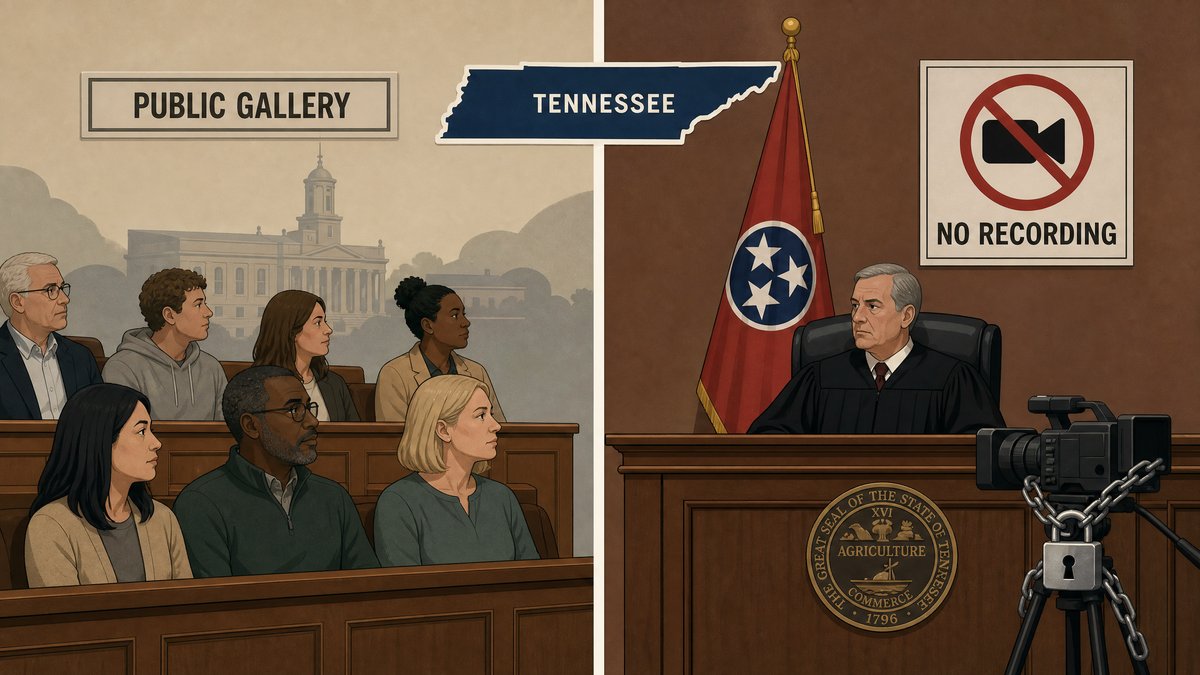
Open Courtrooms, Closed Proceedings, and the Difference Between Attendance and Recording
Public access to court proceedings is an important part of judicial accountability. Yet “open court” does not mean that every proceeding is open in every circumstance, or that any person may record inside a courtroom. For readers, reporters, and people following a case, the key is to distinguish the right to attend from the separate rules governing cameras, microphones, and other recording equipment.
The Presumption of Public Access
Tennessee’s Constitution states that courts shall be open, and Tennessee courts ordinarily conduct hearings in public. Public attendance can help people understand the justice system and allows scrutiny of how court business is conducted. The public character of a hearing, however, does not make spectators parties to the case. Judges may enforce decorum, restrict disruptive conduct, and regulate seating or access for safety and case-management reasons.
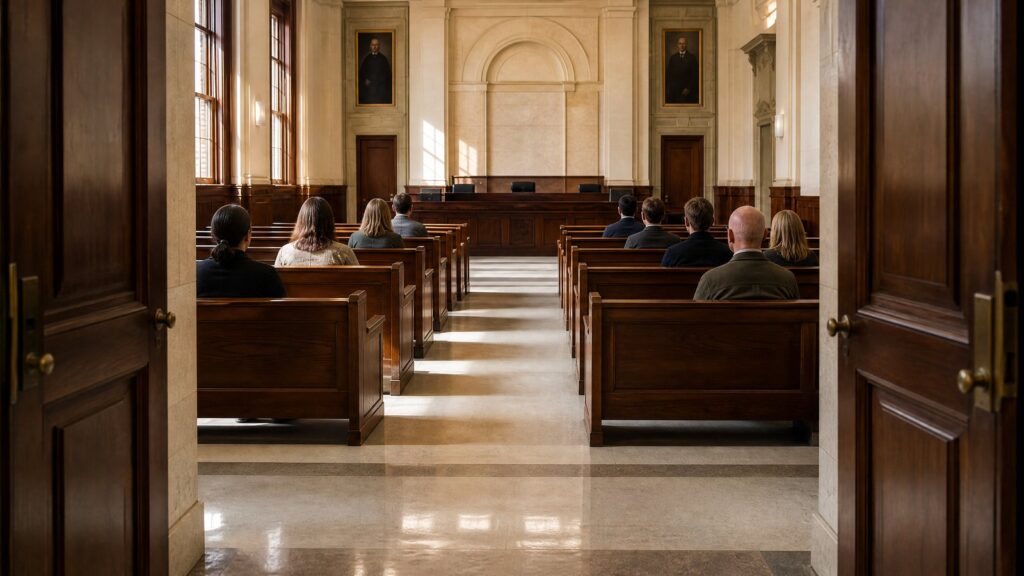
Court records and court proceedings can also be subject to limits. A court may seal a record or close a portion of a proceeding when a legally sufficient reason supports a narrowly tailored restriction. The legal standards and procedures depend on the court, case type, and information at issue. Common concerns include minors’ privacy, confidential information, safety, or the protection of a fair proceeding. A closure or sealing order should be read closely: it may apply only to a particular document, witness, or portion of a hearing rather than to the entire case.
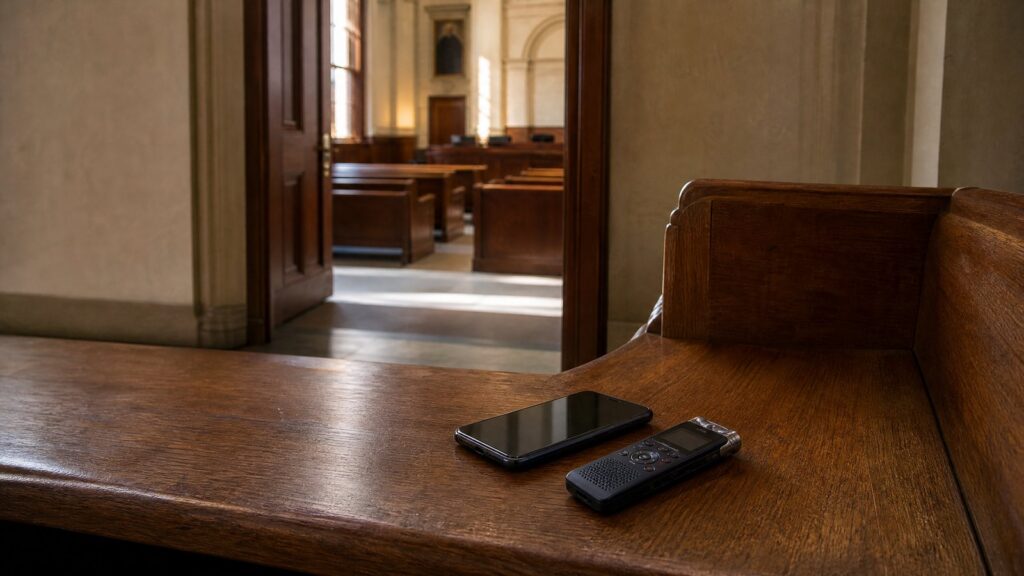
Attendance Is Not the Same as Recording
Supreme Court Rule 30 governs media coverage in Tennessee courtrooms. The rule addresses how representatives of the news media may use cameras, audio equipment, and related technology. The rule contains a request process and permits judges to manage coverage in light of the proceeding and the people involved. It includes restrictions designed to protect jurors and to minimize disruption. A person who can enter a courtroom therefore should not assume that recording, livestreaming, photographing, or broadcasting is also permitted.
For journalists, Rule 30 is a practical starting point: make a timely request, identify the coverage sought, comply with courtroom instructions, and be prepared for limits that may be appropriate in the case. The Tennessee Administrative Office of the Courts publishes media-coverage guidance that should be checked alongside the text of Rule 30 and any order issued by the presiding judge.
How to Report a Closed or Restricted Proceeding
Accuracy matters especially when access is restricted. A responsible report should identify the source of the restriction—such as a written order, a judge’s oral ruling, or a court rule—and explain its scope without speculation. “The public was excluded from a portion of the hearing under the court’s order” is more precise than claiming that the court acted secretly. When possible, link to the public order or docket entry, note any stated reason, and distinguish verified court action from a party’s allegation about access.
A Practical Checklist
- Confirm the courtroom, date, and hearing type before attending.
- Review local courtroom rules and any orders in the case.
- Do not bring or operate recording equipment without understanding the applicable rule or permission.
- When access is limited, obtain the order or docket entry that explains the limitation.
- Attribute statements about access to the court record, the judge, or a named official source.
Disclaimer
This article is general information about court access and media coverage. It is not legal advice and does not determine whether access or recording will be permitted in a particular proceeding.

Sources
- Tennessee Supreme Court Rule 30: Media Coverage Guidelines
- Tennessee Administrative Office of the Courts: Media Coverage Rules
- Tennessee Constitution, Article I, Section 17
Related reading: Tennessee Rule 30 media-access guidelines.
Leave a Reply