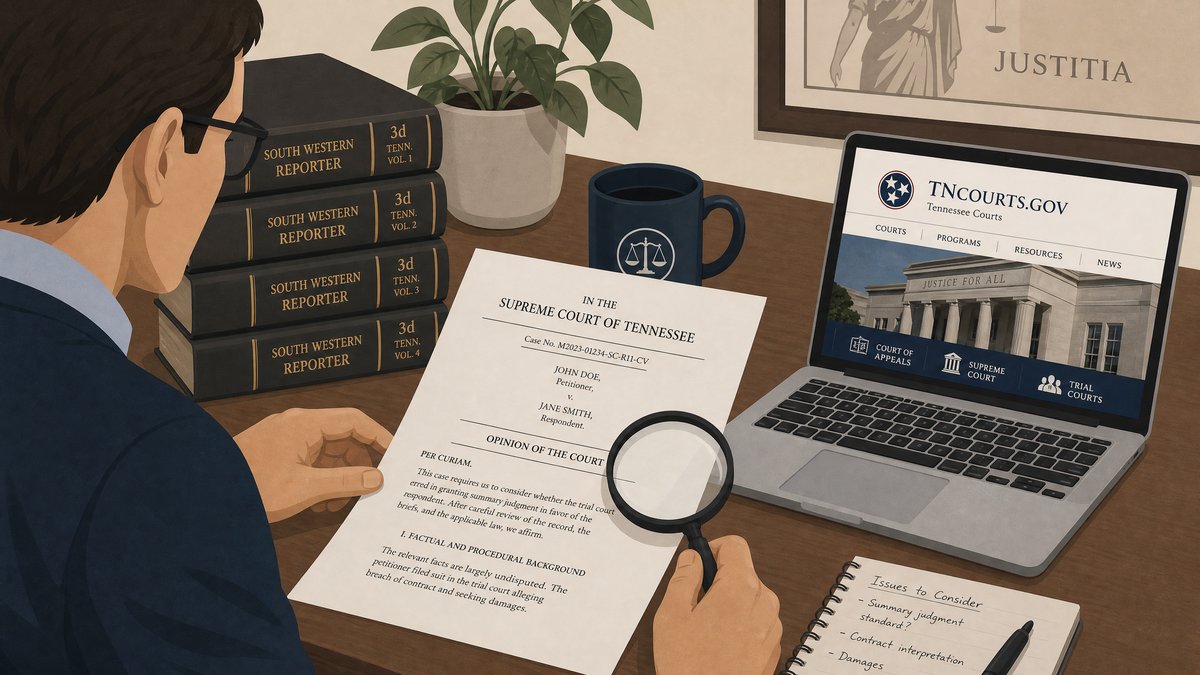
How to Read a Tennessee Supreme Court Opinion From Start to Finish
Understanding a Tennessee Supreme Court opinion can seem daunting, but by breaking it down into its core components, any interested citizen can gain valuable insight into the state’s highest legal decisions. These opinions are not merely legal documents; they explain how the law is applied to complex situations and can shape Tennessee law for future cases.
The Anatomy of an Opinion: Key Sections
While each opinion is unique, many Tennessee Supreme Court decisions follow a recognizable structure. Familiarizing yourself with these sections is the first step to effective reading.

1. Case Caption and Preliminary Information
At the beginning of an opinion, look for the case caption. It identifies the parties, docket number, and filing date. Opinions commonly identify the authoring justice and provide context about the court or tribunal from which the case arrived.
2. Summary or Introductory Overview
Some decisions begin with an overview that helps readers identify the dispute, procedural history, and principal holding. Treat introductory material as an orientation tool, then read the actual opinion and disposition carefully before drawing conclusions about what the Court decided.
3. Factual Background and Procedural History
The opinion generally describes the relevant factual background and procedural history: the events that led to the litigation and the path through the lower courts. Pay attention to whether the court is recounting an allegation, a stipulated fact, or a finding. A court’s account of a party’s allegation does not automatically establish its truth.

4. Legal Issues Presented
This section identifies the legal questions the Court must answer. Finding these questions early helps readers understand the scope of the decision and avoid treating the opinion as a broad ruling on issues the Court did not decide.
5. Analysis and Holding
The main opinion contains the Court’s legal analysis. The justices examine statutes, constitutional provisions, and earlier cases, then apply those authorities to the record. The holding is the legal conclusion that resolves the issues before the Court. Read the reasoning as well as the headline outcome: the reasoning often explains the decision’s future relevance.
6. Concurring and Dissenting Opinions
A justice who agrees with the outcome but not all of the majority’s reasoning may write a concurring opinion. A justice who disagrees may write a dissenting opinion. These separate writings are informative but do not carry the same precedential force as the majority opinion.

7. Disposition
The final disposition states what happens to the lower-court judgment. Common terms include:
- Affirm: the lower-court decision stands.
- Reverse: the lower-court decision is overturned.
- Vacate: the lower-court decision is nullified.
- Remand: the matter is sent back for further proceedings consistent with the opinion.
Tips for Effective Reading
- Read actively and note the issue, rule, reasoning, and disposition.
- Distinguish what the Court held from background discussion or party arguments.
- Check whether the opinion is a majority, concurring, or dissenting writing.
- Use the official Tennessee Courts opinion page to locate the complete document and related materials.
- Avoid treating a legal opinion as advice about a different person’s facts.
By approaching Tennessee Supreme Court opinions systematically, readers can better understand the public record and the judicial process without overstating what an individual decision means.
Disclaimer
This article provides general legal information and journalism, not legal advice. It does not assess any reader’s specific facts or create an attorney-client relationship.

Sources
Related reading: reading Tennessee appellate opinions.
Leave a Reply