Stop Legal Harassment

Court access · Free expression · Accountability

Tag: tennessee supreme court

  • How to Read a Tennessee Supreme Court Opinion From Start to Finish

    How to Read a Tennessee Supreme Court Opinion From Start to Finish

    How to Read a Tennessee Supreme Court Opinion From Start to Finish

    Understanding a Tennessee Supreme Court opinion can seem daunting, but by breaking it down into its core components, any interested citizen can gain valuable insight into the state’s highest legal decisions. These opinions are not merely legal documents; they explain how the law is applied to complex situations and can shape Tennessee law for future cases.

    The Anatomy of an Opinion: Key Sections

    While each opinion is unique, many Tennessee Supreme Court decisions follow a recognizable structure. Familiarizing yourself with these sections is the first step to effective reading.

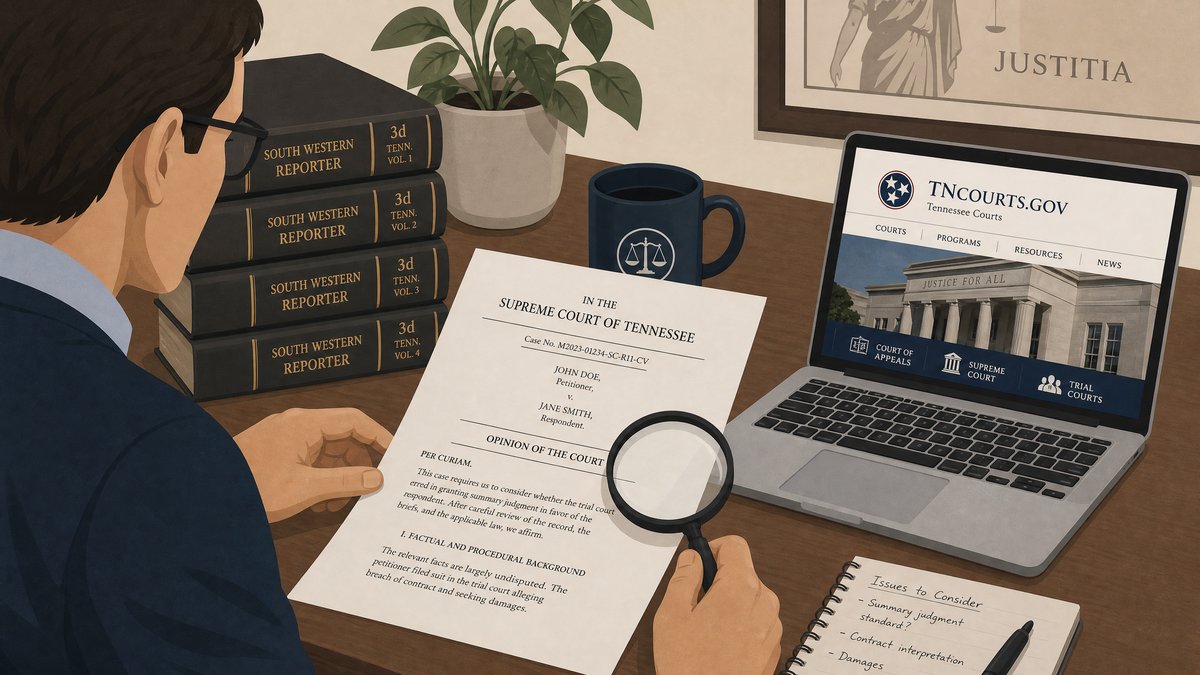
    Right hand holding a pen over printed pages with highlighted passages and marginal notes, beside a coffee mug and stacked books on a desk.
    Close-up of annotated printed pages with highlighted passages and margin notes, illustrating one way readers mark key passages when reading an opinion.

    1. Case Caption and Preliminary Information

    At the beginning of an opinion, look for the case caption. It identifies the parties, docket number, and filing date. Opinions commonly identify the authoring justice and provide context about the court or tribunal from which the case arrived.

    2. Summary or Introductory Overview

    Some decisions begin with an overview that helps readers identify the dispute, procedural history, and principal holding. Treat introductory material as an orientation tool, then read the actual opinion and disposition carefully before drawing conclusions about what the Court decided.

    3. Factual Background and Procedural History

    The opinion generally describes the relevant factual background and procedural history: the events that led to the litigation and the path through the lower courts. Pay attention to whether the court is recounting an allegation, a stipulated fact, or a finding. A court’s account of a party’s allegation does not automatically establish its truth.
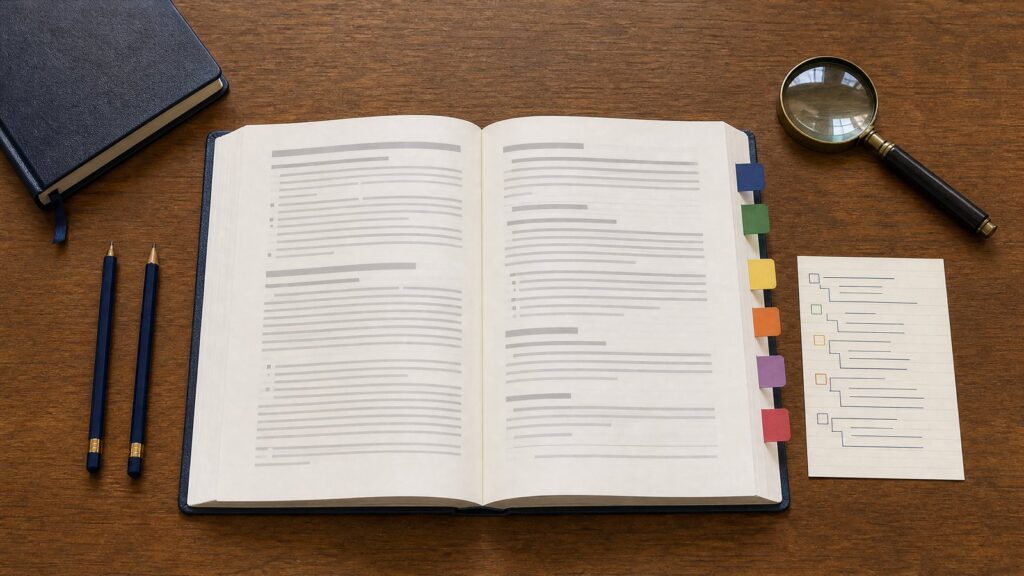
    Open book with colored page tabs and faint printed lines on a wooden desk, two blue pencils, a magnifying glass, and a checklist card.
    An open, tabbed reference book beside a magnifying glass and checklist suggests a methodical approach to mapping an opinion’s structure.

    4. Legal Issues Presented

    This section identifies the legal questions the Court must answer. Finding these questions early helps readers understand the scope of the decision and avoid treating the opinion as a broad ruling on issues the Court did not decide.

    5. Analysis and Holding

    The main opinion contains the Court’s legal analysis. The justices examine statutes, constitutional provisions, and earlier cases, then apply those authorities to the record. The holding is the legal conclusion that resolves the issues before the Court. Read the reasoning as well as the headline outcome: the reasoning often explains the decision’s future relevance.

    6. Concurring and Dissenting Opinions

    A justice who agrees with the outcome but not all of the majority’s reasoning may write a concurring opinion. A justice who disagrees may write a dissenting opinion. These separate writings are informative but do not carry the same precedential force as the majority opinion.

    Person with hair in a bun typing on a laptop at a wooden library table next to an open reference book, yellow notepad, pen and brass lamp.
    Person taking notes while using print and digital sources, illustrating how to consult both formats during close reading and citation work.

    7. Disposition

    The final disposition states what happens to the lower-court judgment. Common terms include:

    • Affirm: the lower-court decision stands.
    • Reverse: the lower-court decision is overturned.
    • Vacate: the lower-court decision is nullified.
    • Remand: the matter is sent back for further proceedings consistent with the opinion.

    Tips for Effective Reading

    • Read actively and note the issue, rule, reasoning, and disposition.
    • Distinguish what the Court held from background discussion or party arguments.
    • Check whether the opinion is a majority, concurring, or dissenting writing.
    • Use the official Tennessee Courts opinion page to locate the complete document and related materials.
    • Avoid treating a legal opinion as advice about a different person’s facts.

    By approaching Tennessee Supreme Court opinions systematically, readers can better understand the public record and the judicial process without overstating what an individual decision means.

    Disclaimer

    This article provides general legal information and journalism, not legal advice. It does not assess any reader’s specific facts or create an attorney-client relationship.

    Hands holding a pencil, marking an open book with three sticky tabs, next to a stack of books, a lamp, and a notebook on a table.
    An editorial illustration of note-taking and citation-checking, showing a reader marking an open reference book with sticky tabs and a pencil.

    Sources

    Related reading: reading Tennessee appellate opinions.
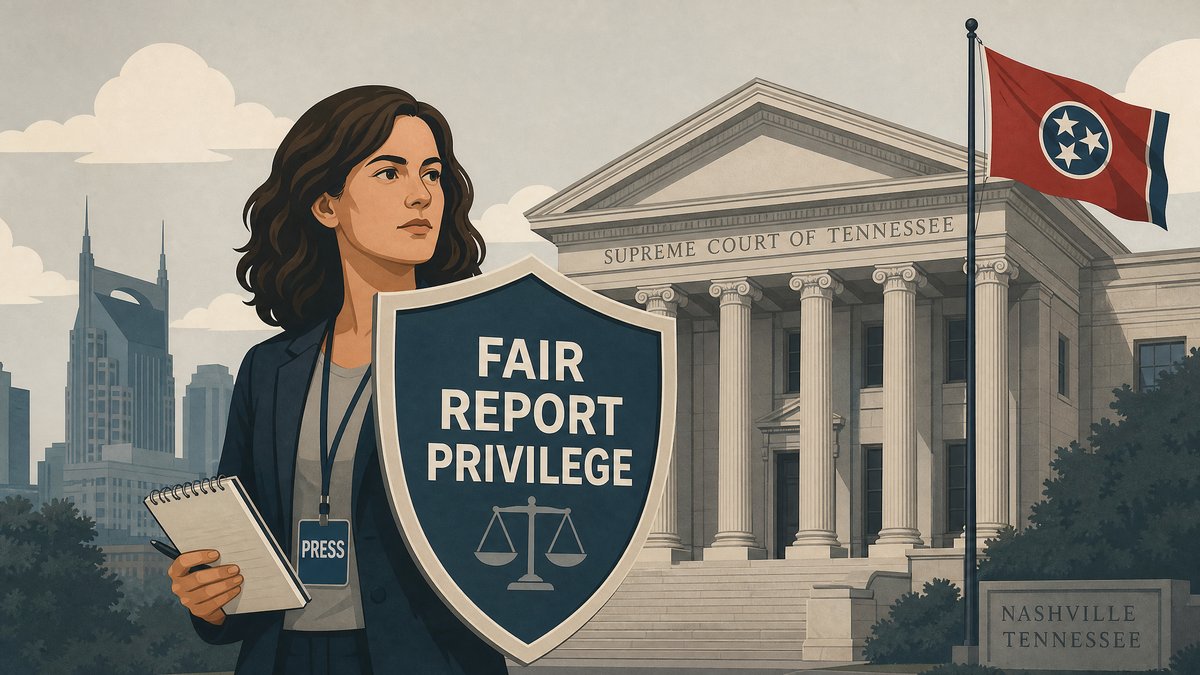
  • The Fair-Report Privilege: What Tennessee’s High Court Said in Burke v. Sparta

    The Fair-Report Privilege: What Tennessee’s High Court Said in Burke v. Sparta

    The Fair-Report Privilege: What Tennessee’s High Court Said in Burke v. Sparta

    The Tennessee Supreme Court has issued a significant ruling in the case of Jeffery Todd Burke v. Sparta Newspapers, Inc., providing a crucial, and notably narrow, interpretation of the fair report privilege. This decision, handed down on December 5, 2019, clarifies the boundaries of this journalistic protection, particularly in the context of interactions between reporters and government officials, and carries substantial implications for media organizations operating within the state.

    At the heart of the dispute was the question of whether the fair report privilege extends to nonpublic, one-on-one conversations between a newspaper reporter and a government official. The case involved alleged defamatory statements published by Sparta Newspapers, which had initially secured a summary judgment in its favor from a lower court. This initial ruling suggested a broader application of the privilege, encompassing such private interactions.

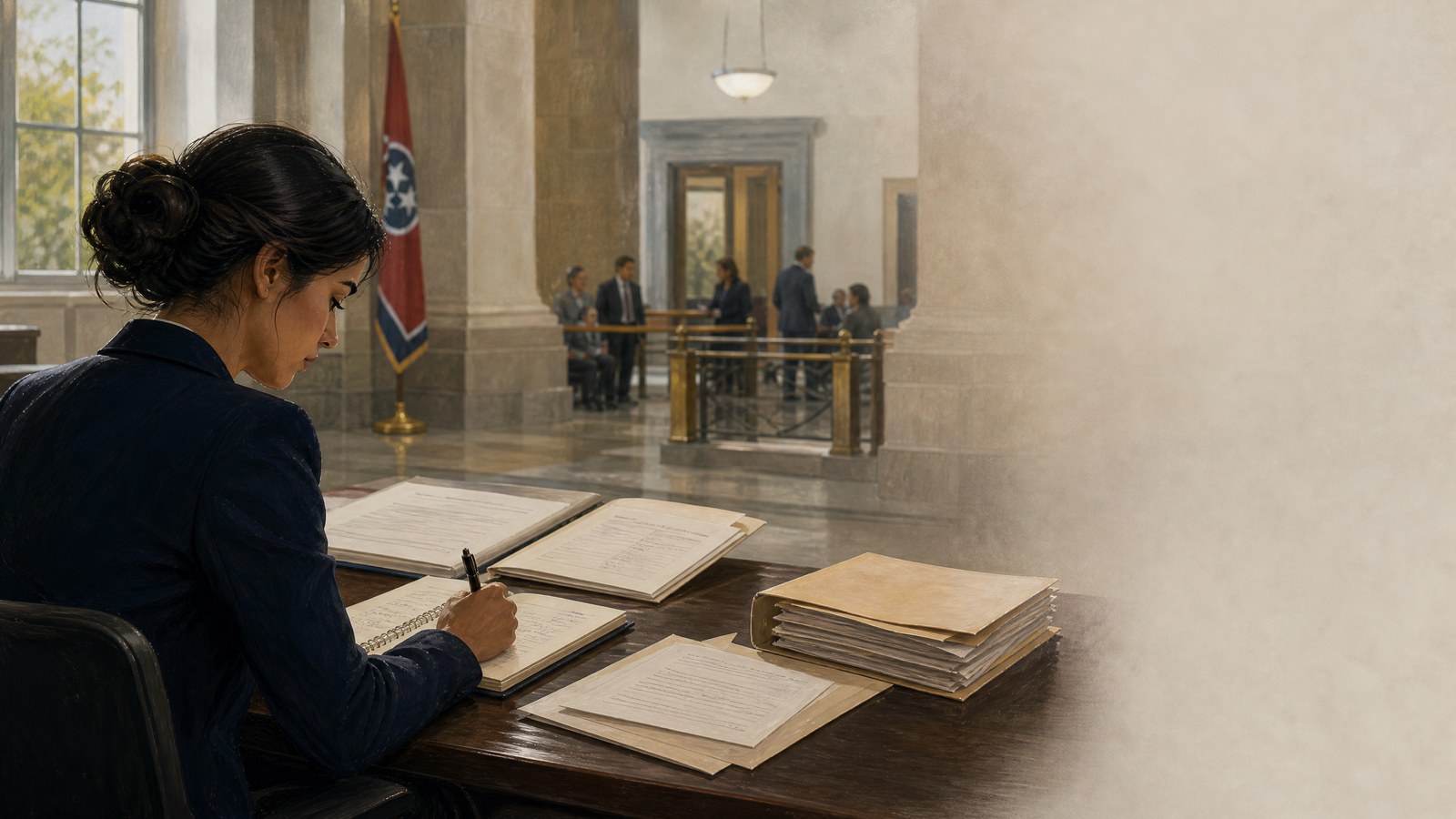
    A reporter takes notes during an open Tennessee government meeting beside a visible public record folder and courthouse setting.
    The fair-report privilege is anchored in reporting on public proceedings and officially released governmental information.

    The Supreme Court’s Narrow Interpretation

    However, the Tennessee Supreme Court reversed the lower court’s summary judgment, unequivocally stating that the fair report privilege does not extend to these types of nonpublic, one-on-one discussions. Even if the government official in question is a public information officer, the privilege, as interpreted by the state’s highest court, does not apply to such private exchanges.

    The Court clarified that the fair report privilege is applicable exclusively to public proceedings or official government actions that have been made public. This distinction is paramount. It means that for a journalist to invoke the fair report privilege as a defense against defamation claims, the reported information must originate from an open, public governmental process or a formally released public record. Private conversations, regardless of the official capacity of the source, fall outside this protective umbrella.

    A public court file and open government records appear beside a private, closed-door conversation to illustrate the difference in source context.
    Public records and proceedings differ fundamentally from private one-on-one conversations when assessing the privilege’s scope.

    This ruling underscores the principle that the privilege is designed to protect the accurate reporting of public governmental affairs, ensuring transparency and public access to official actions. It is not intended to shield reporting based on private disclosures, even if those disclosures come from a government representative.

    Implications for Journalism in Tennessee

    The decision in Burke v. Sparta serves as a critical reminder for journalists in Tennessee regarding the scope of their protections. It necessitates a careful consideration of the source and context of information when reporting on government matters. Relying on private conversations with officials, even those designated as public information officers, for potentially defamatory content without a corresponding public record or proceeding, now carries increased risk.

    A journalist compares a public meeting agenda, official court record, and reporting notes at a careful legal research desk.
    Careful reporting begins with confirming that information comes from accessible public events or official records.

    The Supreme Court’s ruling effectively tightens the criteria for applying the fair report privilege, compelling journalists to ensure that their reporting on governmental activities is directly tied to publicly accessible events or documents. This could lead to a greater emphasis on attending public meetings, reviewing official records, and seeking information that has been formally disseminated or presented in a public forum.

    Following its reversal of the summary judgment, the Tennessee Supreme Court remanded the case for further proceedings. This means the case will return to a lower court to address the alleged defamatory statements, now without the broad application of the fair report privilege that was initially granted.

    In conclusion, the Burke v. Sparta decision marks a significant moment for legal journalism in Tennessee. It establishes a clear, albeit narrow, boundary for the fair report privilege, reinforcing its application to public governmental actions and proceedings while excluding private, one-on-one interactions. Journalists and media organizations must adapt their practices to this clarified legal landscape to ensure their reporting remains within the bounds of this critical protection.

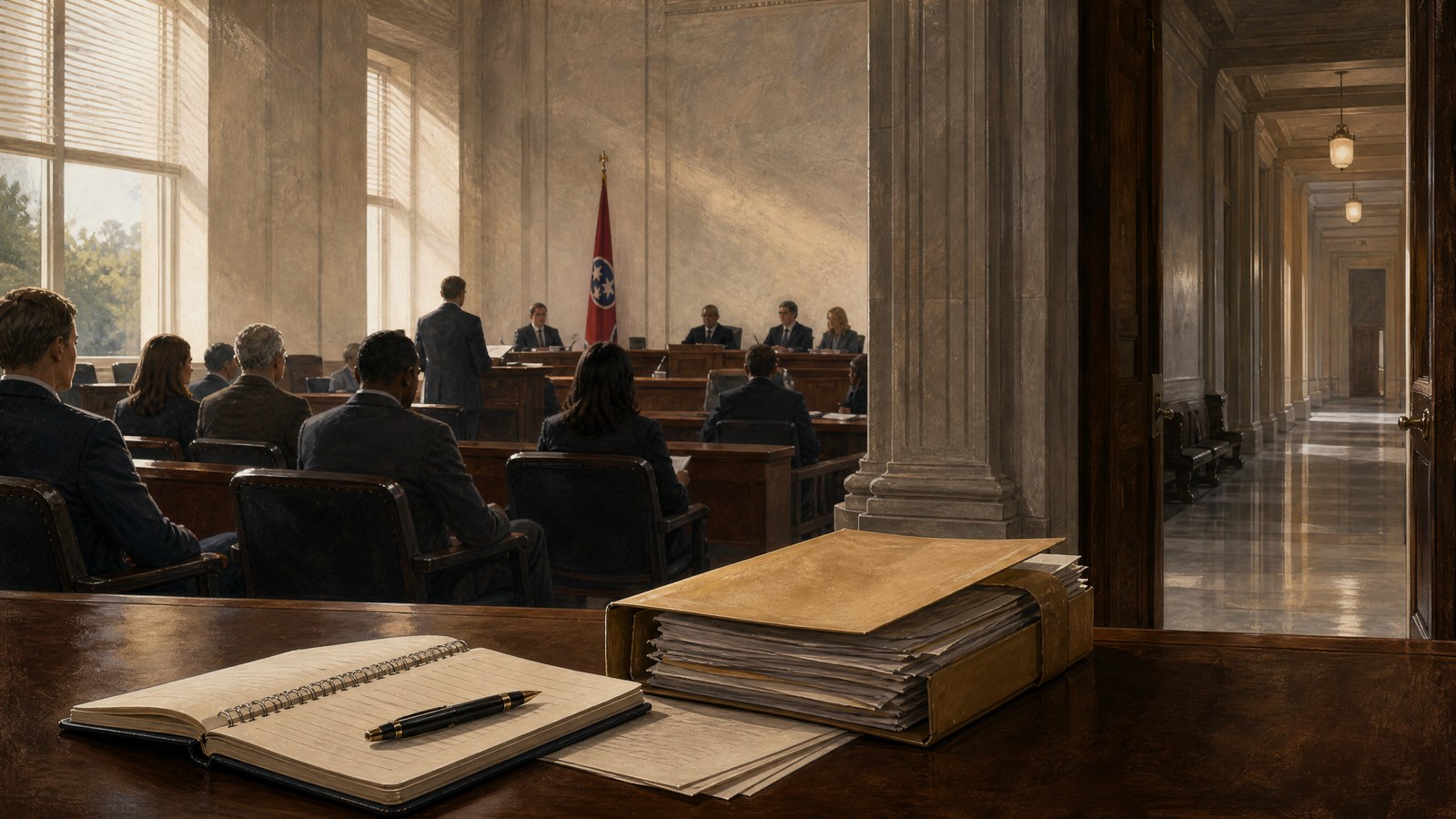
    A Tennessee courtroom and reporter’s notebook frame a clear boundary between open public proceedings and private communication.
    Burke v. Sparta emphasizes a defined boundary: the privilege protects reporting tied to public governmental actions and records.

    Primary Sources

    Note: This article provides public-interest journalism and general information about Tennessee legal processes. It is not legal advice. If you have a specific legal question, consult a qualified attorney.

    Related reading: reporting on pending cases and fair-report privilege.

  • Documents & Decisions: Tennessee Supreme Court Clarifies TPPA and Voluntary Dismissal

    Documents & Decisions: Tennessee Supreme Court Clarifies TPPA and Voluntary Dismissal

    The Tennessee Supreme Court unanimously ruled that a pending TPPA petition does not prevent a plaintiff from taking a voluntary nonsuit, though the defendant cannot recover TPPA fees if the dismissal occurs before the petition is adjudicated.

    On October 9, 2024, the Tennessee Supreme Court issued a unanimous decision in Robert E. Lee Flade v. City of Shelbyville, Tennessee, et al. The decision addresses the interaction between a plaintiff’s right to take a voluntary nonsuit under Tennessee Rule of Civil Procedure 41.01 and a defendant’s petition to dismiss under the Tennessee Public Participation Act (TPPA).

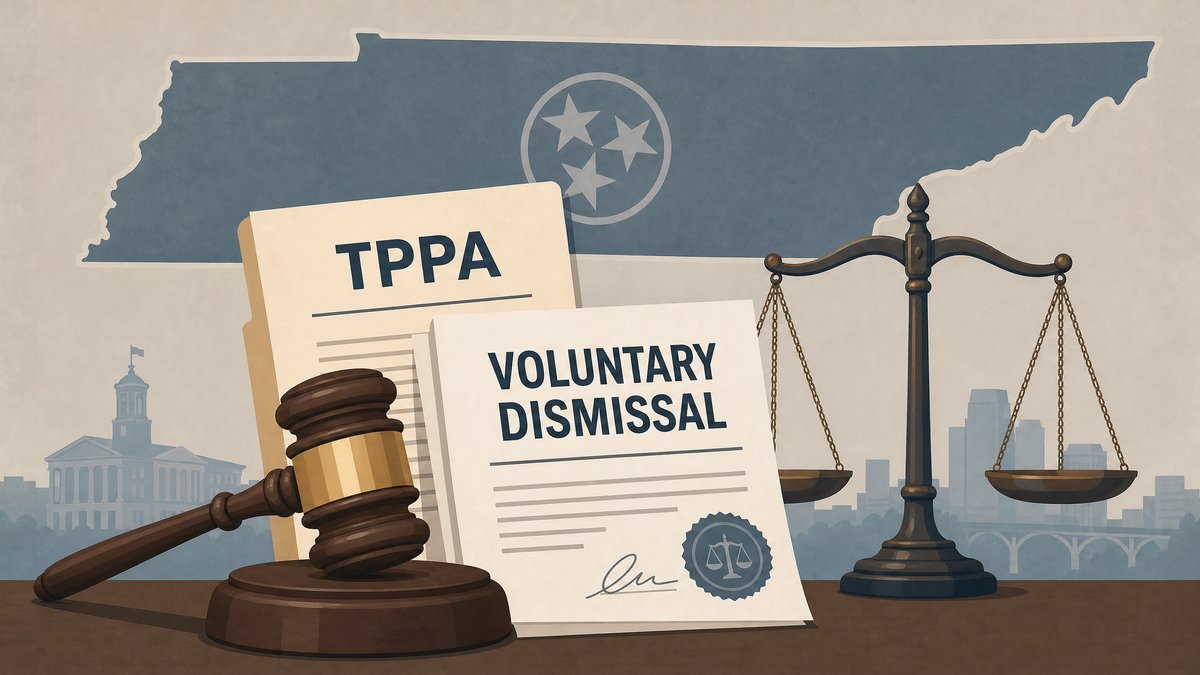
    A photograph of bound legal briefs and a gavel on a polished desk, representing a court ruling.
    The Tennessee Supreme Court recently clarified the interaction between the TPPA and voluntary dismissals.

    The question before the court

    The case began after Robert E. Lee Flade sued several defendants over statements made on social media. In response, two defendants filed motions to dismiss and TPPA petitions that sought dismissal with prejudice, attorney’s fees and costs, and sanctions. Before the trial court heard those requests, Flade voluntarily nonsuited the complaint. The trial court entered an order dismissing the case without prejudice, and it declined to adjudicate the pending TPPA petitions. The Court of Appeals affirmed.

    The Supreme Court accepted the appeal to decide whether filing a TPPA petition creates an exception to a plaintiff’s right of voluntary dismissal under Rule 41.01.

    What Rule 41.01 generally allows

    Tennessee Rule of Civil Procedure 41.01 generally gives a plaintiff the right to take a voluntary nonsuit without prejudice before trial, subject to the rule’s terms and specified exceptions. A nonsuit ends that action without a decision on the merits, although the rule and other law may affect whether and how a claim can later be refiled. The rule is procedural and should be read closely in the context of a specific case.

    A photograph of a person holding a pen over a legal document, illustrating procedural review.
    Tennessee Rule of Civil Procedure 41.01 governs voluntary nonsuits before trial.

    The court’s holding

    The Supreme Court held that the filing of a TPPA petition is not an exception to Rule 41.01’s voluntary-nonsuit right. In the court’s analysis, the TPPA did not displace the long-established rule permitting a plaintiff to voluntarily dismiss an action in these circumstances. Because the plaintiff dismissed the action before the trial court adjudicated the TPPA petitions, the trial court correctly declined to rule on them.

    The practical consequence identified by the court was significant: where a plaintiff voluntarily dismisses the lawsuit before the TPPA petition is adjudicated, the defendant cannot obtain TPPA attorney’s fees in that proceeding. That conclusion follows from the procedural posture of the case; it does not resolve the merits of every dispute that may involve a TPPA petition.

    A photograph of an empty courtroom bench, representing a judicial holding.
    The court held that a pending TPPA petition does not prevent a plaintiff from taking a voluntary nonsuit.

    Why the decision matters

    The TPPA was enacted to provide a mechanism for early dismissal of certain legal actions that implicate free speech, petition, or association rights. The statute also includes provisions concerning discovery, fees, and sanctions. Flade clarifies a limit on that mechanism: a pending TPPA petition alone does not prevent a plaintiff from taking a timely voluntary nonsuit under Rule 41.01.

    For reporters and readers, the opinion is also a reminder that the timing of a filing can be outcome-determinative. A public docket might show a TPPA petition, a nonsuit, and a dismissal order. Those entries do not necessarily tell a full story unless the underlying pleadings and opinion are reviewed.

    A photograph of hands typing on a laptop, illustrating the review of public court records.
    Reviewing the underlying pleadings and opinion is essential to understanding a case’s procedural posture.

    How to read this ruling responsibly

    The decision does not announce that every claim implicating speech is meritless, nor does it answer whether a particular lawsuit is retaliatory. It addresses a particular procedural question arising from the relationship between a voluntary dismissal and a statutory dismissal petition. When discussing the case, it is important to distinguish the court’s legal holding from allegations made in the underlying pleadings.

    Primary sources

    1. Tennessee Supreme Court opinion, Flade v. City of Shelbyville.
    2. Tennessee Administrative Office of the Courts press release.
    3. Tennessee Rule of Civil Procedure 41.01.

    Editorial note: This article provides general information based on public court materials. It is not legal advice and does not assess the truth of unproven allegations in the underlying dispute.

    Related reading: TPPA abuse-of-process protections.