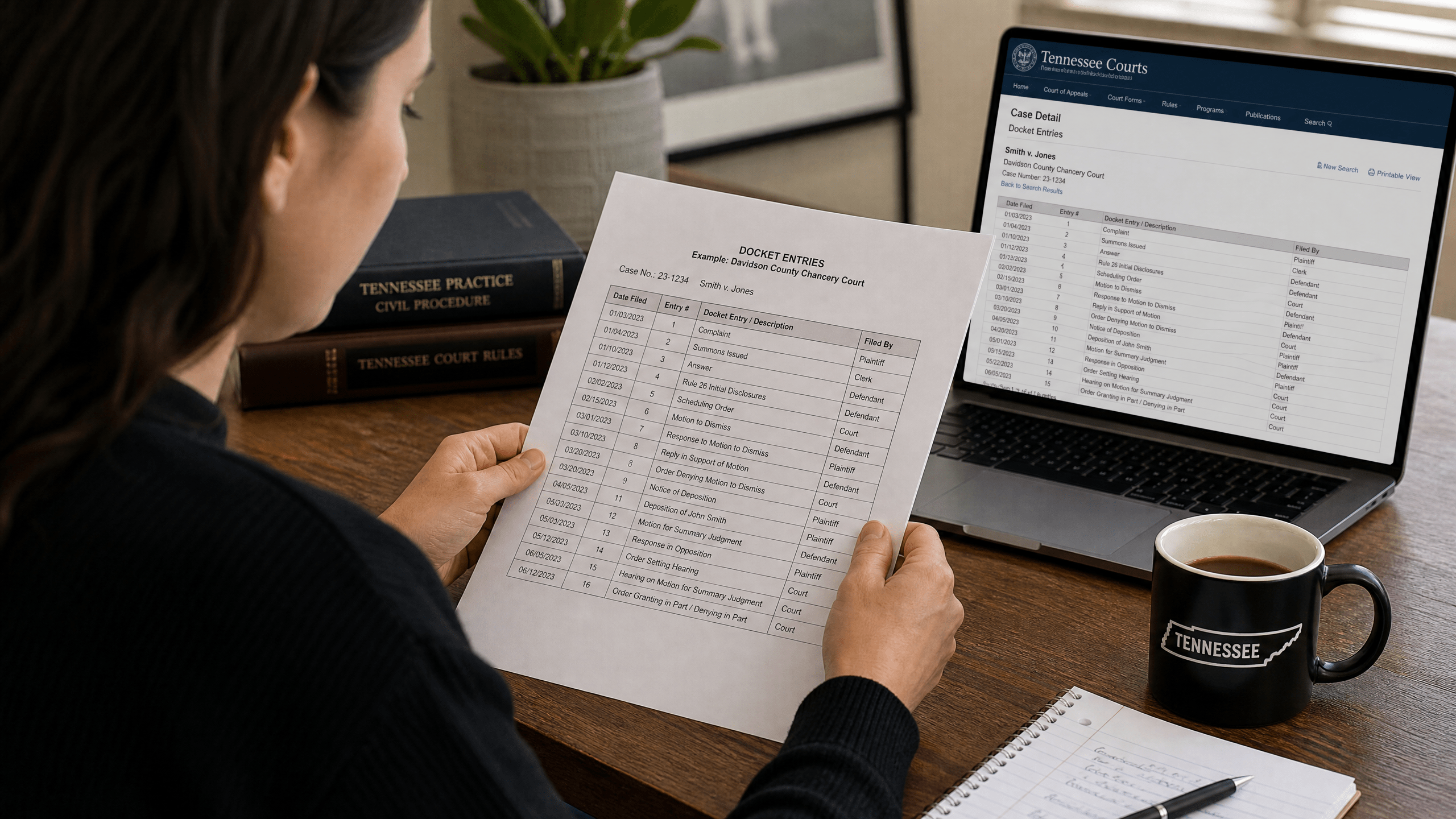
Tennessee court docket entries are the running log of a case: who filed what, when the court took action, and how the case was resolved. They are foundational public records that organize a matter’s procedural history. But a docket is not a transcript, not an opinion, and not a substitute for reading the orders and judgments that control outcomes. This guide explains what Tennessee court docket entries generally include, how to interpret dates and dispositions, and where their limits begin. This guide explains the basics of reading Tennessee docket entries and understanding what they establish.
What a Tennessee court docket is (and is not)
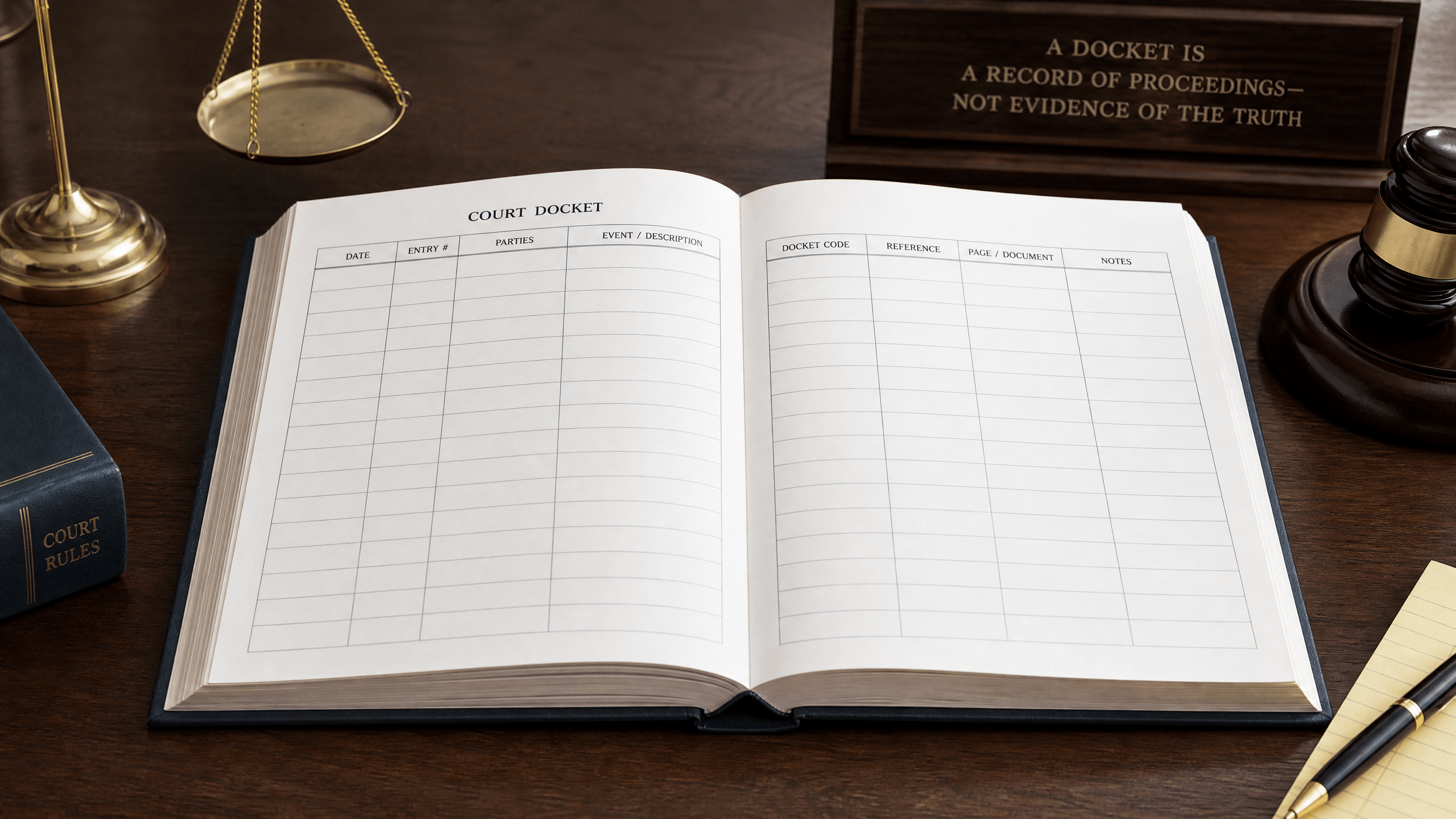
In broad terms, a Tennessee court docket is a public record that records procedural steps in a case, the court’s judgments, and post-judgment execution status. Typical entries identify case parties and attorneys, list the dates of filings and court actions, and reflect financial outcomes such as costs or amounts due. These functions help the public and the parties follow a case’s path through the courts.
Equally important is what a docket is not. Docket text is not evidence and is not a finding about the truth of any allegation. Many docket lines simply note that a filing occurred; they do not evaluate its accuracy. Short labels such as “dismissed” or “granted” summarize outcomes but do not capture the full terms of a judge’s order. For detailed reasoning, the controlling documents are the signed orders and, when a case is appealed, the written appellate decisions made publicly available by the court system. For a centralized overview of official appellate case materials, see the judiciary’s statewide portal at the Tennessee Courts appellate resources page Tennessee Courts appellate resources portal for opinions.
Public access and its limits
Access to Tennessee court records occurs within a statewide public-records framework that includes statutory exceptions. While dockets are public records, not everything in a court file (or about a litigant) will appear on a public-facing docket, and some materials may be restricted by statute or court order. The State maintains a searchable reference that catalogs exceptions to access; this tool helps explain why certain information is redacted or withheld from public view Tennessee Public Records Exception Database maintained by the state.
Because access rules arise from statutes and court orders that can change, the exceptions database is a practical starting point for recognizing categories of information that may be confidential or restricted from public view. This legal framework explains, for example, why juvenile matters or certain sensitive personal data may be absent from public dockets.
Core elements you are likely to see on a docket
Download the video transcript (TXT).
Although formats vary across courts, most Tennessee court dockets will include some combination of the following elements:
- Case identifiers: a case number and case type label used to track filings and orders.
- Parties and attorneys: names of plaintiffs/petitioners, defendants/respondents, and counsel of record.
- Filings and court actions by date: chronological entries noting pleadings, motions, responses, notices, and court rulings.
- Scheduled events: hearing dates, trial settings, and continuances.
- Dispositions: shorthand notations reflecting outcomes (for example, a final judgment entered or a motion resolved).
- Financial outcomes: costs assessed, amounts awarded, and other monetary entries associated with the judgment.
- Post-judgment activity: entries showing enforcement steps or “execution” status after a judgment.
Some fields or documents may be redacted or omitted if they fall within statutory confidentiality or a sealing order.
How to read dates on a docket

Dates are often the key to understanding what happened and when. A single case can contain multiple date types that serve different functions. Common ones include:
- Filing date: when a document was received and file-stamped by the clerk.
- Entry date: when an order or judgment was entered on the docket, which may be later than the date the judge signed it.
- Service date: when a party or attorney was formally served with a document or notice.
- Scheduled date: when a hearing, conference, or trial is set to occur.
- Disposition date: when the court resolved a motion or the entire case.
These distinctions matter. For example, appeal deadlines and certain post-judgment time limits are frequently tied to entry dates, not the date a hearing occurred. Likewise, a docket might show that a hearing was scheduled, but a subsequent entry (or the absence of one) could indicate it was continued or resolved without a hearing. Always read dates in sequence, and remember that the docket is a living record: a later entry can change the legal landscape by superseding an earlier order.
How to read dispositions and orders

Disposition entries function as short administrative labels. They tell you that the court took an action, but not necessarily why or under what exact terms. Some common labels you may encounter include “dismissed,” “granted,” “denied,” “settled,” and “judgment entered.” To know the scope of an order—who prevailed, what relief was awarded, what deadlines apply, and whether any claims remain—look for the underlying signed order or judgment referenced by the docket entry. The order contains the controlling language.
Financial lines on the docket may show costs assessed and amounts due as part of a judgment. After judgment, entries referring to “execution” or other enforcement steps relate to collection and compliance status. Track these chronologically to see whether an initial judgment has been modified, satisfied, or remains outstanding. If a later entry notes that an earlier order was vacated or superseded, the later entry controls.
What a Tennessee docket cannot establish
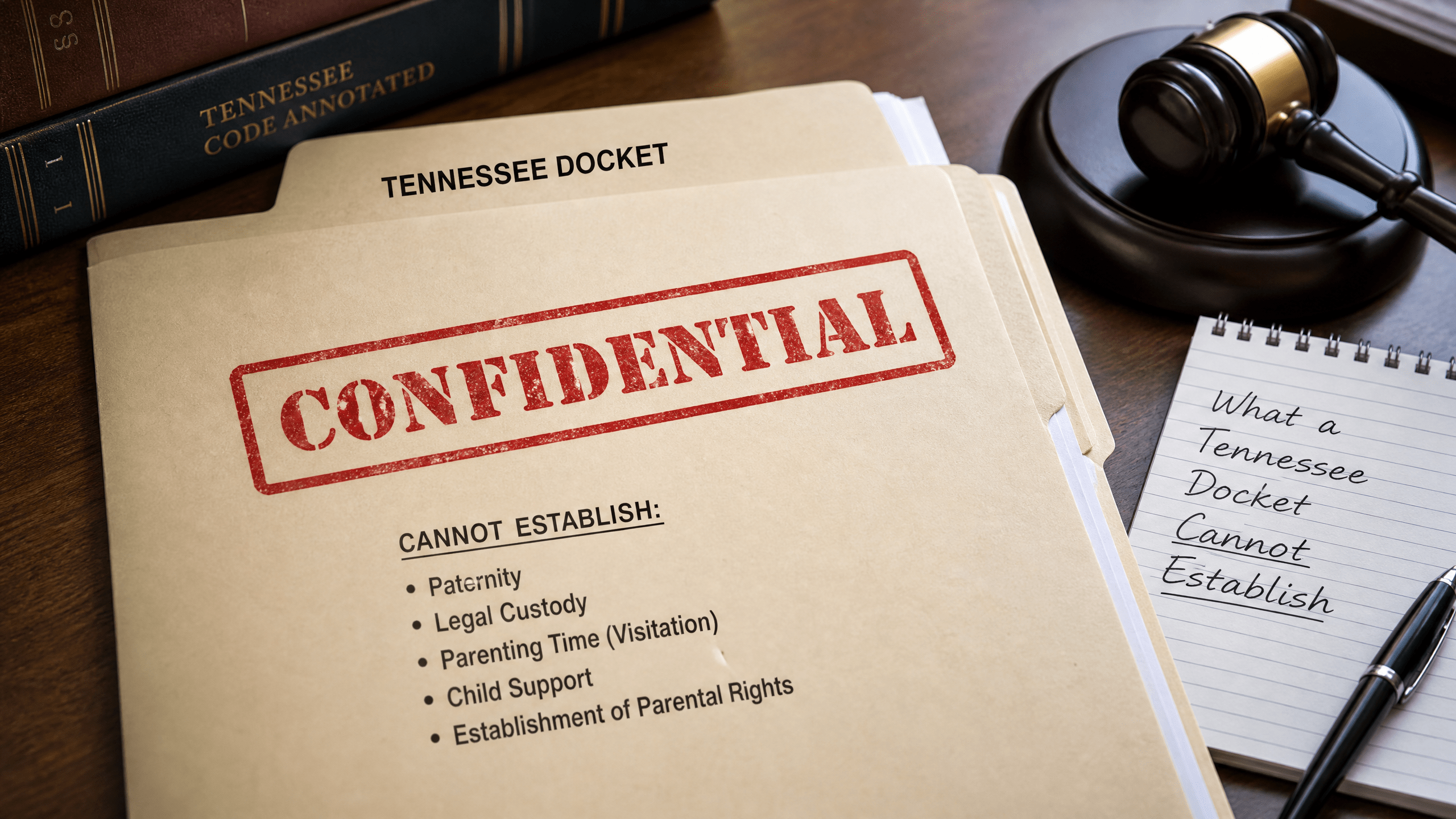
Because a docket is a summary tool, there are strict limits on what you can conclude from it:
- Truth of allegations: a docket shows that a pleading was filed; it does not prove the facts alleged.
- Complete reasoning: brief labels for rulings rarely include the court’s analysis. Appellate opinions are where legal reasoning is published for statewide reference, accessible through the judiciary’s public portal Tennessee Courts appellate resources portal for opinions.
- Confidential matters: categories protected by statute or court order do not appear on public dockets or may be redacted, consistent with statewide exceptions to public access documented in the state’s reference tool Tennessee Public Records Exception Database for restricted access.
- Off-record events: conferences, settlement discussions, and clerk’s desk communications may not be reflected unless a filing or order memorializes them.
- Real-time status: a docket can lag. Clerks update entries, but delays occur between a hearing, the signing of an order, and the entry of that order on the docket.
Finding official appellate materials and case context
When a case reaches the appellate courts, the most authoritative sources for what the court decided are the opinions and orders the judiciary publishes. Tennessee centralizes public appellate case resources to help the public track these materials Tennessee Courts appellate resources portal for opinions. Reading the appellate docket alongside the issued opinion or order provides both the procedural context and the court’s reasoning.
Practical tips for reading docket entries
- Start with identifiers: confirm you are on the correct case number and case type before drawing any conclusions.
- Follow the chronology: read entries in order. Note the difference between the date an event occurred and the date it was entered.
- Find the controlling document: where a disposition line references an order or judgment, read that document for the full terms.
- Watch for superseding entries: later orders can modify or vacate earlier ones. The most recent controlling order governs.
- Separate allegations from rulings: distinguish between a party’s filing (an allegation or argument) and a court order (a decision).
- Note privacy indicators: redactions, initials, or omitted data often reflect statutory confidentiality or a sealing order under statewide access rules. For context about why certain data is withheld, consult the state’s reference tool Tennessee Public Records Exception Database for restricted access.
- Recheck the record: because updates can lag, revisit the docket to confirm no later order has changed the status.
Why the same case can look different across systems

Not every Tennessee court publishes docket information in the same format or on the same schedule. Some systems provide more detail or link directly to orders; others display minimal lines until documents are scanned and entered. Differences in software, local practice, and the presence of confidential material all affect what the public can see on a given day. The underlying principle remains the same: the docket is the case’s procedural ledger, and access to it operates within the statewide framework of public access and statutory exceptions.
Limits of this guide
This guide addresses what Tennessee court dockets commonly show and what they do not, based on general principles of public access. It does not list every possible exception or confidential record type, and it does not detail the specific contents of every court’s docket. Court practices and legal standards change. For official case materials on appeal, consult the judiciary’s public appellate case resources maintained by Tennessee Courts, and review the state’s reference for statutory limits on access in the Public Records Exception Database.
Sources
- Tennessee Courts: Public Appellate Case Resources
- Tennessee Public Records Exception Database (Office of Open Records Counsel)
This article provides general information, not legal advice. Court rules, records, and legal consequences depend on the facts, the forum, and current law; consult a qualified lawyer for advice about a specific situation.
General-information disclaimer: This article is provided for journalism and general information only. It is not legal advice and does not create an attorney-client relationship.
Leave a Reply