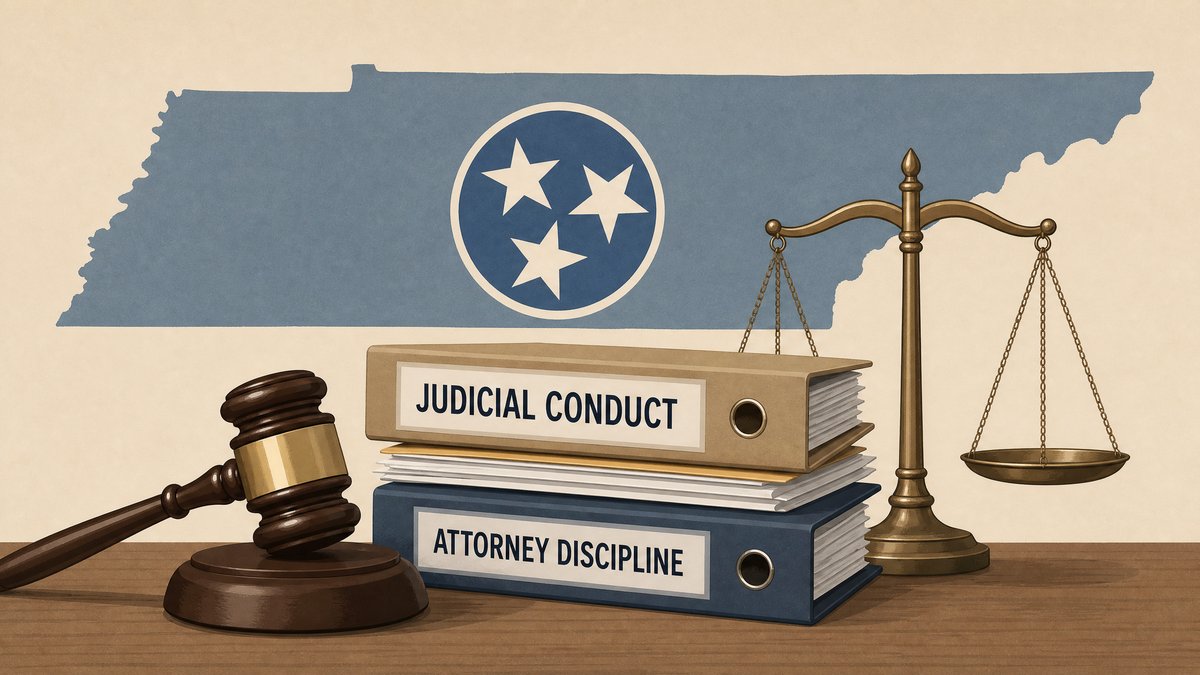
Understanding Judicial and Attorney Accountability in Tennessee
Maintaining public trust in the legal system is paramount, and a key component of this trust is the accountability of those who serve within it. In Tennessee, mechanisms are in place to address concerns regarding the conduct of both judges and attorneys. This article provides an overview of where the public can find information about judicial conduct and attorney discipline, outlining the roles of the Tennessee Board of Judicial Conduct and the Tennessee Board of Professional Responsibility.
The Tennessee Board of Judicial Conduct: Upholding Judicial Integrity
The Tennessee Board of Judicial Conduct (BJC) is an independent body established by the state legislature to ensure the integrity of the judiciary. Its primary role is to investigate and address allegations of misconduct against judges across various courts, including appellate, trial, general sessions, probate, juvenile, and municipal courts, as well as judicial candidates. The BJC’s jurisdiction extends to matters concerning a judge’s physical, mental, and moral fitness, their performance of duties, and any actions that might unfavorably reflect upon the judiciary or adversely affect the administration of justice.

Judicial misconduct is defined as conduct that violates the Code of Judicial Conduct, which is Tennessee Supreme Court Rule 10. This code sets standards for how judges should conduct themselves both inside and outside the courtroom. When a complaint is filed, it must be in writing, signed by the complainant, and allege specific facts related to the alleged misconduct. The BJC’s legal staff reviews complaints, and if sufficient grounds exist, an investigation may be initiated. It is crucial to understand that matters before the BJC are confidential unless formal charges are filed against a judge. Only when formal charges are filed does the matter become public.
If the BJC finds that charges of misconduct are established by clear and convincing evidence, it can impose various disciplinary actions. These range from private or public reprimands to recommending that the Tennessee General Assembly remove a judge from office. It is important to note that the BJC is not an appellate court; it cannot review, revise, or correct a judge’s rulings, nor can it provide legal advice. Its focus is solely on judicial conduct.

The Tennessee Board of Professional Responsibility: Ensuring Attorney Ethics
For concerns related to the ethical conduct of attorneys, the Tennessee Board of Professional Responsibility (BPR) is the relevant authority. The BPR’s mission is to protect the public from harm caused by unethical lawyers by administering the disciplinary process. It supervises the ethical conduct of attorneys and investigates alleged violations of the Rules of Professional Conduct, which govern the legal profession in Tennessee.
Members of the public, including clients, judges, or anyone who believes an attorney has acted unethically, can file a complaint with the BPR. Similar to judicial complaints, these must detail specific allegations of misconduct. The BPR offers both a formal complaint process for serious ethical violations and an informal Consumer Assistance Program (CAP) for less severe concerns. The BPR’s website provides information on recent disciplinary and licensure actions, offering transparency into its proceedings. These public records typically include details of the attorney, the nature of the misconduct, and the disciplinary action taken, such as censure, suspension, or disbarment.

The BPR, like the BJC, does not provide legal advice. Its role is to investigate and adjudicate matters of attorney ethics, ensuring that legal professionals adhere to the standards set forth by the Tennessee Supreme Court. The disciplinary actions taken by the BPR are intended to protect the public and maintain the integrity of the legal profession.
Distinguishing Allegations from Verified Facts
When seeking information about judicial or attorney conduct, it is vital to distinguish between allegations and verified facts. A complaint filed with either the BJC or the BPR is an allegation. These allegations undergo a rigorous investigation process. For judicial conduct, matters remain confidential unless formal charges are filed. For attorney discipline, while the filing of a complaint initiates a process, public disciplinary actions are only reported after a finding of misconduct has been made and approved by the Board or the Tennessee Supreme Court. Therefore, information found regarding ongoing investigations or initial complaints should be understood as unverified allegations until a formal finding or disciplinary action is publicly announced.
Disclaimer
This article provides general information about where to find judicial conduct and attorney discipline information in Tennessee and is not intended as legal advice. For specific legal questions or assistance, please consult with a qualified attorney.

Sources
- Tennessee Board of Judicial Conduct
- Board of Judicial Conduct FAQs
- Tennessee Board of Professional Responsibility
- Tennessee Board of Professional Responsibility: For The Public
- Tennessee Board of Professional Responsibility: Recent Disciplinary and Licensure Actions
Related reading: court self-help and legal-information resources.
Leave a Reply