Stop Legal Harassment

Court access · Free expression · Accountability

Tag: tennessee law

  • Anti-SLAPP Basics: What the Tennessee Public Participation Act Covers

    Anti-SLAPP Basics: What the Tennessee Public Participation Act Covers

    Anti-SLAPP Basics: What the Tennessee Public Participation Act Covers

    Introduction

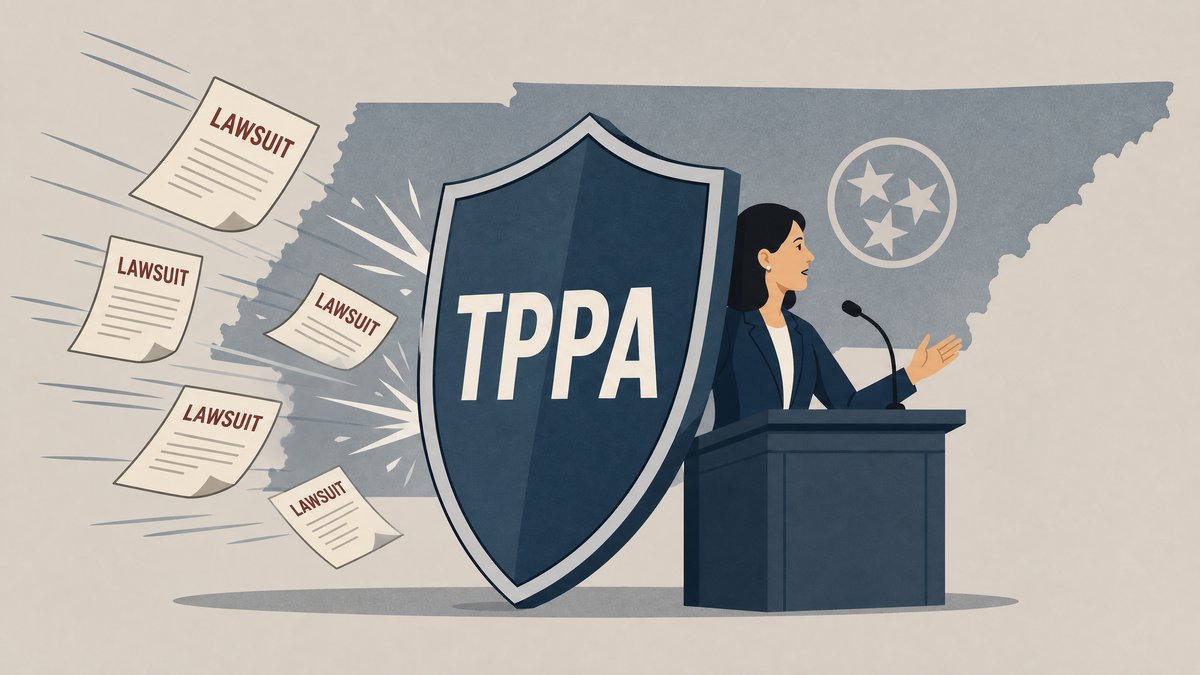
    Public disagreement can sometimes lead to litigation. Anti-SLAPP laws are designed to provide a process for courts to evaluate certain claims that arise from speech, petitioning, or association. Tennessee’s law is the Tennessee Public Participation Act, often called the TPPA. This general-information guide explains the statute’s purpose and structure without advising anyone about a particular dispute.

    What “Anti-SLAPP” Means

    SLAPP is shorthand for a “strategic lawsuit against public participation.” The label is commonly used to describe legal claims that may impose expense or pressure on people who speak, organize, or petition government about matters of public concern. Whether a particular lawsuit qualifies for relief under Tennessee law depends on its facts, claims, and procedural posture; it is not determined simply by the label used by either side.

    Man stands at a wooden podium speaking into a microphone to seated audience members who face a raised dais with five people behind a long table
    A speaker addresses a panel during a public meeting, a context often discussed when explaining anti‑SLAPP and public participation protections.

    The Tennessee Public Participation Act

    The TPPA protects certain exercises of the rights of free speech, petition, and association. It applies to a legal action that is based on, relates to, or is in response to a party’s exercise of those rights. The statute defines “exercise of the right of free speech” as a communication made in connection with a matter of public concern or religious expression. It separately defines petition activity and association.

    Matters of public concern

    The statutory definition includes issues concerning health or safety, environmental, economic, or community well-being, government, public officials, public figures, and goods or services in the marketplace. Courts apply the statutory text to the record before them. A connection to public concern is important for the free-speech branch of the Act, but it does not turn every dispute involving a public issue into a winning TPPA motion.

    Person from behind writing in an open notebook on a wooden counter, with folders, a magnifying glass and a blurred columned hallway beyond.
    Notes, folders and a magnifying glass on a wooden counter accompany someone writing, illustrating reviewing documents and preparing written remarks.

    The motion process

    A party seeking TPPA relief may file a motion to dismiss. The Act establishes a burden-shifting process. First, the movant must make a prima facie showing that the action is based on, relates to, or is in response to protected activity. The responding party may then avoid dismissal by establishing a prima facie case for each essential element of the claim. Even then, a motion may succeed if the movant establishes a valid defense as a matter of law.

    The TPPA also addresses timing, discovery, fees, sanctions, and appellate review. Discovery is generally stayed while a motion is pending, subject to the statute’s rules. Courts must apply the current statute and relevant precedent rather than rely on a generalized description of anti-SLAPP law.

    Hands of a person in a dark blazer turning a blank page and holding a pen over an open notebook, with a notebook and folder on a desk.
    Person turning pages and preparing to take notes, a neutral visual for the section on reviewing motions under Tennessee’s public participation law.

    What the TPPA Does Not Do

    The Act is not a blanket immunity from all accountability for speech or conduct. Defamation claims, contractual disputes, and other civil actions can involve complex questions about elements, privileges, evidence, and defenses. It is also not a substitute for careful reporting. Journalists and members of the public should verify documents, attribute allegations, seek comment when appropriate, and distinguish claims from proven facts.

    Why the Distinction Matters

    For public-interest reporting, the TPPA is significant because it recognizes the value of speech and petitioning while preserving procedures for courts to assess legally sufficient claims. A responsible account should state what the statute says, identify any judicial decision being discussed, and avoid implying that a party has engaged in “legal harassment” merely because a lawsuit exists.

    Disclaimer

    This article provides general information about the Tennessee Public Participation Act and is not legal advice. For advice on a specific matter, consult a qualified attorney.
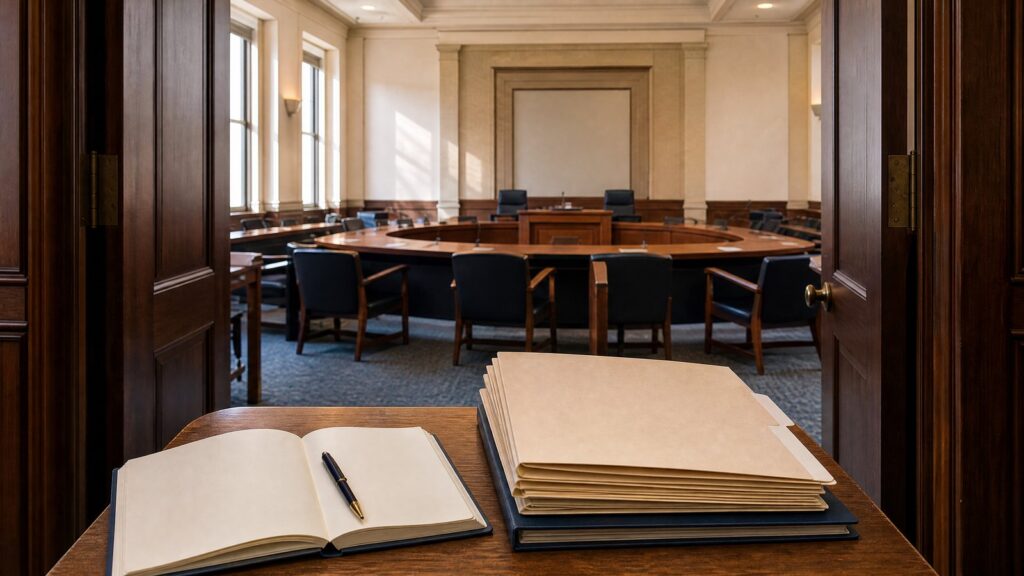
    Open double doors reveal a formal hearing room with semicircular wooden benches and empty chairs; foreground desk holds an open notebook, pen, and stacked manila folders.
    A stack of manila folders and an open notebook rest at the entrance to a formal hearing room, illustrating documentary and procedural aspects discussed nearby.

    Sources

    Related reading: TPPA abuse-of-process and SLAPP defense.
  • Tennessee’s Reporter Shield Law: What It Protects and Its Limits

    Tennessee’s Reporter Shield Law: What It Protects and Its Limits

    Tennessee’s Reporter Shield Law: What It Protects and Its Limits

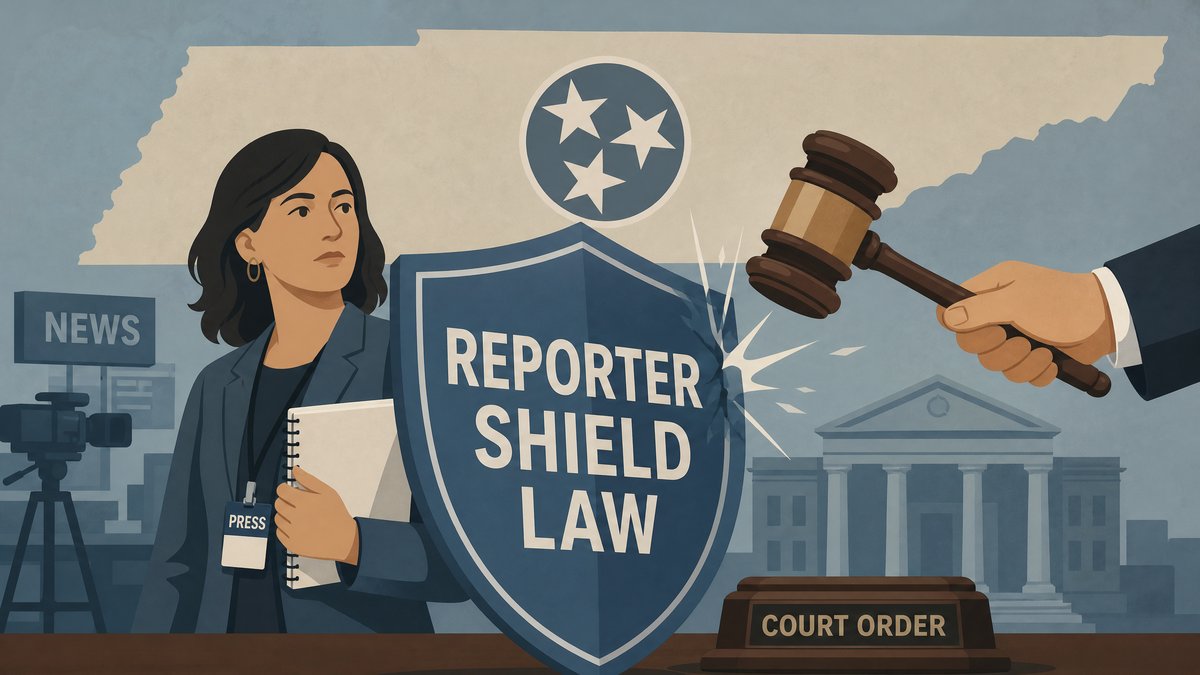
    The ability of journalists to gather and disseminate information is crucial for a well-informed public. Tennessee Code Annotated § 24-1-208 contains a reporter-shield provision that protects certain newsgathering information and sources. The statute’s text matters because the protection is broad, but it is not absolute.

    What the statute protects

    Section 24-1-208 states that a person connected with or employed by the news media or press, or independently engaged in gathering information for publication or broadcast, generally may not be required by a court, grand jury, legislature, or administrative body to disclose information or its source obtained for publication or broadcast. The statute uses broad language, which can matter to both traditional news organizations and independent journalists. Whether a particular person or material falls within the statute depends on the circumstances and the statute’s requirements.

    Person seen from behind writing in a notebook at a wooden desk with a mug and lamp; a blurred silhouette gestures behind frosted glass.
    A person taking notes while a silhouetted figure speaks behind frosted glass evokes confidential conversations and the handling of sensitive notes.

    How the protection can be challenged

    The law also contains a procedure for a party seeking to overcome the protection. Under the statute, the party must make a strong showing, including that the information is clearly relevant to a specific probable violation of law, cannot reasonably be obtained through alternative means, and serves a compelling and overriding public interest. The statutory standard is demanding, and the precise application of the law may depend on the record before the court.

    The statutory procedure also makes timing important. A subpoena, discovery request, or court order can have short response deadlines. A reporter or editor should preserve the request, identify who has custody of the sought material, and obtain legal advice promptly rather than assume a general news-media label resolves the issue.

    Sunlit wooden desk in a courtroom setting with a closed black notebook, two pencils, a manila file folder and a magnifying glass.
    A notebook, file folder and magnifying glass on a sunlit courtroom desk, evoking questions about subpoenas and source protection.

    A defamation-related provision

    The statute includes a specific provision concerning the source of allegedly defamatory information when a defendant in a civil defamation action relies on the source as part of a defense. That provision illustrates why a newsroom should not treat any shield law as an automatic answer to every subpoena, discovery request, or lawsuit.

    Practical newsroom implications

    For a public-interest publication, the law supports careful source practices rather than casual promises. Editors should explain the limits of confidentiality before accepting sensitive information, preserve records securely, distinguish verified reporting from allegations, and seek legal review when a subpoena or discovery demand arrives. A shield-law question can involve deadline-sensitive procedure, so a specific dispute belongs with qualified counsel.

    Woman at a desk holding a pen over an open notebook, lamp and closed book nearby, silhouette behind a frosted divider and city lights outside.
    The staged interview scene evokes considerations about protecting confidential sources and the legal limits on source confidentiality discussed nearby.

    It is also wise to maintain a clear editorial record. Note what has been independently confirmed, which assertions come from documents or interviews, what information was offered on background or off the record, and whether a person was promised anonymity. These practices improve reporting even when no legal demand follows.

    Why the public should care

    Source protections can help reporters investigate matters that would otherwise remain hidden, but the public benefit depends on accurate reporting and responsible verification. The same reporting practices that reduce error—obtaining documents, seeking comment, identifying the basis for assertions, and correcting mistakes transparently—also make legal journalism more credible.

    Disclaimer

    This article provides general information about Tennessee’s reporter-shield law and is not legal advice. For advice about a particular subpoena, source, or dispute, consult a qualified attorney.

    Open notebooks, a closed journal, paper folders, pens, a magnifying glass and a landline phone on a wooden desk by a window.
    A desk with notebooks, folders, a magnifying glass and a telephone evokes themes of information handling, recordkeeping and legal limits.

    Sources

    Related reading: source protection and transparent legal journalism.

  • Civil Discovery in Plain English: What It Is and What It Is Not

    Civil Discovery in Plain English: What It Is and What It Is Not

    Civil Discovery in Plain English: What It Is and What It Is Not

    Civil discovery is a crucial pre-trial phase in civil lawsuits where parties exchange information and evidence relevant to the case. Its primary goal is to prevent surprises at trial, promote fair settlements, and ensure that justice is served based on all available facts. This process allows each side to understand the strengths and weaknesses of their own case and their opponent’s, leading to more informed decisions and potentially avoiding lengthy and costly trials.

    What Civil Discovery Is

    At its core, civil discovery is the formal process by which litigants gather information from one another and from third parties. This information can include documents, electronic data, physical evidence, and sworn testimony. The scope of discovery is generally broad, allowing parties to seek any non-privileged matter that is relevant to any party’s claim or defense and proportional to the needs of the case.

    Two people in dark business suits pass stacks of manila file folders across a polished wood conference table with notebooks, pens, and a notepad.
    Two people exchange manila file folders across a conference table, used to illustrate document exchange in civil discovery and pretrial procedure.

    Key Purposes of Discovery

    • Preventing trial by ambush: Parties disclose relevant information before trial.
    • Promoting settlement: A clearer factual record helps parties evaluate claims.
    • Narrowing issues: Discovery can clarify what is actually disputed.
    • Preserving evidence: It can collect testimony or documents that may otherwise become unavailable.

    Common Methods of Civil Discovery

    1. Interrogatories

    Interrogatories are written questions sent by one party to another, answered in writing and under oath. They often seek basic factual information, witness identities, positions, and the existence of documents.

    2. Requests for Production

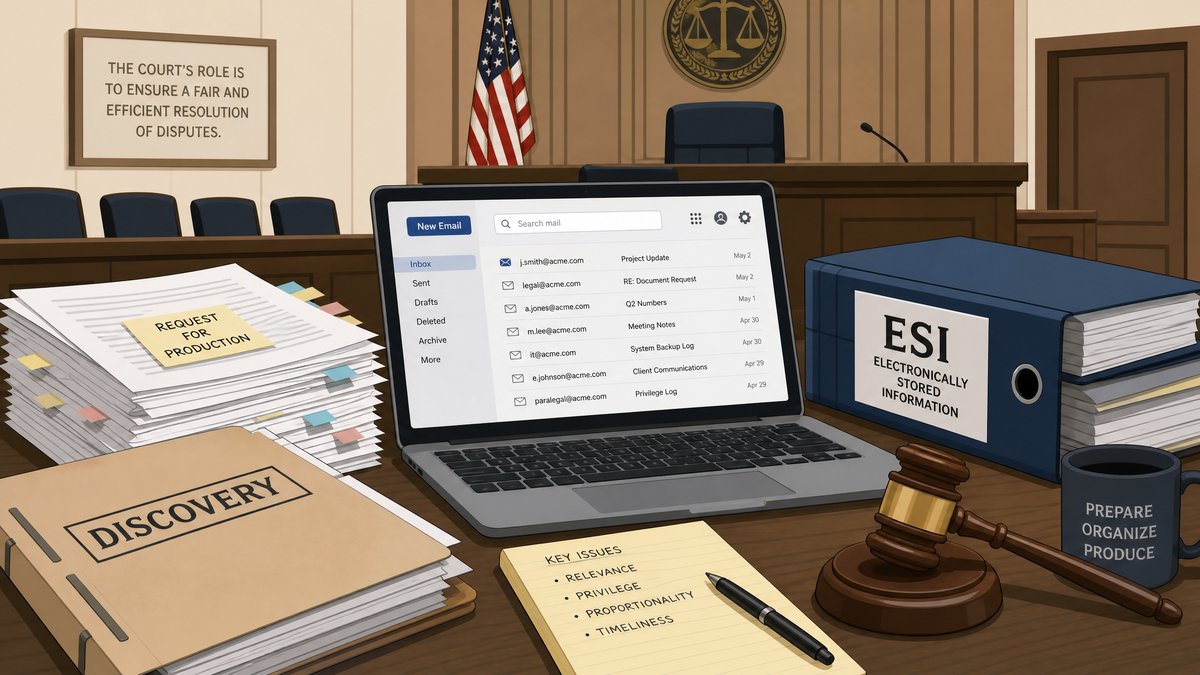
    These requests seek documents, photographs, tangible things, or electronically stored information such as emails, text messages, or digital files. The material sought must be relevant, nonprivileged, and proportional to the needs of the case.

    Person seen from behind at a wooden desk holding a pen and filling a numbered checklist on a clipboard with notebooks and calendar.
    A person reviewing a blank numbered checklist at a desk complements the article’s discussion of organizing steps in the civil discovery process.

    3. Depositions

    A deposition is out-of-court sworn testimony recorded by a court reporter. Attorneys may question a party or witness, subject to applicable rules and objections. Depositions can preserve testimony and help parties understand a witness’s account.

    4. Requests for Admission

    Requests for admission ask a party to admit or deny stated facts or the genuineness of documents. Admissions may narrow the issues that need to be proved later.

    Empty conference table with two mesh chairs, a tabletop microphone, stacked binders and folders, a notepad and a glass of water.
    A meeting table with binders, microphone, notepad and water, illustrating a neutral workspace for organizing and reviewing discovery materials.

    What Discovery Is Not

    Discovery is not an unlimited license to demand everything a party may want. Courts can limit discovery to prevent undue burden, harassment, delay, or disproportionate expense. Privileged information is generally protected. Discovery is also not a substitute for trial: the exchange of information does not itself decide liability. In addition, discovery material is not automatically public. Protective orders may limit disclosure of sensitive information.

    Why the Distinction Matters

    Public discussion of civil litigation can become misleading when discovery requests are reported as if they prove a claim or establish a fact. A request is a request; an allegation is an allegation; and an order resolving a discovery dispute may be narrow. Document-led reporting should identify the request, response, and court ruling separately.

    Disclaimer

    This article provides general information about civil discovery and is not legal advice. Procedures and deadlines depend on the court, the case, and the applicable rules.

    Person in a suit using a laptop showing file and folder icons on screen at a wooden courtroom desk with paper folders nearby.
    Person working through electronic folders on a laptop at a courtroom desk, illustrating electronic file review and organization in discovery workflows.

    Sources

    Related reading: Tennessee Rule 11 and sanctions.

  • Defamation, Opinion, and Fair Reporting: Guardrails for Public-Interest Journalism

    Defamation, Opinion, and Fair Reporting: Guardrails for Public-Interest Journalism

    Defamation, Opinion, and Fair Reporting: Guardrails for Public-Interest Journalism

    Introduction

    Public-interest journalism informs citizens and can strengthen accountability. It also requires careful reporting discipline, particularly when stories include allegations, court filings, or disputes that may affect a person’s reputation. This article explains several important guardrails: defamation law, the distinction between fact and opinion, and the fair-report privilege.

    Woman seated at a wooden courtroom table reads loose papers and writes in a notebook; closed book, two pencils, and a magnifying glass nearby.
    An individual reviewing documents and taking notes in a courtroom-like space, illustrating careful document review relevant to reporting guardrails.

    Understanding Defamation

    Defamation generally concerns a false statement of fact that harms a person’s reputation. It can include written statements (libel) and spoken statements (slander). The precise elements and defenses depend on the circumstances, including who was discussed, what was said, how it was published, and whether the matter involves public concern. Truth is a fundamental defense. Responsible reporting therefore begins with verification, attribution, and attention to what the source document actually says.

    Opinion Is Not a Label That Solves Everything

    Commentary and opinion can be important parts of public debate. But simply adding “in my opinion” does not transform an otherwise verifiable factual assertion into protected opinion. A statement may create legal risk if it implies undisclosed defamatory facts. A sound editorial practice is to separate reporting from analysis: identify the fact, link or cite the source, and make clear when the writer is drawing an inference or expressing a viewpoint.

    Overhead view of a person's hands and the back of their head at a wooden desk with three file folders, a pencil, and a magnifying glass.
    A person examines organized file folders with a pencil and magnifying glass, evoking the process of distinguishing fact from opinion.

    The Fair-Report Privilege

    Journalists frequently report on official proceedings, public records, and judicial matters. Tennessee recognizes a fair-report privilege for fair and accurate reports of official actions or proceedings. The privilege is not a substitute for careful work. It is strongest when reporting accurately attributes information to an identifiable public proceeding or record, fairly conveys its substance, and avoids treating allegations as established facts. The Tennessee Supreme Court has explained that the privilege does not extend to nonpublic, one-on-one conversations merely because the source is connected to government.

    Practical Editorial Guardrails

    • Verify primary sources. Read the complaint, order, recording, docket entry, or public report before characterizing it.
    • Attribute precisely. Say who made an allegation and where it appears.
    • Separate allegations from findings. A filing is not a judicial ruling, and a ruling on one issue may not resolve the entire case.
    • Invite a response when appropriate. Provide a meaningful opportunity to respond to significant adverse factual claims.
    • Use accurate headlines. Avoid headlines that overstate the source material.
    • Preserve the record. Retain copies, links, and notes showing what was reviewed.

    Speech and Anti-SLAPP Protections

    Tennessee’s Public Participation Act provides a procedure that may be available in cases targeting protected speech or petitioning activity. It does not eliminate the need for responsible reporting, and its application depends on the facts and the claims asserted. It is best understood as part of the broader framework surrounding public participation, rather than a guarantee against all litigation.

    Rear view of attendees seated on wooden pews in a courtroom, four foreground figures writing in notebooks.
    Audience members taking notes in a courtroom illustrate how public observation and careful recordkeeping relate to responsible news coverage.

    Disclaimer

    This article provides general information for journalism and public education. It is not legal advice. Specific questions should be directed to qualified counsel familiar with the governing jurisdiction and facts.

    Two people seated at a wooden table in a book-lined room, reviewing printed documents with pens and closed hardcover books nearby.
    An editorial review scene that illustrates careful document review and deliberation relevant to discussion of opinion and fair reporting.

    Sources

    Related reading: Tennessee fair-report privilege.