Stop Legal Harassment

Court access · Free expression · Accountability

Category: Public Records

  • A Public-Records Checklist for Tracking Local Courts and Government

    A Public-Records Checklist for Tracking Local Courts and Government

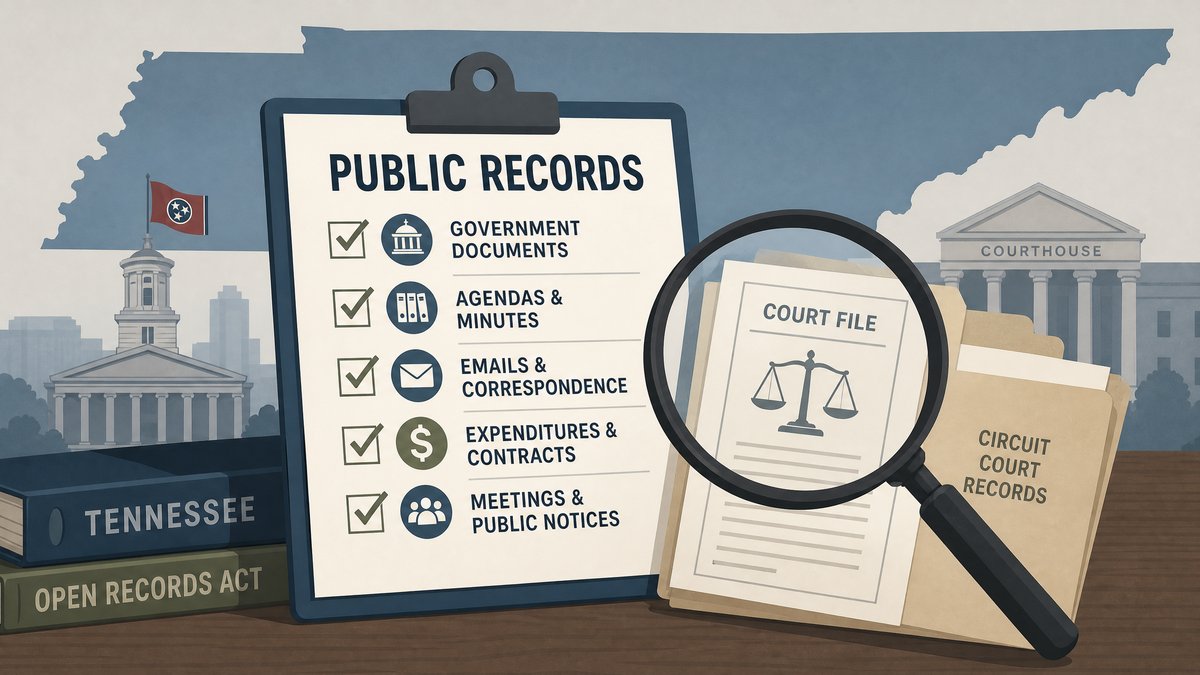
    In a democratic society, transparency and accountability are cornerstones of good governance. For the citizens of Tennessee, the ability to access public records serves as a vital mechanism for holding local courts and government entities accountable. Understanding these rights, as well as the procedures and limitations involved, empowers individuals to engage more effectively with their public institutions. This article provides an explainer on the framework governing public records access in Tennessee, drawing directly from state law and Supreme Court rules.

    Understanding the Tennessee Public Records Act

    The foundation of public records access in Tennessee is laid out in the Tennessee Public Records Act (TCA § 10-7-503). This crucial piece of legislation broadly defines what constitutes a public record, ensuring a wide scope of accessibility for citizens. According to the Act, public records encompass virtually all documents, papers, electronic data, and other materials that are either made or received by governmental entities in connection with their official business. This expansive definition means that a vast array of information generated or handled by state and local government bodies falls under the purview of public access.

    Under this Act, citizens of Tennessee are granted the fundamental right to inspect these public records during regular business hours. This right is not absolute, however, as the Act also acknowledges that certain records may be specifically exempted from public disclosure by other state laws. These exemptions are typically in place to protect privacy, ensure ongoing investigations, or safeguard sensitive governmental operations.

    Person seen from behind writing a checklist on paper beside a laptop, notebooks, stacked books and a coffee mug on a wood desk.
    An example of organizing a checklist and files at a desk while reviewing records on a laptop, illustrating preparation steps for public-records requests.

    Governmental entities, through their records custodians, bear a significant responsibility in facilitating this access. When a request for public records is made, custodians are obligated to act promptly. They must either make the non-exempt records available without undue delay or provide a written denial of the request, along with a clear timeline for when the records will be made available, all within seven business days of receiving the request. This provision is designed to prevent unnecessary delays and ensure timely access to information.

    Accessing Court Records: Tennessee Supreme Court Rule 34

    While the Tennessee Public Records Act provides a general framework, public access to court records is further clarified and governed by Tennessee Supreme Court Rule 34. This rule recognizes the unique nature of judicial documents and categorizes them into three distinct types: Case Records, Administrative Records, and Judicial Records. This categorization helps to delineate which court-related information is publicly accessible and which is not.

    Person at a wooden table writing in a notebook next to an open laptop with blurred text, calendar pad and folder.
    Study table with laptop, notebook and law books, suggesting organization and tracking practices for local court records.

    Rule 34 also specifies certain types of court records that are explicitly not public. These non-public records include, but are not limited to, unpublished drafts of judicial opinions and internal case management information. The rationale behind these exemptions often relates to protecting the deliberative process of the judiciary, ensuring the integrity of ongoing legal proceedings, or safeguarding personal information that is not relevant to the public interest in a specific case. Understanding these distinctions is crucial for anyone seeking information from the state’s judicial system.

    Making a Public Records Request

    To ensure an efficient and successful public records request, individuals must ensure their requests are sufficiently detailed. The request must enable the governmental entity to identify the responsive records without undue burden. Vague or overly broad requests may be denied or require clarification, leading to delays. It is advisable to be as specific as possible regarding the documents, dates, and subjects involved.

    Governmental entities are permitted to charge reasonable costs for copies of public records. These fees are typically intended to cover the actual expenses associated with duplicating the records, such as paper, printing, or electronic media. However, these costs must be reasonable and should not be used as a barrier to access.

    A person seen from behind writing in a notebook while seated in wooden gallery benches of a courtroom, with several blurred figures at the front.
    An audience member taking notes in a courtroom underscores the value of attending proceedings to gather details for public-records tracking.

    It is also important to note that the Act includes provisions to prevent abuse of the public records process. Intentional disruption of government operations through records requests can lead to legal consequences, including injunctions. This measure is in place to balance the public’s right to know with the need for governmental entities to perform their duties without malicious interference.

    Important Considerations and Limitations

    While the Tennessee Public Records Act and Supreme Court Rule 34 provide a robust framework for public access, it is essential to remember that specific exemptions and procedures may apply depending on the nature of the record and the governmental entity involved. The legal landscape surrounding public records can be complex, with nuances that may not be immediately apparent.

    This article aims to inform the public about their rights and the general processes involved in requesting public records in Tennessee. It is presented as public-interest journalism, focusing on neutral and objective information derived from the cited statutes and rules. It deliberately avoids partisan advocacy or characterization of individuals or cases beyond what is explicitly stated in the primary sources.

    Wooden desk with a magnifying glass, stacked manila file folders, open planner, laptop, checklist clipboard and pencil.
    A checklist pad with folders, a laptop and magnifying glass suggests tools for organizing public-records searches and tracking sources.

    Primary Sources

    Note: This article provides public-interest journalism and general information about Tennessee legal processes. It is not legal advice. If you have a specific legal question, consult a qualified attorney.

    Related reading: focused Tennessee public-records request.

  • Sealed Records, Protective Orders, and Why an Open Case Is Not Always an Open File

    Sealed Records, Protective Orders, and Why an Open Case Is Not Always an Open File

    Sealed Records, Protective Orders, and Why an Open Case Is Not Always an Open File

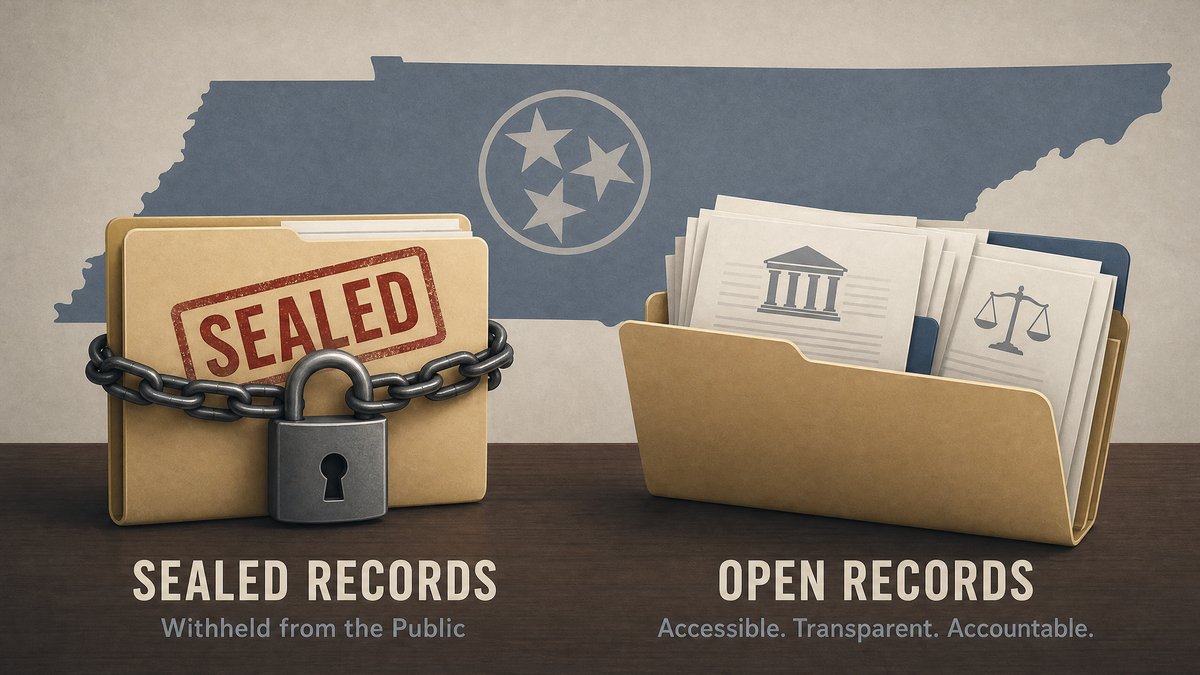
    Open courts support transparency and public accountability. Court proceedings and many court records are generally accessible to the public, but that principle is not absolute. Sealed records and protective orders can limit disclosure of particular information. Understanding the distinction matters for readers, litigants, and journalists who want to report accurately from the public record.

    The Presumption of Openness in Tennessee Courts

    Tennessee Supreme Court Rule 34 establishes a strong presumption that court records are public. The rule gives the public a right to inspect records maintained by courts unless another statute, court rule, or court order provides otherwise. This default promotes public oversight of the justice system, but it does not make every document in every case broadly available for redistribution.

    A manila folder lying on a polished wooden service counter beside a dark plastic document tray under a frosted glass partition.
    A service counter with a folder and document tray evokes the physical exchange of documents at a public service window.

    Rule 34 also recognizes limitations. A record may be protected from disclosure by law, rule, or court order. Those limits are an important part of a responsible review of any docket or filing.

    Sealed Records: When Privacy Outweighs Public Scrutiny

    A sealed record is a document or case material that a court has ordered to be kept confidential. Tennessee appellate Rule 15 addresses filing documents under seal and recognizes that trial-court sealing can carry into the appellate court unless the appellate court orders otherwise. Sealing requires an individualized court determination; it is not created merely because parties agree that material is confidential.

    Courts may consider interests such as the protection of trade secrets, highly sensitive personal information, information about minors, safety concerns, and the integrity of an ongoing investigation. The central question is whether a sufficiently important interest outweighs public access and whether a less restrictive alternative can protect that interest.

    Blank lined notebook with ribbon bookmark, pen, a manila folder holding a heavily redacted sheet, and a magnifying glass on a wooden desk.
    A partially redacted document sits in a folder beside a notebook and magnifying glass, illustrating issues of document privacy and access.

    Protective Orders: Safeguarding Information During Litigation

    Protective orders serve a different function. They are commonly used during discovery to govern how parties handle sensitive information exchanged in litigation. Tennessee’s civil rules, like federal practice, allow courts to address information that could create annoyance, embarrassment, oppression, or undue burden if disclosed without safeguards.

    A protective order can specify who may see confidential material, how it may be used, and how it must be returned or destroyed. It does not necessarily seal an entire case file. That distinction is essential: a document marked confidential in discovery and a document sealed from public court access are related but not identical concepts.

    Table with an open manila folder, two pencils, a clear vertical divider, a closed folder and a black notebook, with a chair and cabinets behind.
    An arranged reading table with folders and a clear divider visually represents how access to files can be structured even when a case is publicly open.

    Allegations Versus Verified Facts

    In legal journalism, a court filing may contain claims and accusations that have not been proved. Responsible reporting uses precise attribution: “the complaint alleges,” “the response denies,” or “the court found.” That language helps readers distinguish a party’s position from a judicial finding, especially where the underlying documents involve sensitive personal information or reputational harm.

    A Practical Review Before Sharing

    Before sharing a document, check the docket for sealing or access orders; retain any existing redactions; determine whether a protective order or other limitation applies; identify the document’s procedural context; and consider whether a narrow quotation or accurate summary would serve the public interest with less risk. If a filing appears sealed, restricted, or unusually sensitive, seek qualified legal and editorial review rather than treating public-interest reporting as a reason to disregard a court order.

    Disclaimer

    This article provides general information about legal topics and is not legal advice. For advice on a specific dispute, filing, or court order, consult a qualified attorney.

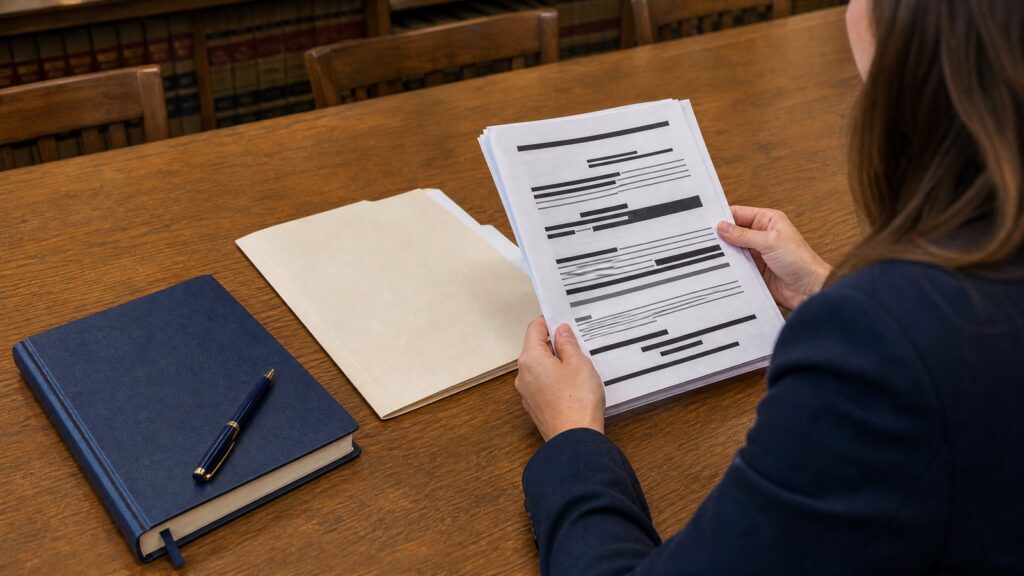
    Person holding a stack of printed pages with heavy black redactions, folder, blue notebook and pen on a wooden table, shelves behind.
    A reader examines heavily redacted pages beside a folder and notebook, illustrating how sealed or redacted records can limit access even in public cases.

    Sources

    Related reading: questions to ask before sharing court filings online.

  • How to Make a Focused Tennessee Public-Records Request

    How to Make a Focused Tennessee Public-Records Request

    How to Make a Focused Tennessee Public-Records Request

    In a democratic society, transparency and accountability are paramount. For the citizens of Tennessee, the Tennessee Public Records Act serves as a vital instrument in upholding these principles, granting individuals the right to inspect and copy public records. Understanding how to effectively utilize this act, particularly by crafting a focused public records request, is crucial for ensuring governmental entities uphold their obligations and for citizens to exercise their fundamental rights.

    The Tennessee Public Records Act broadly defines public records to include all documents, papers, letters, maps, books, photographs, microfilms, electronic data, and other materials made or received by any governmental entity. This expansive definition ensures that a wide array of information is accessible to the public, fostering an informed citizenry.

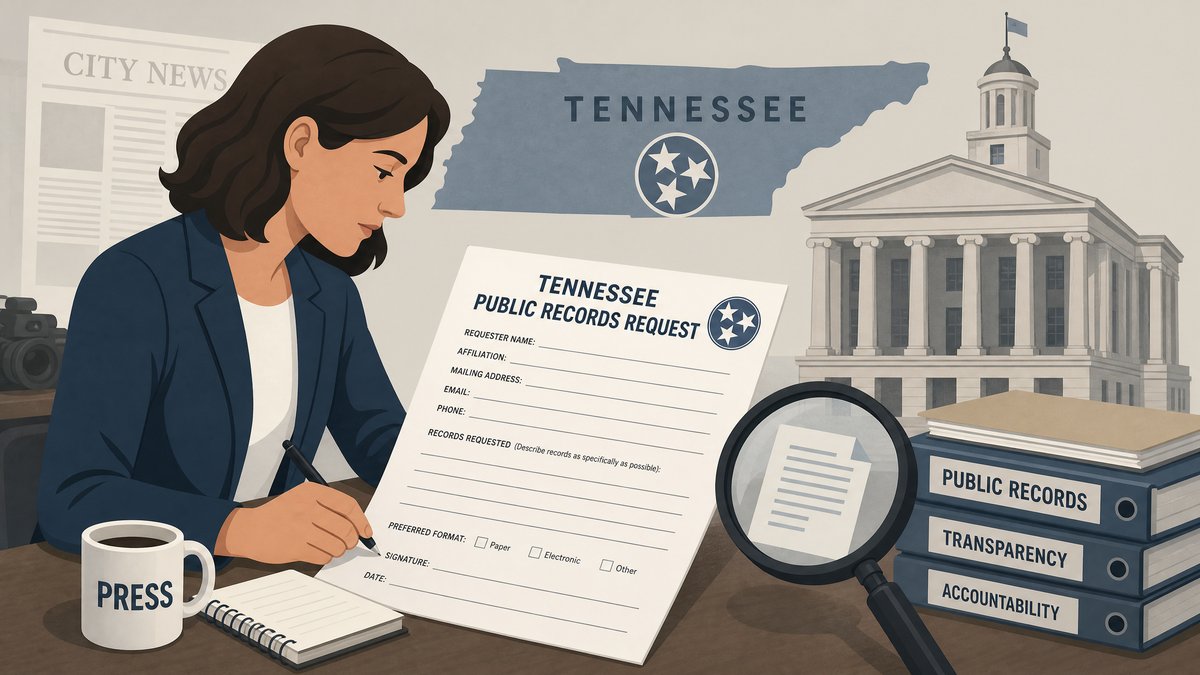
    A neatly organized Tennessee public-records request packet with a laptop, magnifying glass, and the State Capitol in the background.
    A focused request helps an agency identify the records being sought.

    Crafting a Focused Request: Precision is Key

    While the right to access public records is clear, the responsibility lies with the requestor to make a sufficiently detailed request. A common misconception is that governmental entities are required to compile information or create new records in response to a request. This is not the case. Instead, requests must be specific enough to allow the governmental entity to identify and locate the particular records being sought. For instance, instead of asking for “all information about a project,” a focused request would specify “all emails, contracts, and meeting minutes related to the [Specific Project Name] between [Start Date] and [End Date].”

    The emphasis on specificity is not merely bureaucratic; it ensures efficiency and prevents undue burden on governmental resources. By clearly articulating what records are desired, citizens facilitate a smoother and quicker response process, ultimately benefiting both parties.

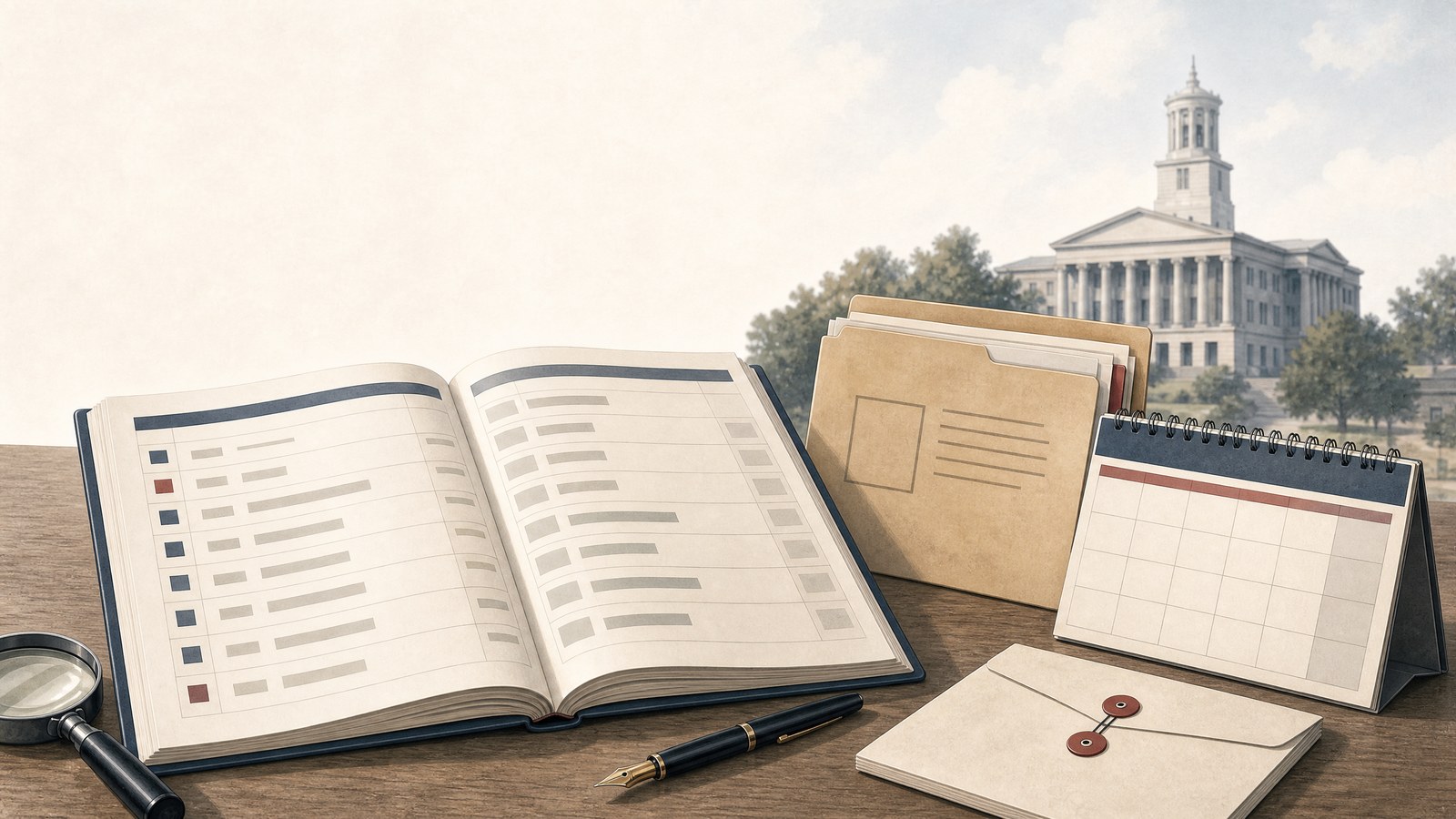
    A records-request planning desk with a date-range calendar, document folders, and a checklist for narrowing a Tennessee request.
    Specific document types and date ranges make a request easier to process.

    Understanding Costs and Response Times

    Accessing public records in Tennessee is generally designed to be accessible. Inspection of public records is typically free of charge. However, governmental entities are permitted to charge reasonable fees for copies of records. These charges are intended to cover the actual cost of materials and labor involved in producing the copies. Before fulfilling a request that involves charges, the governmental entity is obligated to provide the requestor with an estimate of these costs. This allows citizens to make informed decisions about proceeding with their request.

    Governmental entities also have clear obligations regarding response times. Upon receiving a public records request, they must respond within seven business days. This response can take one of three forms: providing the requested records, denying the request with a clear legal basis for the denial, or providing a written explanation of the time reasonably necessary to produce the records. This structured response framework ensures that requests are not ignored and that citizens receive timely communication regarding their inquiries.

    A Tennessee public-records response workflow with a calendar, documents, a cost estimate, and a courthouse in the background.
    Clear expectations about timing and costs support a more informed request.

    Who Can Request Public Records?

    It is important to note that the rights granted under the Tennessee Public Records Act are specifically extended to citizens of Tennessee. Governmental entities may, therefore, require proof of identification to verify the requestor’s eligibility. This provision helps ensure that the act serves its intended purpose of empowering the state’s own citizens with access to their government’s records.

    A Tennessee public-records file beside a privacy shield, identification card, and courthouse, illustrating access considerations.
    Access is strongest when public records and privacy protections are considered together.

    Important Considerations

    This article provides general information about the Tennessee Public Records Act and should not be construed as legal advice. Readers should consult with a legal professional for specific guidance regarding their individual situations. The information presented is based on current statutes and policies, which are subject to change. It is crucial to ensure all citations to Tennessee Code Annotated are accurate and up-to-date at the time of publication.

    Primary Sources

    Note: This article provides public-interest journalism and general information about Tennessee legal processes. It is not legal advice. If you have a specific legal question, consult a qualified attorney.

    Related reading: court and government records checklist.

  • Friday Accountability Briefing: Five Public Tennessee Legal Documents Worth Watching

    Friday Accountability Briefing: Five Public Tennessee Legal Documents Worth Watching

    Accountability reporting begins with documents. Public records do not answer every question, and a filing or bill is not proof of an allegation. But primary materials can help readers see what government bodies and courts have actually done, what remains unresolved, and where to look next.

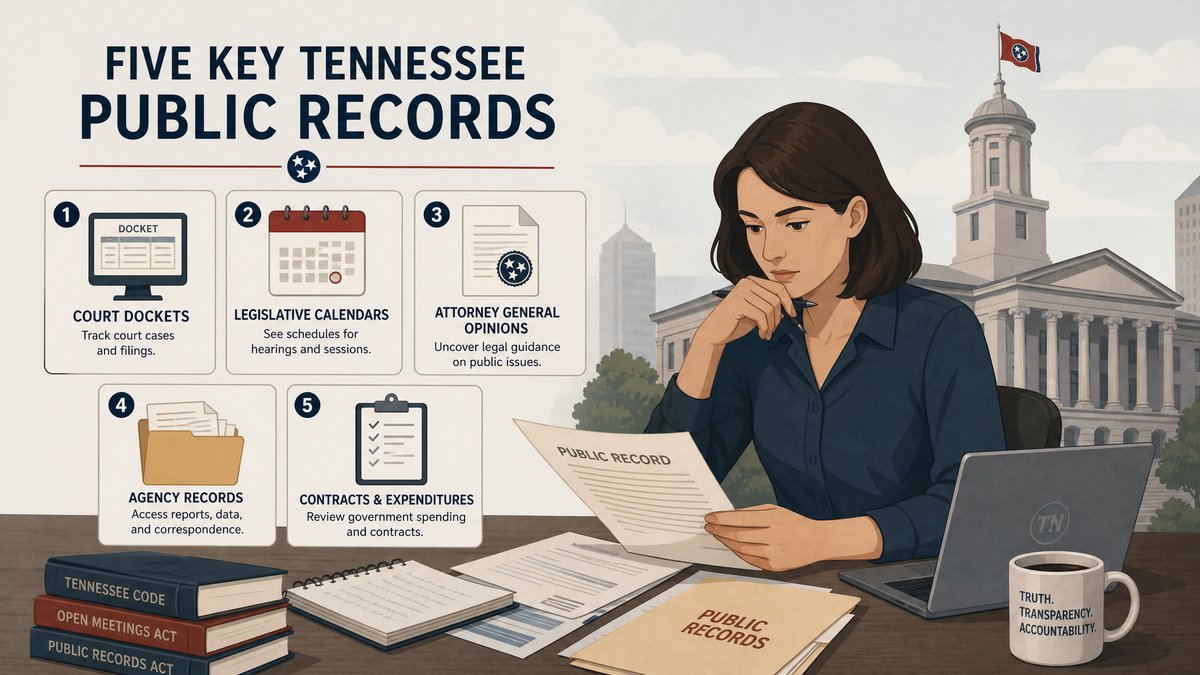
    Here are five useful Tennessee document types for readers who want to follow legal and civic issues with care.

    A carefully organized research desk with Tennessee court documents, public-records papers, legislative materials, a magnifying glass, and a notebook.
    Public documents provide the foundation for accurate accountability reporting.

    1. A court docket

    A docket is the court’s running list of events in a case. It can show filings, hearing dates, orders, and case-status entries. It is a roadmap—not a substitute for reading the documents themselves. A docket entry may identify that a motion was filed, but the motion and resulting order will usually provide the context needed to describe it accurately.

    When writing from a docket, record the court, case number, date, and document title. Separate a party’s allegation from a court’s finding. If access is limited or a record is sealed, do not infer what the unavailable material says.

    An open court docket beside a case file and calendar, representing the timeline of filings, hearings, orders, and case-status entries.
    A court docket is a roadmap to a case, not a substitute for reading the underlying filings and orders.

    2. A court order or opinion

    An order explains a court’s decision on a motion or procedural question. An appellate opinion may provide a fuller legal analysis and is often the most reliable starting point for explaining a rule or precedent. Read the holding before summarizing the case. Pay attention to the precise question the court answered, the standard it applied, and whether the decision is final or subject to further review.

    The Tennessee judiciary publishes opinions and many other resources at tncourts.gov. An official decision is stronger reporting support than a summary or a social-media characterization of the case.

    3. A public-records request and response

    Tennessee’s Public Records Act provides a framework for inspecting or receiving copies of public records maintained by governmental entities, subject to statutory exceptions. For court records, Supreme Court Rule 34 addresses public access and identifies categories of records that are confidential or otherwise unavailable. A records request should be specific, respectful, and tailored to documents that the agency or court actually maintains.

    A denial or redaction is not proof of misconduct. It may reflect a lawful exception, privacy protection, court order, or an administrative issue. Good reporting asks what legal basis was cited and preserves the correspondence for readers to evaluate.

    A Tennessee public-records request and response paperwork set on a desk with files and a privacy shield.
    Public-records correspondence can document what was requested, what was produced, and what was withheld.

    4. A bill and its history

    Before a proposal becomes law, readers can follow the bill number, sponsors, amendments, committee actions, fiscal notes, and votes. The Tennessee General Assembly’s website provides bill information and legislative materials. Tracking a bill’s history helps distinguish a proposal from enacted law—and helps journalists identify the version that was actually considered by a committee or passed by a chamber.

    Tennessee’s Constitution requires bills to be considered and passed on three different days in each house before becoming law, subject to the state’s constitutional process. A bill may be amended many times along the way, which is why the final enrolled version matters.

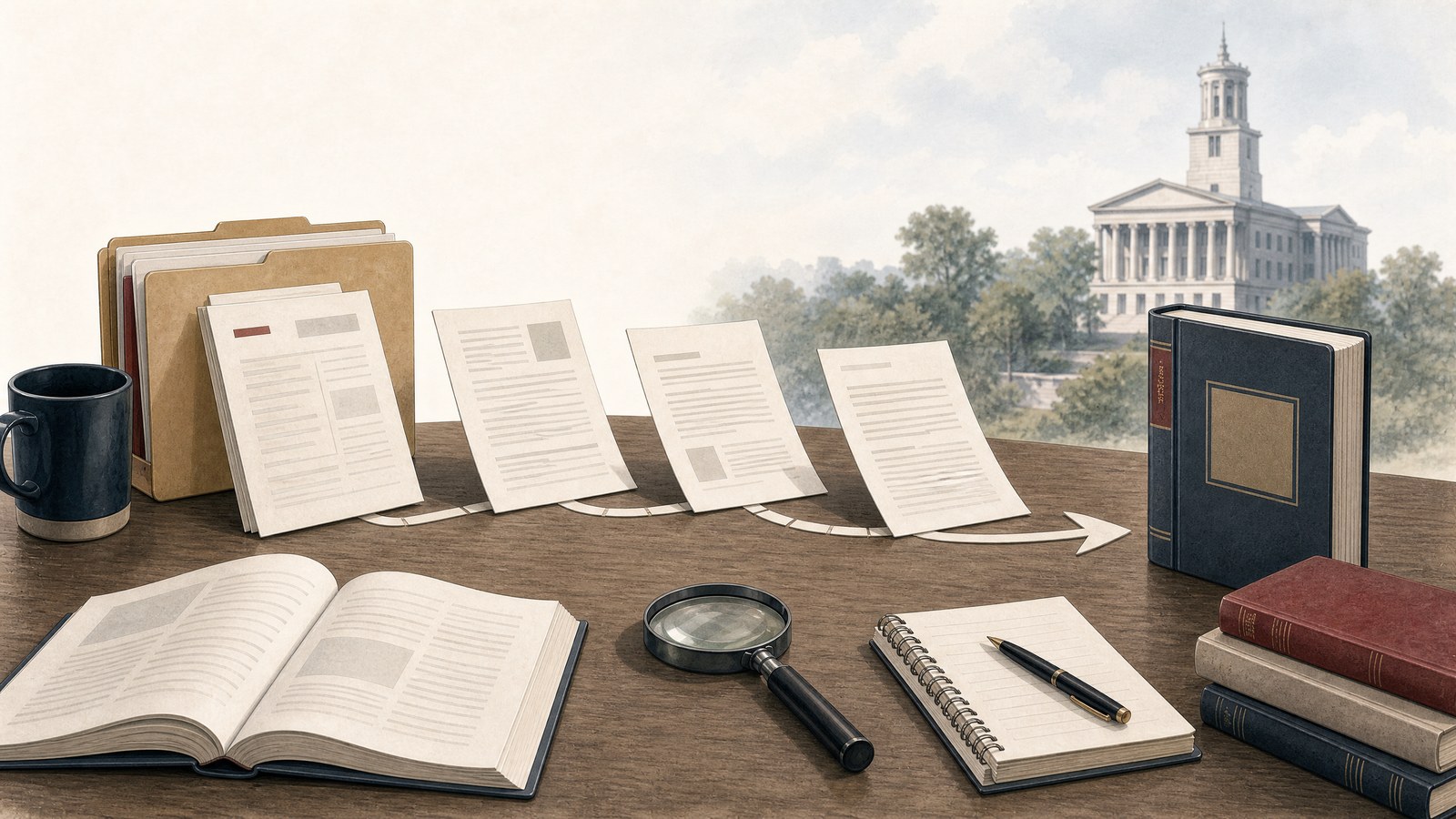
    A Tennessee legislative bill-tracking path from documents to a bound public chapter, with the State Capitol in the background.
    Bill history shows how a proposal moved from filing through committee action, votes, and final enactment.

    5. A public chapter

    Once legislation becomes law, it is assigned a public chapter number and later incorporated into the Tennessee Code Annotated when appropriate. The public chapter is the most direct record of what the legislature enacted at that time. A responsible explainer links to the public chapter, describes the effective date, and checks whether the provision has later been amended or challenged.

    A simple verification checklist

    • Identify the primary document and its official source.
    • State the date, issuing body, and procedural posture.
    • Distinguish allegations, arguments, evidence, rulings, and final judgments.
    • Link readers to documents whenever possible.
    • Correct the record promptly if new documentation changes the story.

    Document-based reporting is not glamorous, but it is durable. It gives readers a way to check a story’s foundations and makes public debate more accurate.

    Primary sources

    1. Tennessee Supreme Court Rule 34: Public Access to Court Records.
    2. Tennessee General Assembly: How a Bill Becomes a Law.
    3. Tennessee Courts.

    Editorial note: This briefing provides general public-information guidance. It is not legal advice and does not replace the applicable rules, statutes, or court orders.

    Related reading: Tennessee public-records checklist.

  • A Six-Week Public-Interest Legal Newsroom Review Checklist

    A Six-Week Public-Interest Legal Newsroom Review Checklist

    A Six-Week Public-Interest Legal Newsroom Review Checklist

    Legal journalism needs more than a compelling headline. It needs repeatable practices for checking accuracy, minimizing avoidable harm, maintaining editorial independence, and explaining legal documents clearly. This six-week checklist gives a small newsroom a practical review cycle before it scales publishing volume.

    Use the cycle as a working editorial meeting, not merely as a compliance exercise. Assign one person to gather records, another to read for clarity and fairness, and a final reviewer to check links, disclosures, and corrections information. Keeping a short written record of the decisions made each week helps the newsroom explain its process later and spot gaps before publication.

    Week 1: Confirm Editorial Foundations

    A journalist reviewing editorial policy documents on a desk

    Review the mission statement, editorial policy, corrections process, and disclosure language. The Society of Professional Journalists’ Code of Ethics identifies core principles that fit this work: seek truth and report it, minimize harm, act independently, and be accountable and transparent. Make sure every contributor understands the difference between news reporting, analysis, opinion, and legal advice.

    Set a practical assignment standard before reporting begins. Identify the public-interest question the story will answer, the records needed to answer it, and the language that should trigger an editor’s review. A clear foundation keeps a newsroom from drifting into advocacy, speculation, or unexplained conclusions when a fast-moving legal story creates pressure to publish quickly.

    Week 2: Check Sources and Records

    A researcher verifying public court records on a laptop

    For each legal story, identify the best available primary source: an order, opinion, Tennessee civil docket entry, statute, rule, hearing recording, or official public record. Label allegations as allegations and do not treat a filing as proof. Note whether a source is public, whether it is complete, and whether another party has had an opportunity to respond.

    Create a simple source log that records the document name, date, court or agency, docket reference, and the passage supporting each important statement. For Tennessee coverage, consult Rule 34 on Public Access to Court Records to understand the public-access framework and its exceptions. When facts come from a secondary source, trace them back to the original record where possible. If a source is unavailable or disputed, say so plainly rather than filling the gap with assumption.

    For federal coverage, use the U.S. Courts’ federal court-document access guide to distinguish commonly available filings from records that may be sealed or otherwise restricted.

    Week 3: Review Privacy and Harm

    A legal document with sensitive personal information redacted

    Consider whether publishing a name, address, minor detail, or allegation is necessary to serve the public interest. Ask whether the person is a public official, whether the information appears in an accessible public record, and whether the audience needs the detail to understand the story. Avoid sensational language and remove unnecessary identifying information. For a companion framework, see Five Questions to Ask Before Sharing a Court Filing Online.

    Pause for a second review when a story involves children, victims, medical information, home addresses, or records that are technically public but easily misunderstood. The question is not only whether the newsroom can repeat a detail; it is whether repeating it adds meaningful context. For general information on structuring this kind of review, consult the Reporters Committee’s Reporter’s Guide to Pre-Publication Review; it is not a substitute for legal advice. When withholding a nonessential detail, preserve the explanation that allows readers to understand the reporting without creating avoidable exposure.

    Week 4: Evaluate Legal-Journalism Guardrails

    A team reviewing an article draft against legal journalism standards

    Review attribution, headlines, images, and summaries for defamation-risk signals. Opinion should be recognizable as opinion and should rest on disclosed facts. Reporting should fairly describe a court’s procedural posture—what has been alleged, decided, appealed, or dismissed. Avoid using legal terms of art such as “fraud” or “guilty” unless they accurately reflect the record.

    Read the headline, deck, social copy, captions, and pull quotes on their own. A careful article can still mislead if its shortest elements overstate the record. Editors should confirm that each strong characterization is attributed, supported by a document, or clearly framed as analysis. This review is also a good time to ensure that images do not imply facts that the article cannot establish.

    Week 5: Clarify Public Access and Context

    An accessible guide explaining court procedures to the public

    Explain the legal process clearly. Define terms that a general audience might not understand. Provide context about the jurisdiction, the stage of the case, and the practical effect of an order. Whenever possible, link directly to the primary source documents so readers can verify the reporting. For Tennessee-specific background on attending proceedings, readers can consult the Reporters Committee’s Tennessee court-access guide.

    Build each story around the reader’s next question: what happened, what does the document actually do, and what happens next? Spell out dates, deadlines, and procedural steps in plain language. When a docket is difficult to access, describe how readers can locate the relevant record or explain what remains unknown. For Tennessee courtroom coverage, review the official Tennessee Rule 30 media guidelines; the site’s Rule 30 Court-Coverage Request Template offers a practical starting point for a request. Clear context helps the audience distinguish between a filing, a hearing, a ruling, and a final outcome.

    Week 6: Confirm Independence and Accountability

    A newsroom team reviewing independence and accountability practices

    Verify that no outside party, donor, or subject dictated the content of the reporting. Ensure that any relevant conflicts of interest are disclosed to the reader. Confirm that the process for submitting a correction or contacting the newsroom is visible and functional.

    Close the cycle by checking whether the newsroom followed the standards it set in Week 1. If a story required an unusual editorial choice, record the reason and identify whether the policy needs clarification. Publish corrections promptly and explain material changes when they affect a reader’s understanding. Accountability is strongest when it is routine, visible, and applied consistently to stories that are favorable and unfavorable alike.

    Use the Checklist as a Repeatable Practice

    A six-week cycle is not a substitute for careful reporting on any individual story. It is a way to make the newsroom’s standards concrete, searchable, and easier to apply under deadline. Revisit the checklist after major coverage, update it when a new records system or recurring issue appears, and make sure new contributors can use it without relying on informal knowledge alone. Consistent legal journalism earns trust by showing readers how the work is done as well as what the work finds.