Stop Legal Harassment

Court access · Free expression · Accountability

Tag: media law

  • The Fair-Report Privilege: What Tennessee’s High Court Said in Burke v. Sparta

    The Fair-Report Privilege: What Tennessee’s High Court Said in Burke v. Sparta

    The Fair-Report Privilege: What Tennessee’s High Court Said in Burke v. Sparta

    The Tennessee Supreme Court has issued a significant ruling in the case of Jeffery Todd Burke v. Sparta Newspapers, Inc., providing a crucial, and notably narrow, interpretation of the fair report privilege. This decision, handed down on December 5, 2019, clarifies the boundaries of this journalistic protection, particularly in the context of interactions between reporters and government officials, and carries substantial implications for media organizations operating within the state.

    At the heart of the dispute was the question of whether the fair report privilege extends to nonpublic, one-on-one conversations between a newspaper reporter and a government official. The case involved alleged defamatory statements published by Sparta Newspapers, which had initially secured a summary judgment in its favor from a lower court. This initial ruling suggested a broader application of the privilege, encompassing such private interactions.

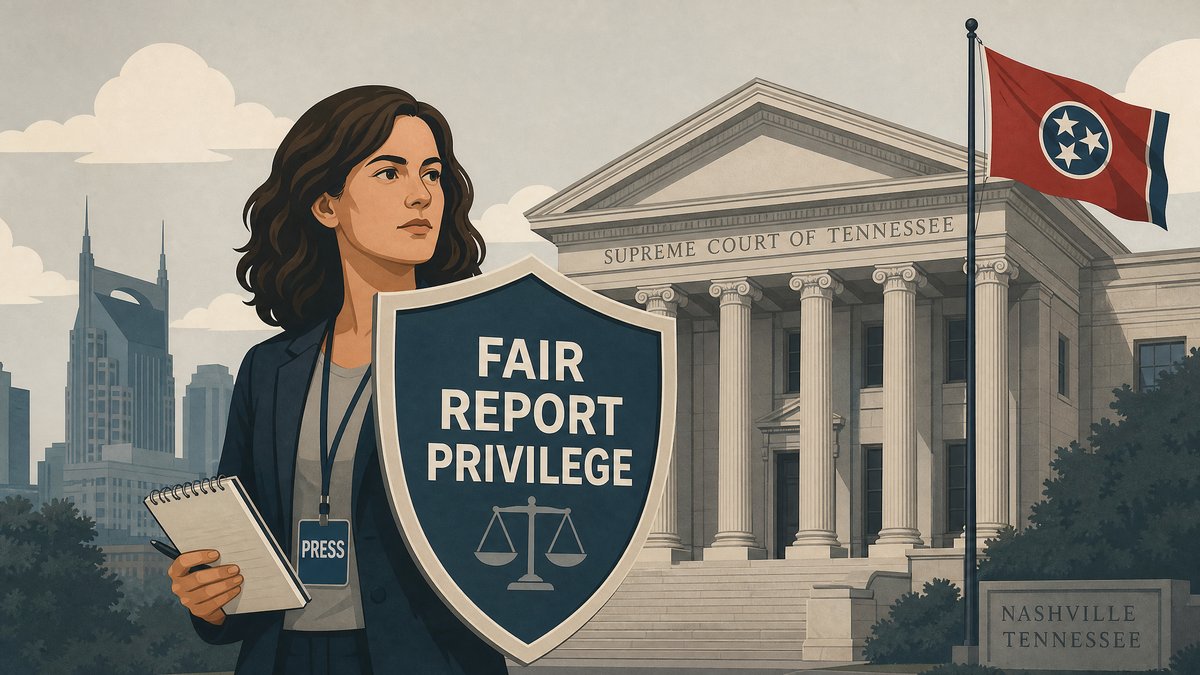
    A reporter takes notes during an open Tennessee government meeting beside a visible public record folder and courthouse setting.
    The fair-report privilege is anchored in reporting on public proceedings and officially released governmental information.

    The Supreme Court’s Narrow Interpretation

    However, the Tennessee Supreme Court reversed the lower court’s summary judgment, unequivocally stating that the fair report privilege does not extend to these types of nonpublic, one-on-one discussions. Even if the government official in question is a public information officer, the privilege, as interpreted by the state’s highest court, does not apply to such private exchanges.

    The Court clarified that the fair report privilege is applicable exclusively to public proceedings or official government actions that have been made public. This distinction is paramount. It means that for a journalist to invoke the fair report privilege as a defense against defamation claims, the reported information must originate from an open, public governmental process or a formally released public record. Private conversations, regardless of the official capacity of the source, fall outside this protective umbrella.

    A public court file and open government records appear beside a private, closed-door conversation to illustrate the difference in source context.
    Public records and proceedings differ fundamentally from private one-on-one conversations when assessing the privilege’s scope.

    This ruling underscores the principle that the privilege is designed to protect the accurate reporting of public governmental affairs, ensuring transparency and public access to official actions. It is not intended to shield reporting based on private disclosures, even if those disclosures come from a government representative.

    Implications for Journalism in Tennessee

    The decision in Burke v. Sparta serves as a critical reminder for journalists in Tennessee regarding the scope of their protections. It necessitates a careful consideration of the source and context of information when reporting on government matters. Relying on private conversations with officials, even those designated as public information officers, for potentially defamatory content without a corresponding public record or proceeding, now carries increased risk.

    A journalist compares a public meeting agenda, official court record, and reporting notes at a careful legal research desk.
    Careful reporting begins with confirming that information comes from accessible public events or official records.

    The Supreme Court’s ruling effectively tightens the criteria for applying the fair report privilege, compelling journalists to ensure that their reporting on governmental activities is directly tied to publicly accessible events or documents. This could lead to a greater emphasis on attending public meetings, reviewing official records, and seeking information that has been formally disseminated or presented in a public forum.

    Following its reversal of the summary judgment, the Tennessee Supreme Court remanded the case for further proceedings. This means the case will return to a lower court to address the alleged defamatory statements, now without the broad application of the fair report privilege that was initially granted.

    In conclusion, the Burke v. Sparta decision marks a significant moment for legal journalism in Tennessee. It establishes a clear, albeit narrow, boundary for the fair report privilege, reinforcing its application to public governmental actions and proceedings while excluding private, one-on-one interactions. Journalists and media organizations must adapt their practices to this clarified legal landscape to ensure their reporting remains within the bounds of this critical protection.
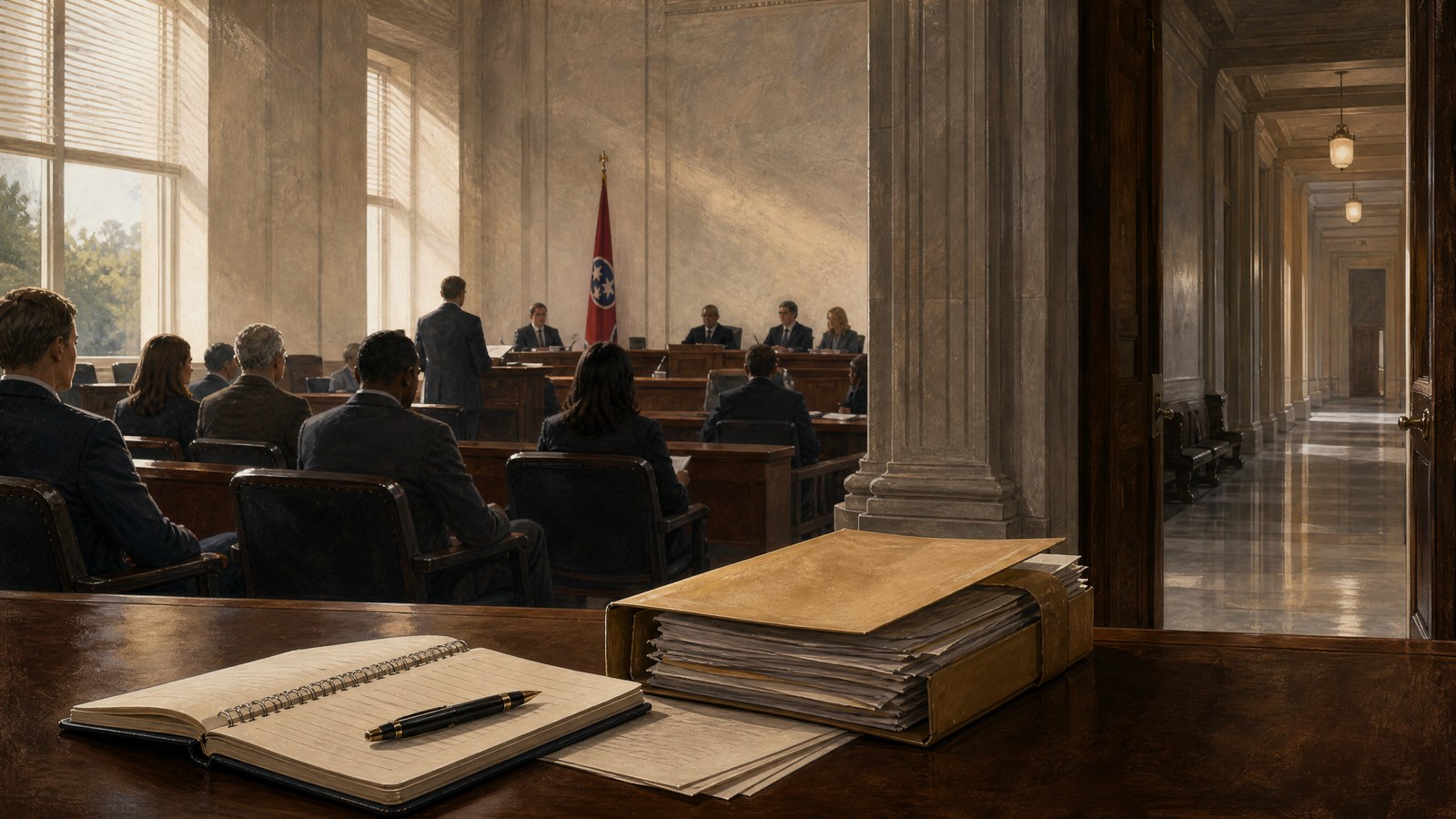
    A Tennessee courtroom and reporter’s notebook frame a clear boundary between open public proceedings and private communication.
    Burke v. Sparta emphasizes a defined boundary: the privilege protects reporting tied to public governmental actions and records.

    Primary Sources

    Note: This article provides public-interest journalism and general information about Tennessee legal processes. It is not legal advice. If you have a specific legal question, consult a qualified attorney.

    Related reading: reporting on pending cases and fair-report privilege.

  • Five Questions to Ask Before Sharing a Court Filing Online

    Five Questions to Ask Before Sharing a Court Filing Online

    Sharing court filings online can illuminate how a dispute is moving through the legal system, but a document’s existence in a case does not make every detail appropriate to amplify. Before a newsroom, advocate, or community member shares a filing, it is worth pausing to ask five practical questions. This general editorial framework is designed to support accurate, fair, and secure public-record reporting; it is not legal advice for a specific case or publication decision.

    A journalist reviewing court filings at a desk before sharing them online.

    1. Is the document publicly available, and has the court limited access?

    Start with the court record itself. Tennessee’s public case-history system can help readers locate case information, but the availability of a docket entry does not necessarily answer every question about a particular document. Some material may be sealed, restricted, redacted, or subject to an order governing use. A filing that is not readily visible to the public should not be reposted merely because someone has obtained a copy. Check the docket, the document’s caption, and any related orders before sharing.

    2. Does the copy contain personal information that should not be amplified?

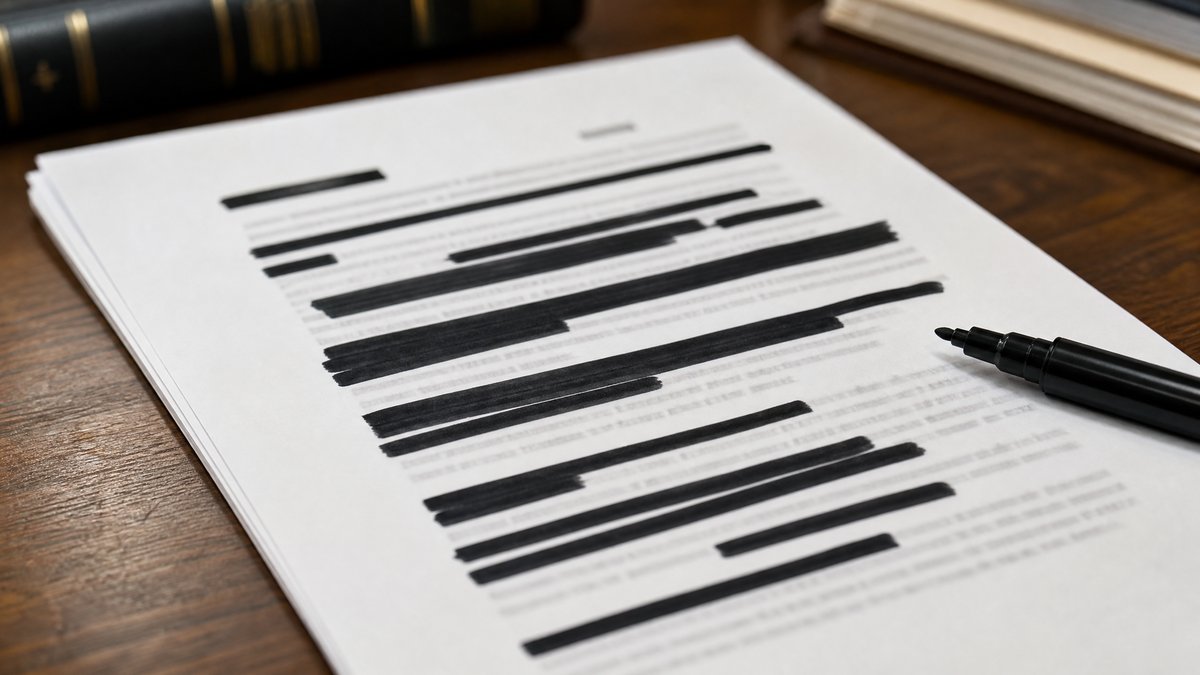
    A hand using a black marker to redact sensitive information on a printed legal document.

    Even a public document can contain information that deserves restraint. Review it for addresses, financial-account details, medical information, information about minors, and other identifiers that could create a safety or privacy risk. Redactions that appear on a court copy should remain in place. If a document appears to disclose protected or obviously sensitive information, do not assume that a public link removes every ethical concern. Consider whether quoting a narrow passage, summarizing accurately, or omitting an identifier would serve the public interest with less harm.

    3. Are allegations clearly labeled as allegations?

    A person typing on a laptop, adding editorial context to legal documents.

    A civil complaint, an affidavit, or a motion often contains claims that have not been proven, tested in court, or accepted by a judge. Sharing these documents without context can mislead readers into treating disputed claims as established facts. When sharing a filing, clearly state its procedural role. Our Journalism Guide provides related resources for clear, responsible public-record reporting. Distinguish between what a party alleges, what a court has found, and what remains in dispute.

    4. Is the document complete, and does it represent the current state of the case?

    A single filing rarely tells the whole story. A complaint may have been amended, a motion may have been denied, or an order may have been overturned on appeal. Before sharing an older document, check the docket to see if subsequent filings change its meaning or relevance. If the document is only part of a larger exchange, consider linking to the full docket or summarizing the procedural history so readers understand the context.

    5. Have you provided a clear path to the source?

    A stack of printed legal documents and public records.

    When sharing a court document, make it easy for readers to verify the information. If the document is available through a public portal, provide the case number, court name, and a direct link or clear instructions on how to find it. If you are hosting a copy, ensure it is clearly labeled and visually distinct from editorial commentary. Providing a clear path to the source builds trust and allows readers to evaluate the material themselves.

    A careful process supports better public-record reporting

    Responsible sharing is not simply a matter of whether a filing can be found online. It means checking the document’s status, protecting sensitive information, describing allegations accurately, and linking readers to a reliable source. A consistent review process helps reporters, advocates, and community members make sharing court filings online more informative without creating avoidable privacy or accuracy harms. Visit the site’s Legal Resources archive for additional public-record guidance. When uncertainty remains, pause, review the record again, and consider seeking guidance appropriate to the circumstances before publishing or reposting the document.