Stop Legal Harassment

Court access · Free expression · Accountability

Tag: court records

  • Tennessee courtroom media coverage: public attendance, camera requests, and Rule 30

    Tennessee courtroom media coverage: public attendance, camera requests, and Rule 30

    This neutral guide outlines Tennessee courtroom media coverage rules for readers seeking public-information context. Reporters, documentarians, and members of the public often want to see how justice is administered in real time. In Tennessee, courtroom access and camera use are guided by statewide rules and the presiding judge. The Tennessee judiciary maintains an official page that explains public attendance and how media can request permission to record under Supreme Court Rule 30. For a single, authoritative overview, see the Tennessee Courts media coverage guidance page at Tennessee Courts media coverage guidance page. This guide summarizes key points for planning coverage and reinforces that court-specific directions always control in the room.

    Public attendance: the starting point for access
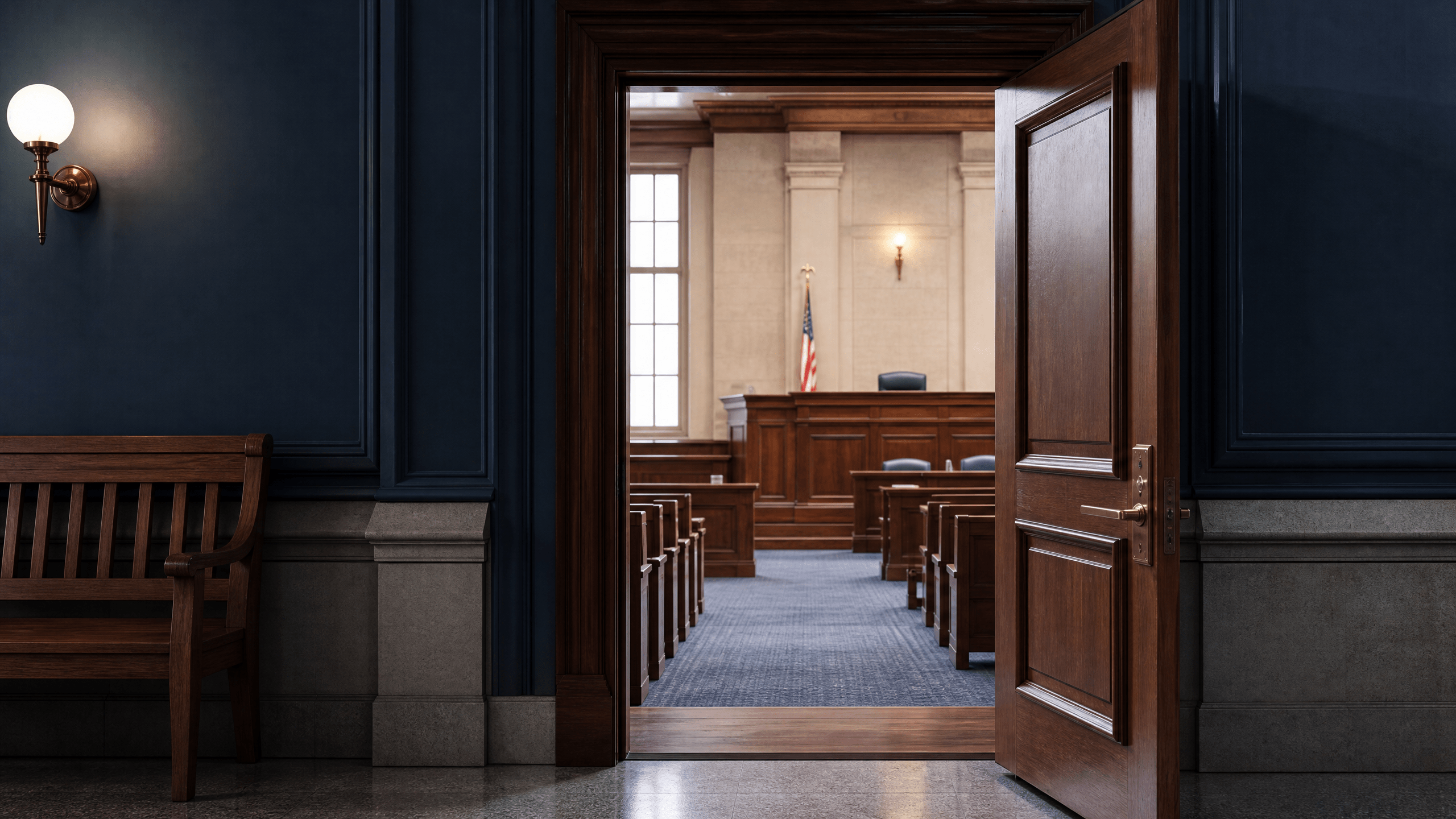
    An open wooden door leading into an empty courtroom, symbolizing public access.
    Open courts: a neutral illustration for public attendance basics.

    As a general matter, proceedings in open court are public events unless a law or order limits attendance. The judiciary’s media guidance emphasizes that the public, including journalists, may attend, and that any request to photograph, video, or record is a separate step subject to Rule 30 and the judge’s control of the courtroom. Even when a hearing is open, seats can be limited by space or security needs, and decorum rules apply to everyone in the gallery.

    Courts typically expect devices to be silent, movement to be minimal, and no disruptions during testimony or argument. If a judge or courtroom officer announces special instructions before a session begins—such as where people may sit, when equipment can be moved, or how to address the court—those instructions govern in that courtroom. If you are uncertain about any direction, ask the clerk, bailiff, or court coordinator before proceedings begin.

    Rule 30: the framework for cameras and recording

    A blurred rulebook and a microphone on a desk, illustrating the procedural framework for recording.
    The Rule 30 framework: balancing access and decorum.

    Tennessee Supreme Court Rule 30 supplies the statewide framework for cameras, audio recording, and other electronic coverage in courtrooms. According to the judiciary’s summary, the presiding judge decides whether to allow coverage and sets the conditions; permission is not automatic. Requests and any permissions are designed to preserve order and fairness, and equipment and operators must not interfere with the proceeding or with participants. For a concise explanation of how the framework works, consult the official Rule 30 media coverage information from the Tennessee Courts at official media coverage information from Tennessee Courts.

    Key ideas reflected in the guidance include judicial discretion, the requirement to seek approval in advance, and the possibility of conditions such as equipment placement, limits on operator movement, and coordination among outlets. The rule and other law may restrict coverage of particular proceedings or participants. Judges may pause, modify, or end coverage that violates conditions or disrupts the proceeding.

    How to request camera or audio coverage

    A pen resting on a blank formal request form, illustrating the administrative step of asking for camera access.
    Requesting access: a neutral illustration for the Rule 30 filing process.

    The Tennessee judiciary’s page outlines how to seek permission under Rule 30 and underscores that requests go to the court where the proceeding will occur. Procedures can vary by court level and case type, so always check the local clerk or coordinator in addition to the statewide guidance provided here: step-by-step coverage request details on the judiciary’s page.

    1. Identify the proceeding: Gather the case name or number, date, time, and courtroom so your request reaches the correct judge and staff.
    2. Submit your request in advance: Ask early enough for the court to review logistics and set any conditions. If a hearing is set on short notice, contact the court as soon as you can.
    3. Describe your setup: Be specific about cameras, microphones, and the number of operators. Courts use this information to manage placement and avoid disruption.
    4. Plan for pooling: Be prepared to coordinate with other outlets if the court limits the number of cameras or operators and requires a shared feed.
    5. Confirm on arrival: Check in with courtroom staff before setting up, and stay within any marked or described media areas.

    What judges may consider when ruling on a request

    A gavel and a blank media badge lanyard on a desk, symbolizing the court’s authority over press access.
    Judicial discretion: a neutral illustration for court rulings on media requests.

    While each courtroom is different, the statewide framework and the judiciary’s summary highlight themes that can influence whether and how coverage is permitted:

    • Fairness and order: Protecting the integrity of the proceeding is paramount. Judges can limit or condition coverage to prevent distractions or prejudice.
    • Privacy and safety interests: Rules or statutes can restrict coverage in matters involving sensitive evidence or vulnerable participants if required by law.
    • Space and logistics: The physical layout of a courtroom affects equipment placement, operator movement, and whether pooling is necessary.
    • Compliance history: A demonstrated ability to follow court directions and cooperate with other media can help facilitate ongoing access.

    Common limits and practices under Rule 30

    A video camera on a tripod positioned discreetly in an empty courtroom.
    Decorum and pooling: a neutral illustration for common camera limits.

    Because the emphasis is on minimizing disruption, permissions granted under the statewide framework frequently include practical limits. Courts may designate fixed camera positions, require that cables be secured, and restrict movement during testimony or argument. Judges may also limit the timing or scope of recording to ensure that proceedings continue efficiently and with appropriate decorum.

    Media organizations should anticipate the possibility of pooled coverage and work out a single plan for camera positions and audio routing before a session begins. If the court identifies categories of participants or exhibits that cannot be recorded, comply promptly and coordinate with court staff to avoid inadvertent coverage. When a judge announces new conditions during the day—such as narrowing where equipment may be placed—adjust immediately and confirm any questions before continuing.

    Practical tips for reporters and producers

    Short editorial visual: courtroom access, camera requests, and discreet media setup.

    Download the video transcript (TXT).

    • Do your homework: Review the statewide explanation in advance and bring a copy of your request so you can confirm what you proposed if questions arise. This guide outlines Tennessee courtroom media coverage rules, but the court’s directions control.
    • Arrive early: Build in time for security screening, check-in with the clerk or bailiff, and quiet setup within any marked media area.
    • Coordinate with colleagues: If multiple outlets plan to cover the same hearing, discuss pooling and signal paths in advance so the court is presented with a single workable plan.
    • Keep a low profile: Use quiet, non-flashing gear, secure cables, and avoid movement during testimony or argument unless the court approves and it can be done without distraction.
    • Listen for updates: If the judge announces new conditions or narrows the scope of coverage, adjust immediately and confirm any questions with court staff.

    Where to find authoritative guidance

    The Tennessee judiciary maintains a single page that gathers the key points about public attendance and media coverage under the statewide framework and points media to the correct process for permission. Start here and check back for updates: Tennessee Courts official media coverage guidance.

    Sources

    This article provides general information, not legal advice. Court rules, records, and legal consequences depend on the facts, the forum, and current law; consult a qualified lawyer for advice about a specific situation.


    General-information disclaimer: This article is provided for journalism and general information only. It is not legal advice and does not create an attorney-client relationship.
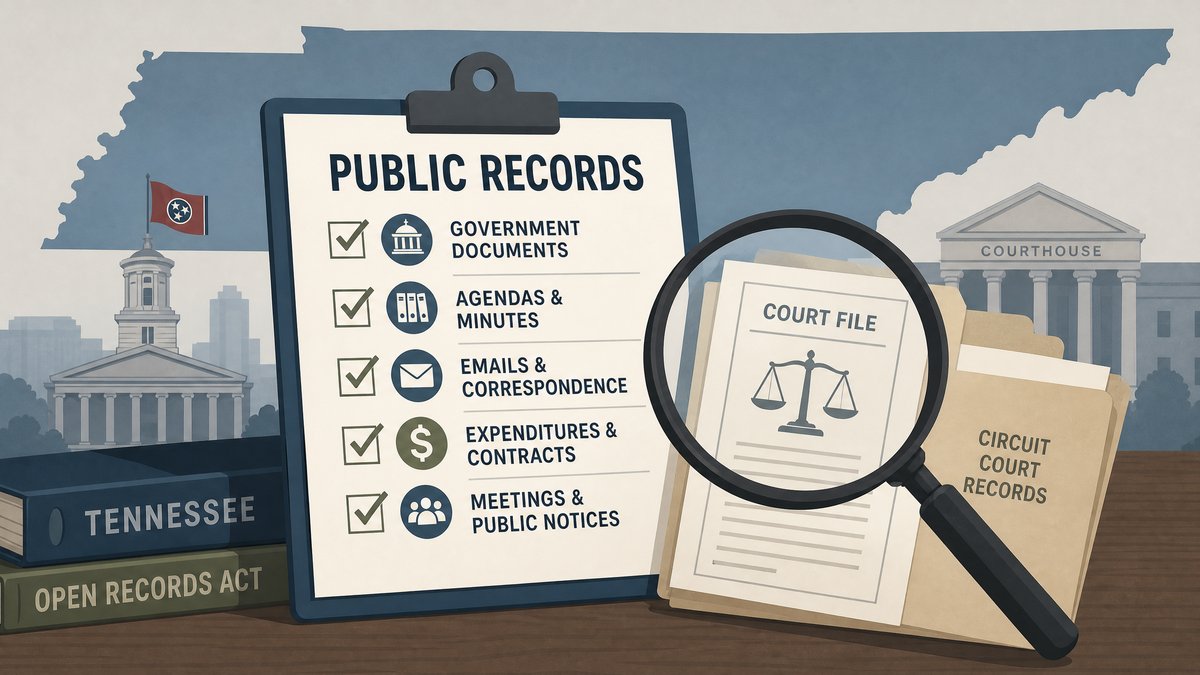

  • A Public-Records Checklist for Tracking Local Courts and Government

    A Public-Records Checklist for Tracking Local Courts and Government

    In a democratic society, transparency and accountability are cornerstones of good governance. For the citizens of Tennessee, the ability to access public records serves as a vital mechanism for holding local courts and government entities accountable. Understanding these rights, as well as the procedures and limitations involved, empowers individuals to engage more effectively with their public institutions. This article provides an explainer on the framework governing public records access in Tennessee, drawing directly from state law and Supreme Court rules.

    Understanding the Tennessee Public Records Act

    The foundation of public records access in Tennessee is laid out in the Tennessee Public Records Act (TCA § 10-7-503). This crucial piece of legislation broadly defines what constitutes a public record, ensuring a wide scope of accessibility for citizens. According to the Act, public records encompass virtually all documents, papers, electronic data, and other materials that are either made or received by governmental entities in connection with their official business. This expansive definition means that a vast array of information generated or handled by state and local government bodies falls under the purview of public access.

    Under this Act, citizens of Tennessee are granted the fundamental right to inspect these public records during regular business hours. This right is not absolute, however, as the Act also acknowledges that certain records may be specifically exempted from public disclosure by other state laws. These exemptions are typically in place to protect privacy, ensure ongoing investigations, or safeguard sensitive governmental operations.

    Person seen from behind writing a checklist on paper beside a laptop, notebooks, stacked books and a coffee mug on a wood desk.
    An example of organizing a checklist and files at a desk while reviewing records on a laptop, illustrating preparation steps for public-records requests.

    Governmental entities, through their records custodians, bear a significant responsibility in facilitating this access. When a request for public records is made, custodians are obligated to act promptly. They must either make the non-exempt records available without undue delay or provide a written denial of the request, along with a clear timeline for when the records will be made available, all within seven business days of receiving the request. This provision is designed to prevent unnecessary delays and ensure timely access to information.

    Accessing Court Records: Tennessee Supreme Court Rule 34

    While the Tennessee Public Records Act provides a general framework, public access to court records is further clarified and governed by Tennessee Supreme Court Rule 34. This rule recognizes the unique nature of judicial documents and categorizes them into three distinct types: Case Records, Administrative Records, and Judicial Records. This categorization helps to delineate which court-related information is publicly accessible and which is not.

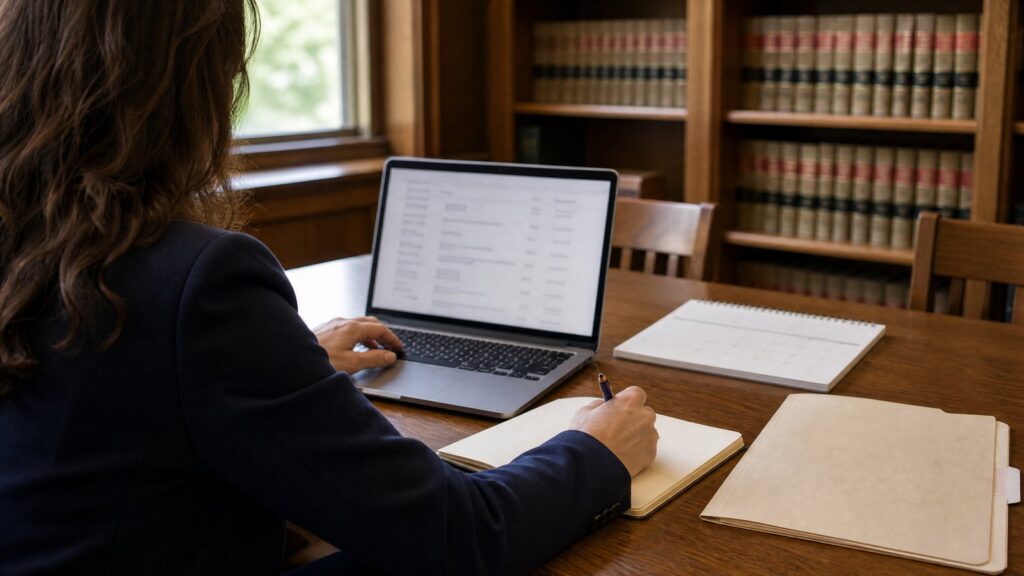
    Person at a wooden table writing in a notebook next to an open laptop with blurred text, calendar pad and folder.
    Study table with laptop, notebook and law books, suggesting organization and tracking practices for local court records.

    Rule 34 also specifies certain types of court records that are explicitly not public. These non-public records include, but are not limited to, unpublished drafts of judicial opinions and internal case management information. The rationale behind these exemptions often relates to protecting the deliberative process of the judiciary, ensuring the integrity of ongoing legal proceedings, or safeguarding personal information that is not relevant to the public interest in a specific case. Understanding these distinctions is crucial for anyone seeking information from the state’s judicial system.

    Making a Public Records Request

    To ensure an efficient and successful public records request, individuals must ensure their requests are sufficiently detailed. The request must enable the governmental entity to identify the responsive records without undue burden. Vague or overly broad requests may be denied or require clarification, leading to delays. It is advisable to be as specific as possible regarding the documents, dates, and subjects involved.

    Governmental entities are permitted to charge reasonable costs for copies of public records. These fees are typically intended to cover the actual expenses associated with duplicating the records, such as paper, printing, or electronic media. However, these costs must be reasonable and should not be used as a barrier to access.

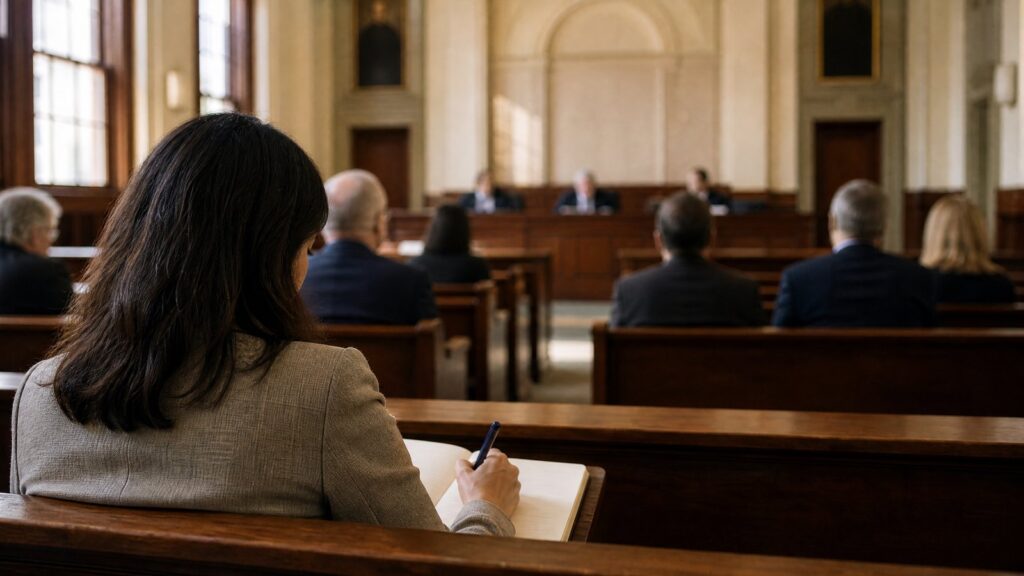
    A person seen from behind writing in a notebook while seated in wooden gallery benches of a courtroom, with several blurred figures at the front.
    An audience member taking notes in a courtroom underscores the value of attending proceedings to gather details for public-records tracking.

    It is also important to note that the Act includes provisions to prevent abuse of the public records process. Intentional disruption of government operations through records requests can lead to legal consequences, including injunctions. This measure is in place to balance the public’s right to know with the need for governmental entities to perform their duties without malicious interference.

    Important Considerations and Limitations

    While the Tennessee Public Records Act and Supreme Court Rule 34 provide a robust framework for public access, it is essential to remember that specific exemptions and procedures may apply depending on the nature of the record and the governmental entity involved. The legal landscape surrounding public records can be complex, with nuances that may not be immediately apparent.

    This article aims to inform the public about their rights and the general processes involved in requesting public records in Tennessee. It is presented as public-interest journalism, focusing on neutral and objective information derived from the cited statutes and rules. It deliberately avoids partisan advocacy or characterization of individuals or cases beyond what is explicitly stated in the primary sources.

    Wooden desk with a magnifying glass, stacked manila file folders, open planner, laptop, checklist clipboard and pencil.
    A checklist pad with folders, a laptop and magnifying glass suggests tools for organizing public-records searches and tracking sources.

    Primary Sources

    Note: This article provides public-interest journalism and general information about Tennessee legal processes. It is not legal advice. If you have a specific legal question, consult a qualified attorney.

    Related reading: focused Tennessee public-records request.