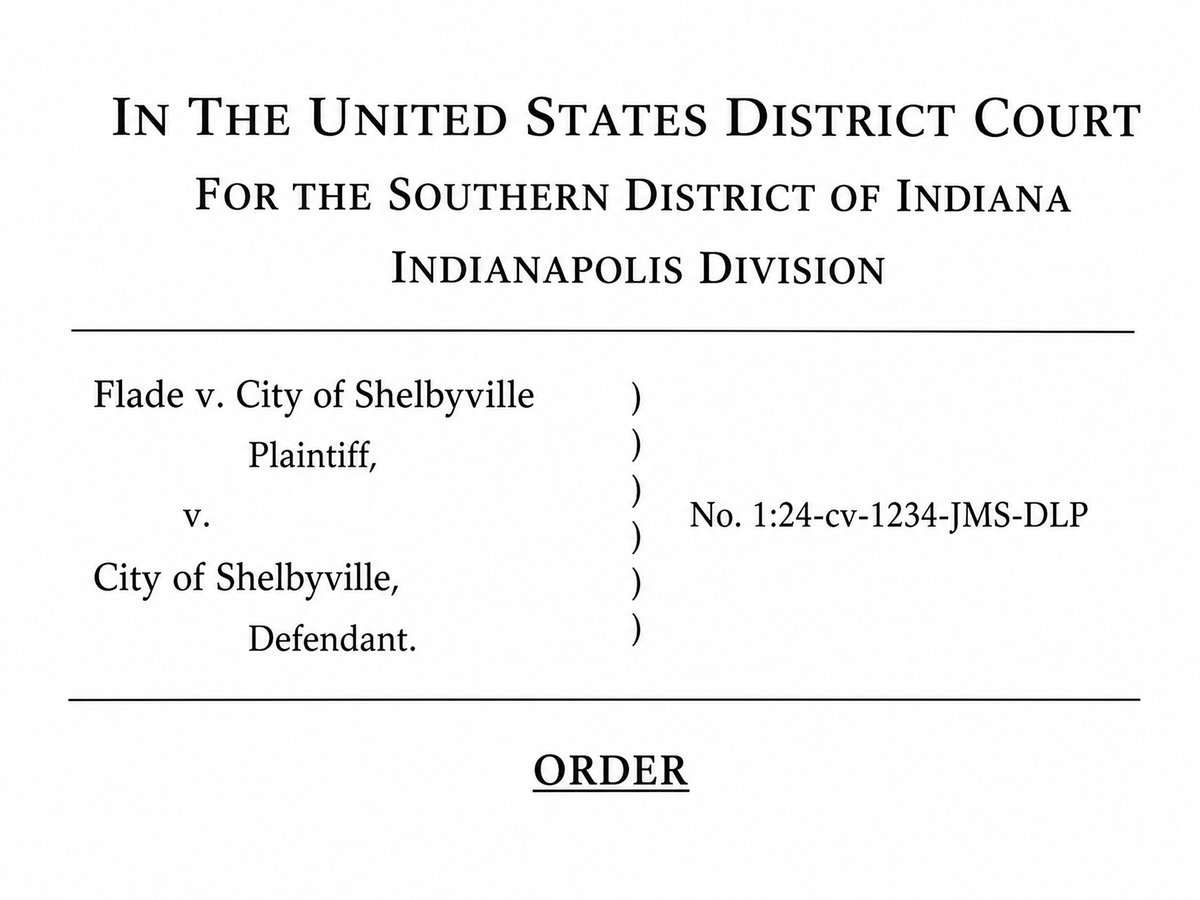
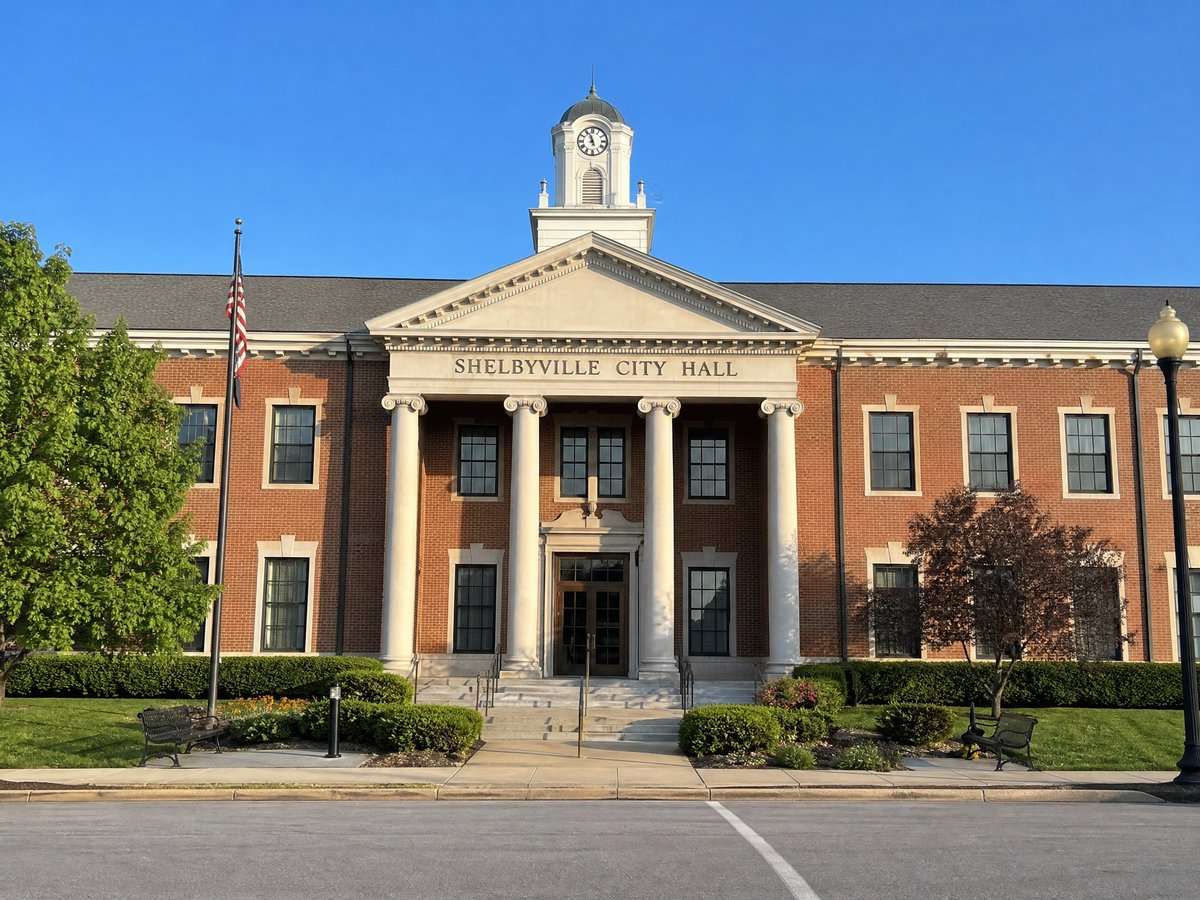
In October 2024, the Tennessee Supreme Court released an official public summary explaining a narrow but important point about attorney’s fees under the Tennessee Public Participation Act (TPPA). In Flade v. City of Shelbyville, the Court’s communication states that a defendant cannot recover TPPA attorney’s fees when the plaintiff voluntarily dismisses the case (a nonsuit) before the trial court rules on a pending TPPA motion. See the official Tennessee Supreme Court press release on the TPPA fees ruling.
The narrow fee holding in Flade v. City of Shelbyville
As summarized by the Court, the TPPA allows defendants to file a special motion seeking early dismissal of certain claims tied to participation or speech, and it includes a fee-shifting provision. But when a plaintiff ends the case by taking a voluntary dismissal before the trial court rules on that motion, the defendant is not entitled to recover attorney’s fees under the TPPA for that motion. The timing of the dismissal relative to the court’s ruling is decisive for this fee issue. For the Court’s own words about this timing rule, see the public summary of the Flade fee-holding and rationale.
That same announcement places the fee ruling within the TPPA’s overall structure: the statute supplies procedural tools—such as an early-dismissal mechanism and potential fee-shifting when a motion is adjudicated—rather than a universal shield from suit. The holding clarifies a practical limit on fee recovery in the specific scenario where a plaintiff dismisses before the court reaches the TPPA motion. See the Tennessee courts press overview of the TPPA’s procedural design.
What the decision does establish
- Fees unavailable after a pre-ruling dismissal: If the plaintiff files a voluntary dismissal before the trial court rules on a pending TPPA motion, TPPA attorney’s fees are not recoverable. This is the core holding summarized in the official Tennessee Supreme Court press release on the TPPA fees ruling.
- Timing matters under the TPPA: The fee outcome turns on whether the court has ruled on the TPPA motion at the time the plaintiff dismisses. The public summary of the Flade fee-holding and rationale highlights this temporal feature.
- Procedural, not absolute: The TPPA’s protections work through procedures and potential fee-shifting when a motion is decided; the Court’s summary presents the statute in these procedural terms rather than as blanket immunity. See the Tennessee courts press overview of the TPPA’s procedural design.
What the decision does not establish
- No ruling on other fee scenarios: The announcement addresses only fees when the plaintiff dismisses before a TPPA ruling. It does not decide what happens after a court rules on a TPPA motion in other settings. See the official announcement explaining voluntary dismissals and fees.
- No view on merits: The fee holding does not resolve the validity of any underlying claim or defense; it focuses on whether TPPA fees may be awarded after a voluntary dismissal filed before a ruling.
- No universal shield: The decision does not convert the TPPA into absolute immunity from all claims; the Court’s summary frames the TPPA as a procedural device with defined limits.
The 2019 TPPA as a procedural tool
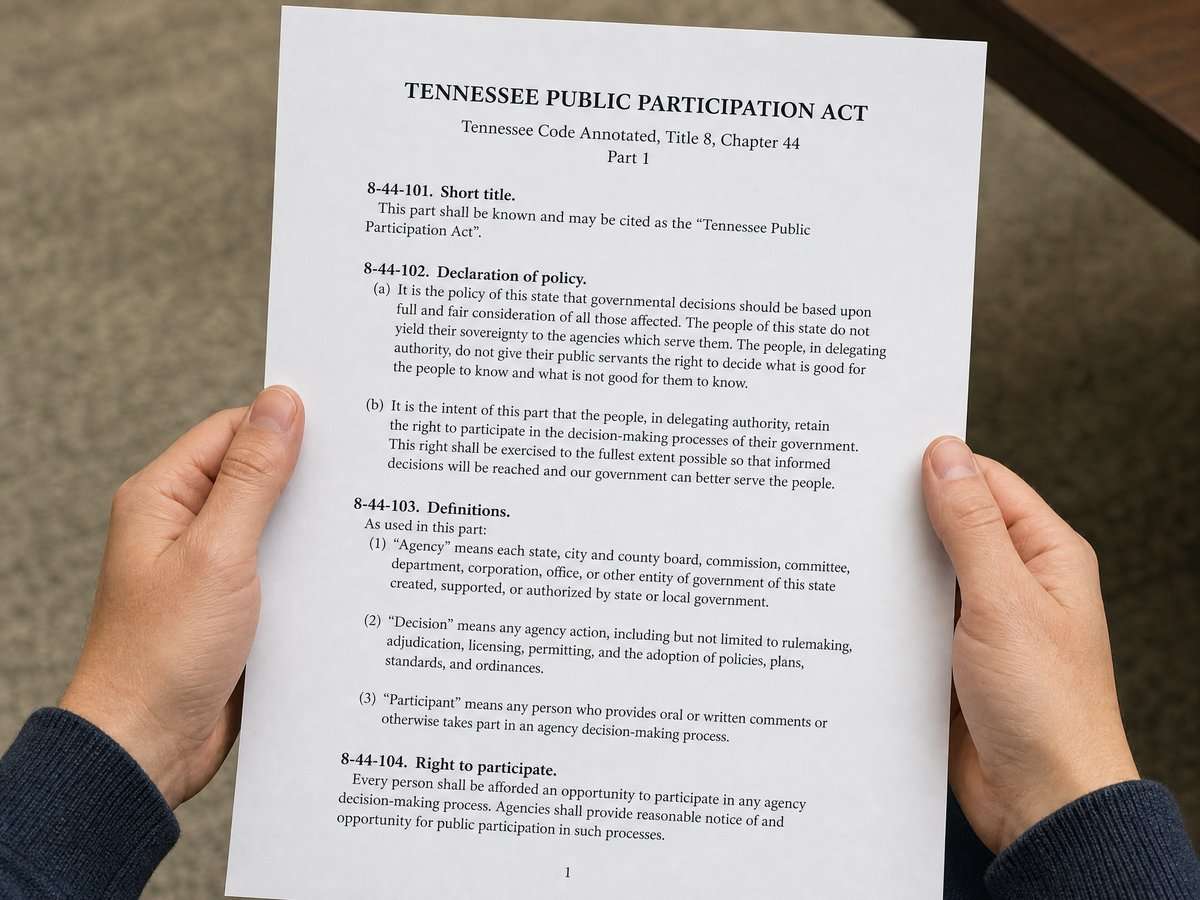
Enacted in 2019, the TPPA offers a special motion for early dismissal of certain suits tied to participation or speech and allows potential fee-shifting when that motion is adjudicated. The Tennessee Supreme Court’s public communication in Flade describes this framework and emphasizes the fee limitation when a plaintiff ends the case before a ruling on the TPPA motion. For that overview, consult the Tennessee courts press overview of the TPPA’s procedural design.
Download the video transcript (PDF).
Practically speaking, the Tennessee TPPA attorney fees decision underscores that the path to fees under the TPPA depends on a ruling. If no ruling occurs because the plaintiff voluntarily dismisses first, fees are not available under the TPPA in that circumstance. The official Tennessee Supreme Court press release on the TPPA fees ruling explains this result.
How the 1997 anti‑SLAPP statute differed
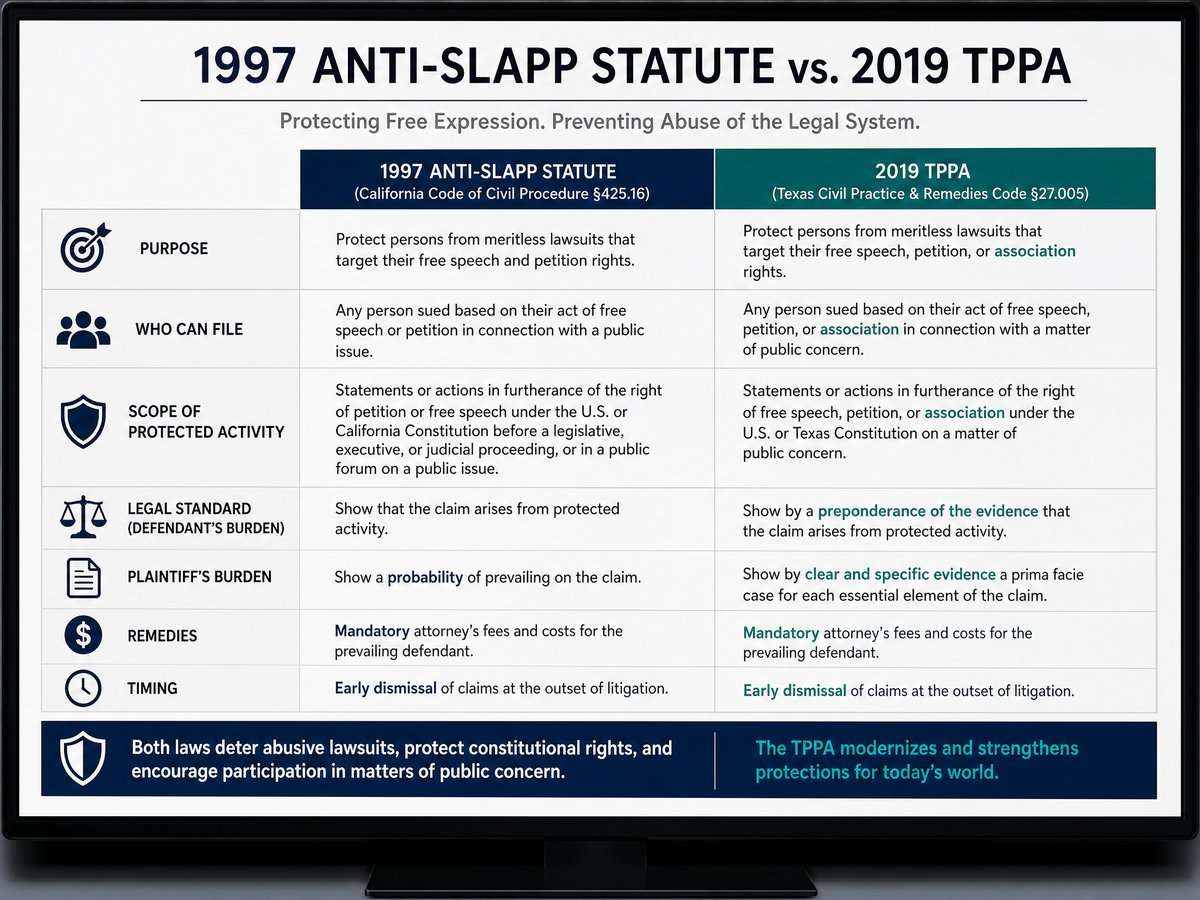
Tennessee previously had an anti‑SLAPP law enacted in 1997. The Court’s public summary contrasts that earlier approach—described as an immunity defense with specific, enumerated statutory exceptions—with the TPPA’s procedural, motion‑based design. Readers can find that contrast in the Court’s communication: see the Court communication describing the 1997 statute’s immunity model. This article does not reproduce statutory text; it relays the distinctions as the Court publicly summarized them.
What this means for Tennessee readers
- Fee recovery is tied to adjudication of the TPPA motion. If a plaintiff dismisses before a ruling, the Court’s summary says TPPA attorney’s fees are not available in that situation. See the official announcement explaining voluntary dismissals and fees.
- The TPPA supplies procedural tools, not absolute immunity. The public summary places the 2019 TPPA within a procedural framework that includes timing‑sensitive fee outcomes.
- The 1997 law operated differently. The Court’s communication describes it as an immunity‑based approach with statutory exceptions, unlike the TPPA’s motion‑driven design.
Reading official court communications
Press releases from courts are public explanations of a decision’s scope. They are not the full opinions, but they indicate what the Court decided and what it did not address. When reading such materials, it helps to separate procedural rulings (for example, fee availability after a voluntary dismissal filed before a ruling) from substantive outcomes on any claim or defense.

Sources
This article provides general information, not legal advice. Court rules, records, and legal consequences depend on the facts, the forum, and current law; consult a qualified lawyer for advice about a specific situation.
General-information disclaimer: This article is provided for journalism and general information only. It is not legal advice and does not create an attorney-client relationship.