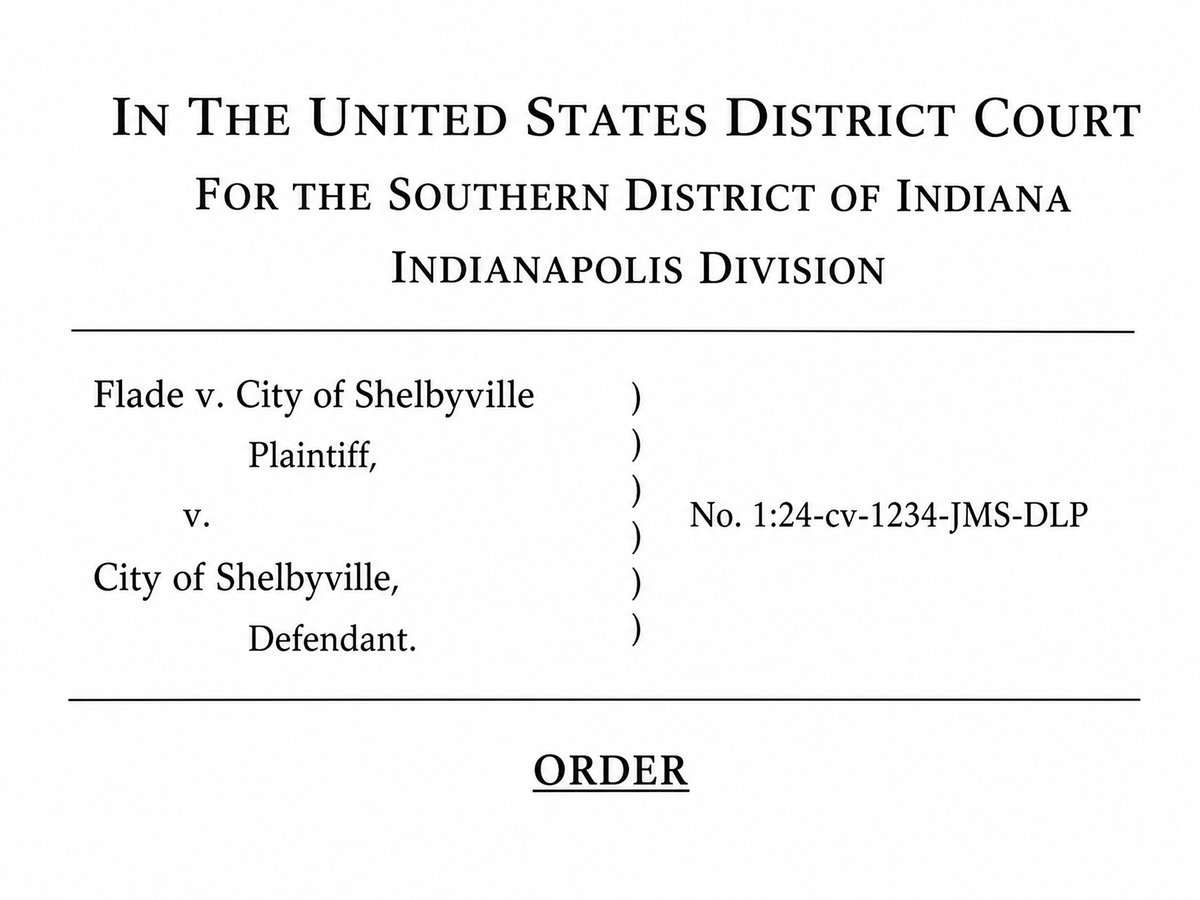
In October 2024, the Tennessee Supreme Court released an official public summary explaining a narrow but important point about attorney’s fees under the Tennessee Public Participation Act (TPPA). In Flade v. City of Shelbyville, the Court’s communication states that a defendant cannot recover TPPA attorney’s fees when the plaintiff voluntarily dismisses the case (a nonsuit) before the trial court rules on a pending TPPA motion. See the official Tennessee Supreme Court press release on the TPPA fees ruling.
The narrow fee holding in Flade v. City of Shelbyville
As summarized by the Court, the TPPA allows defendants to file a special motion seeking early dismissal of certain claims tied to participation or speech, and it includes a fee-shifting provision. But when a plaintiff ends the case by taking a voluntary dismissal before the trial court rules on that motion, the defendant is not entitled to recover attorney’s fees under the TPPA for that motion. The timing of the dismissal relative to the court’s ruling is decisive for this fee issue. For the Court’s own words about this timing rule, see the public summary of the Flade fee-holding and rationale.
That same announcement places the fee ruling within the TPPA’s overall structure: the statute supplies procedural tools—such as an early-dismissal mechanism and potential fee-shifting when a motion is adjudicated—rather than a universal shield from suit. The holding clarifies a practical limit on fee recovery in the specific scenario where a plaintiff dismisses before the court reaches the TPPA motion. See the Tennessee courts press overview of the TPPA’s procedural design.
What the decision does establish
Fees unavailable after a pre-ruling dismissal: If the plaintiff files a voluntary dismissal before the trial court rules on a pending TPPA motion, TPPA attorney’s fees are not recoverable. This is the core holding summarized in the official Tennessee Supreme Court press release on the TPPA fees ruling.
Timing matters under the TPPA: The fee outcome turns on whether the court has ruled on the TPPA motion at the time the plaintiff dismisses. The public summary of the Flade fee-holding and rationale highlights this temporal feature.
Procedural, not absolute: The TPPA’s protections work through procedures and potential fee-shifting when a motion is decided; the Court’s summary presents the statute in these procedural terms rather than as blanket immunity. See the Tennessee courts press overview of the TPPA’s procedural design.
What the decision does not establish
No ruling on other fee scenarios: The announcement addresses only fees when the plaintiff dismisses before a TPPA ruling. It does not decide what happens after a court rules on a TPPA motion in other settings. See the official announcement explaining voluntary dismissals and fees.
No view on merits: The fee holding does not resolve the validity of any underlying claim or defense; it focuses on whether TPPA fees may be awarded after a voluntary dismissal filed before a ruling.
No universal shield: The decision does not convert the TPPA into absolute immunity from all claims; the Court’s summary frames the TPPA as a procedural device with defined limits.
The 2019 TPPA as a procedural tool
Enacted in 2019, the TPPA offers a special motion for early dismissal of certain suits tied to participation or speech and allows potential fee-shifting when that motion is adjudicated. The Tennessee Supreme Court’s public communication in Flade describes this framework and emphasizes the fee limitation when a plaintiff ends the case before a ruling on the TPPA motion. For that overview, consult the Tennessee courts press overview of the TPPA’s procedural design.
Practically speaking, the Tennessee TPPA attorney fees decision underscores that the path to fees under the TPPA depends on a ruling. If no ruling occurs because the plaintiff voluntarily dismisses first, fees are not available under the TPPA in that circumstance. The official Tennessee Supreme Court press release on the TPPA fees ruling explains this result.
How the 1997 anti‑SLAPP statute differed
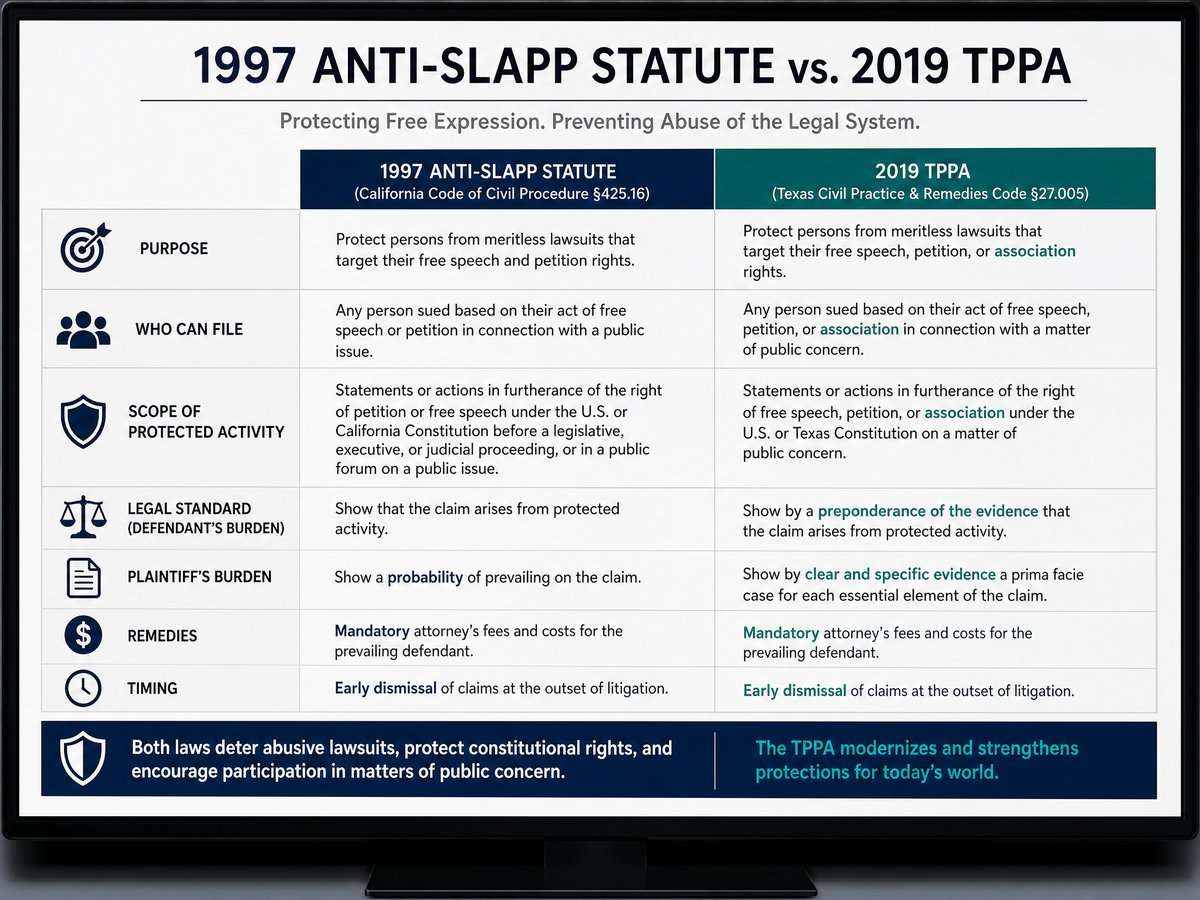
Tennessee previously had an anti‑SLAPP law enacted in 1997. The Court’s public summary contrasts that earlier approach—described as an immunity defense with specific, enumerated statutory exceptions—with the TPPA’s procedural, motion‑based design. Readers can find that contrast in the Court’s communication: see the Court communication describing the 1997 statute’s immunity model. This article does not reproduce statutory text; it relays the distinctions as the Court publicly summarized them.
What this means for Tennessee readers
Fee recovery is tied to adjudication of the TPPA motion. If a plaintiff dismisses before a ruling, the Court’s summary says TPPA attorney’s fees are not available in that situation. See the official announcement explaining voluntary dismissals and fees.
The TPPA supplies procedural tools, not absolute immunity. The public summary places the 2019 TPPA within a procedural framework that includes timing‑sensitive fee outcomes.
The 1997 law operated differently. The Court’s communication describes it as an immunity‑based approach with statutory exceptions, unlike the TPPA’s motion‑driven design.
Reading official court communications
Press releases from courts are public explanations of a decision’s scope. They are not the full opinions, but they indicate what the Court decided and what it did not address. When reading such materials, it helps to separate procedural rulings (for example, fee availability after a voluntary dismissal filed before a ruling) from substantive outcomes on any claim or defense.
This article provides general information, not legal advice. Court rules, records, and legal consequences depend on the facts, the forum, and current law; consult a qualified lawyer for advice about a specific situation.
General-information disclaimer: This article is provided for journalism and general information only. It is not legal advice and does not create an attorney-client relationship.
This public-record guide explains how to read a Tennessee Public Participation Act motion and trace its procedural steps. The Tennessee Public Participation Act (TPPA) creates an early procedure for courts to evaluate certain claims that implicate speech, petitioning, or association on matters of public concern. In court dockets and media coverage, this filing is often described as a “TPPA motion,” though in the statute the party typically files a petition to dismiss. This article offers a public-record reading map: what the TPPA is designed to do, the key statutory terms to look for in filings, and how to trace the petition-to-dismiss sequence and related orders in a Tennessee docket. It is a general-information overview for readers who want to understand the documents and decisions without drawing conclusions about any specific lawsuit.
What the TPPA is and where to find it in the record
Reading a public filing: flagged documents illustrate the statutory review process.
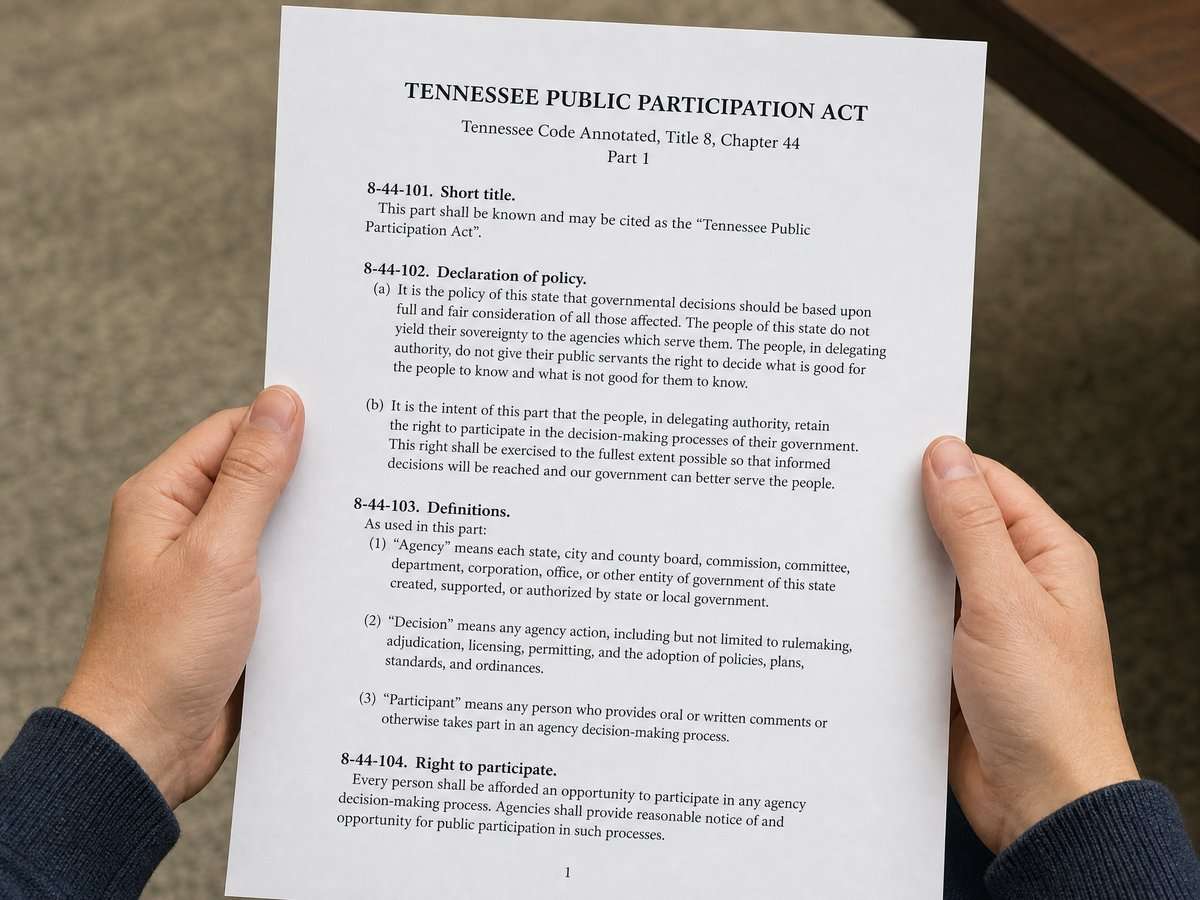
The TPPA was enacted by the Tennessee General Assembly to establish a special procedure for early consideration of certain claims. The official bill record for SB1097 in the 111th General Assembly collects the legislative materials and links to the enacted text. That page describes the core features of the procedure, including the petition to dismiss, a stay of discovery upon filing, the allocation of burdens, and stated limitations on the statute’s reach. Readers can begin with the state’s page here: Official TPPA legislative record for SB1097 (111th General Assembly).
On the General Assembly page, the bill summary and links to the final text outline the procedural steps and definitions that practitioners reference when drafting or opposing a TPPA petition to dismiss. When you see a TPPA-related filing in a case docket, comparing the filing’s language to the statutory terminology can help you situate what the litigants are asking the court to do. For orientation, see the state’s summary materials here: Bill summary and enacted TPPA text posted by the General Assembly.
Key terms that appear in TPPA filings
TPPA petitions to dismiss and responses often revolve around defined phrases. The statutory text, as reflected in the legislative record, supplies definitions for the exercise of the right of free speech, the right to petition, and the right of association, in connection with a matter of public concern. In a public docket, you may see parties quote or paraphrase those definitions to argue that the statute applies (or does not). When reading:
Match terms to the statute: Filings may use headings or argument sections that track the statutory elements. As you read, compare the terms used in the papers to the definitions signposted on the official record.
Note how “matter of public concern” is framed: Parties typically explain why their dispute does or does not fit that concept as the statute uses it.
Watch for statutory exclusions: The TPPA contains stated limitations—categories of actions the statute does not cover. Briefing often addresses these limits up front.
A public-record process map: how a TPPA petition to dismiss moves through a case
Procedural context: a neutral illustration for statutory court motions.
While each case has its own timing and local rules, the TPPA’s framework creates a recognizable sequence in many dockets. The official legislative record sketches that sequence; what follows is a reader’s map for spotting it in public filings.
1) The petition to dismiss and supporting papers
In the TPPA, the defense filing is often titled a “petition to dismiss,” accompanied by a memorandum of law and supporting materials (such as declarations). In an electronic docket, look for a cluster of entries: the petition itself, exhibits, and sometimes a separate statement of facts. The petition generally sets out:
The statute invoked: A citation to the TPPA and a summary of why the statute is being raised, often pointing to the nature of the speech, petitioning, or association at issue as framed by the statute’s definitions.
The requested relief: Dismissal of the legal action (or specified claims) under the TPPA’s standard, plus any related relief the statute authorizes.
What the court may consider: The legislative materials describe the procedure the court uses at this stage, including what parts of the record or evidence the court may consider when deciding the petition.
Because the TPPA’s steps are statutory, many petitions to dismiss track the order of the statute. Cross-reference the filing’s structure with the summary and text on the legislative site: General Assembly page outlining the TPPA procedure.
2) The automatic stay of discovery
A central feature of the TPPA is a stay of discovery upon filing. In the docket, you may see a notice flagging the stay, or a short order from the court acknowledging it. The statute also allows the court, on a proper showing, to permit specified, targeted discovery relevant to the petition. In case files, that can appear as:
Notices referencing the stay: Parties may file notices stating that discovery is paused under the TPPA unless the court orders otherwise.
Targeted discovery motions: A party may move for limited discovery tailored to issues the court identifies as necessary to decide the petition, with the court’s order defining the scope and timing.
Protective mechanisms: Orders may clarify that the stay does not halt unrelated case management, while pausing merits discovery for the claims under the petition.
TPPA filings are organized around who must show what, and when. The official record explains the statute’s allocation of burdens in three broad steps:
Initial showing tied to protected activity: The petitioner first connects the legal action to the exercise of the right of free speech, right to petition, or right of association on a matter of public concern, as those terms are used in the statute.
Prima facie case by the responding party: If the initial showing is met, the burden shifts to the responding party to establish a prima facie case for each essential element of the claim targeted by the petition, consistent with the statute’s allowances at this stage.
Further defenses or grounds: Depending on the petition and the claims, the court can consider other grounds identified in the statute. The sequence is designed to let courts evaluate threshold issues early.
In a docket, you may see this framework reflected in the briefing: an opening petition, a response addressing prima facie elements, and a reply discussing statutory defenses or limits. Courts may issue written orders that track these steps, making findings about burdens met or not met under the statute’s terms. For overview purposes, see: General Assembly page outlining the TPPA petition and burden steps.
4) Hearing practice and interim orders
TPPA matters are often set for a hearing after the initial briefing unless the court decides the petition on the papers. Public dockets usually show:
Notices of hearing: Calendar entries and notices setting a date for argument on the petition to dismiss.
Orders on limited discovery: If the court authorizes targeted discovery, look for a short order laying out the permitted topics and deadlines before the hearing.
Minute entries or audio/video references: Some counties note whether a hearing was held and may reference transcriptions or recordings available through the clerk if permitted by local practice.
Any references you see to the discovery stay, targeted discovery, or briefing sequence are grounded in the statute described in the official legislative record.
5) Orders granting or denying relief
When a court decides a TPPA petition, the order often addresses each claim challenged and explains whether the statutory burdens were met. Common features include:
Scope: The court may grant or deny the petition as to all or some claims, depending on the arguments and statutory definitions.
Reasoning: Findings typically reference the statute’s terms, any limited discovery, and the submissions allowed at this early stage.
Further proceedings: The order may set next steps, such as deadlines for any fee applications authorized by the statute, or a schedule for remaining claims.
Because the TPPA contains stated limitations, orders may also explain why the statute does not reach particular claims or parties. Those discussions commonly cite definitions and exclusions signposted in the legislative record.
How to spot TPPA issues in pleadings and exhibits
When you read a complaint, counterclaim, or third-party claim in a case where a TPPA petition to dismiss is later filed, look for the factual allegations the parties later emphasize under the statute’s definitions. Then, when you review the TPPA petition and response, note how each side uses exhibits to connect (or disconnect) the claims from the statute’s coverage:
Context exhibits: Declarations often provide context about the challenged speech, petitioning, or association. These materials are cited to meet the statute’s initial showing or to address statutory defenses.
Prima facie materials: The responding party may cite documents or declarations to establish the essential elements of the targeted claim at the prima facie stage.
Limitations and carve-outs: Parties sometimes submit materials to show that a statutory limitation applies, which would take the claim outside the TPPA’s procedure. The legislative record identifies that such limitations exist and must be considered.
Discovery stay, targeted discovery, and the record
Timing context: a neutral illustration for the discovery stay and targeted-discovery timeline.
The discovery stay often shapes the early record. While merits discovery generally pauses upon filing, the court may tailor limited discovery needed to decide the petition. In the docket this can appear as:
Narrow depositions or document exchanges: Orders can authorize specific depositions or document categories strictly tied to issues to be resolved under the statute.
Deadlines aligned with the hearing: Targeted discovery windows are commonly scheduled to close before the hearing so that parties can file supplemental papers if permitted.
Protective terms: Courts sometimes include confidentiality or sequencing provisions so that targeted discovery fits the statute’s early-resolution purpose.
The TPPA authorizes certain forms of relief when a petition to dismiss is granted. Orders can address dismissal of targeted claims and may also address fees or sanctions as outlined in the statute. In the public record, fee and sanction issues frequently surface in post-order filings, such as:
Applications for reasonable attorney’s fees and costs: Where the statute authorizes fee-shifting after a grant of the petition, look for a motion supported by billing records or declarations.
Briefing on amounts and reasonableness: Parties often file a memorandum addressing the factors a court may consider in awarding fees and costs authorized by the statute.
Orders awarding or denying amounts: Courts may issue a separate order specifying any award.
Voluntary dismissal and a note on Tennessee Supreme Court guidance
In some cases, a plaintiff may file a voluntary dismissal while a TPPA petition is pending. The Tennessee Supreme Court has addressed how the TPPA’s attorney’s fee provision operates in that voluntary-dismissal scenario. Readers interested in the statewide guidance on that question can review the Court’s published opinion discussing attorney’s fees in connection with voluntary dismissal under the TPPA. The opinion explains how the statute’s fee language applies when no ruling on the petition’s merits has yet issued.
Limitations and scope: what the statute does not cover
Legal-research context: a neutral illustration for statutory limits and scope.
The TPPA contains stated limitations that cabin its reach. Those limitations, identified in the legislative materials, can be important in the record for two reasons:
Threshold applicability: A petition to dismiss may rise or fall on whether a limitation applies. Parties typically brief these limits prominently, and courts often address them first.
Partial application: The statute’s procedure may apply to some claims in a mixed-claim complaint but not others, depending on the definitions and limitations. Orders sometimes reflect this by granting relief as to certain counts while denying as to others.
When you read a TPPA order, scan for a section labeled “Applicability” or “Scope” where the court works through the definitions and any limitations. Compare the analysis to the terms highlighted on the General Assembly page: Legislative record noting TPPA limitations and fee provisions.
How to track a TPPA petition across the docket
Docket-tracking context: a neutral illustration for following case activity.
To follow a TPPA petition in public records, consider this neutral checklist for locating filings and understanding where a case stands:
Identify the initiating TPPA filing: Search for “petition to dismiss” or references to the TPPA in the docket index. Open the main petition and any exhibits.
Locate the discovery stay reference: Check for a notice or order acknowledging the statutory stay and any exceptions for targeted discovery.
Find briefing milestones: Look for a response addressing the prima facie elements of the challenged claim(s) and a reply focusing on statutory defenses or limitations.
Check the hearing schedule: Note any hearing notices, minute entries, or rescheduling orders related to the petition.
Read the court’s order carefully: Determine which claims were decided under the statute and whether fee or sanction issues were reserved for separate motion practice.
Review post-order motions: If permitted by the statute, fee applications or related motions may follow; the docket will show the filings and any subsequent rulings.
Document-reading pointers for TPPA materials
When navigating TPPA filings, keep these general document-reading principles in mind:
Distinguish allegations from findings: Petitions, responses, and declarations are party filings and reflect each side’s assertions. Judicial orders reflect the court’s rulings, which may or may not adopt a party’s position.
Follow the statute’s structure: Because the TPPA prescribes a sequence and identifies limits, many filings mirror that order. Using the official legislative record as a reference can help you map arguments to statutory elements: Official TPPA legislative record for SB1097 (111th General Assembly).
Note the procedural posture: Orders may grant, deny, or partially grant relief. Fee or sanction questions may be decided at the same time or reserved for later motion practice.
Watch for jurisdictional and local-rule overlays: Tennessee trial courts apply statewide statutes alongside local rules. Docket formatting and minute entry detail can vary by county.
Why the TPPA is prominent in Tennessee civil procedure
From a public-record perspective, the TPPA is notable because it creates a defined, early path for courts to address certain disputes touching on speech, petitioning, and association. That path is visible in dockets: a petition invoking statutory definitions; a discovery stay that reshapes early case activity; a burden-shifting sequence; and orders addressing applicability, merits at the prima facie level, and any relief the statute authorizes. The official legislative record collects the statute and summary descriptions that courts and litigants use to navigate this process.
Putting it all together
Short editorial visual: flagged filings, calendar timing, a courtroom doorway, and abstract process mapping.
To read a Tennessee Public Participation Act motion—more precisely, a petition to dismiss under the statute—start with the filing’s invocation of the statute and its definitions, compare it to the official legislative record, track the discovery stay and any targeted discovery orders, map the burden-shifting in the briefing, and then read the court’s order to see how each statutory step was resolved. If the order grants relief, watch the docket for any authorized fee applications or related motions. If a party takes a voluntary dismissal while a petition is pending, note that the Tennessee Supreme Court has addressed how the TPPA’s fee language operates in that setting; reviewing that opinion will provide current statewide guidance on fees after a voluntary dismissal. For a consolidated reference to the statute and summary, see the state’s page: Bill summary and enacted TPPA text posted by the General Assembly.
This article provides general information, not legal advice. Court rules, records, and legal consequences depend on the facts, the forum, and current law; consult a qualified lawyer for advice about a specific situation.
General-information disclaimer: This article is provided for journalism and general information only. It is not legal advice and does not create an attorney-client relationship.
Anti-SLAPP Basics: What the Tennessee Public Participation Act Covers
Introduction
Public disagreement can sometimes lead to litigation. Anti-SLAPP laws are designed to provide a process for courts to evaluate certain claims that arise from speech, petitioning, or association. Tennessee’s law is the Tennessee Public Participation Act, often called the TPPA. This general-information guide explains the statute’s purpose and structure without advising anyone about a particular dispute.
What “Anti-SLAPP” Means
SLAPP is shorthand for a “strategic lawsuit against public participation.” The label is commonly used to describe legal claims that may impose expense or pressure on people who speak, organize, or petition government about matters of public concern. Whether a particular lawsuit qualifies for relief under Tennessee law depends on its facts, claims, and procedural posture; it is not determined simply by the label used by either side.
A speaker addresses a panel during a public meeting, a context often discussed when explaining anti‑SLAPP and public participation protections.
The Tennessee Public Participation Act
The TPPA protects certain exercises of the rights of free speech, petition, and association. It applies to a legal action that is based on, relates to, or is in response to a party’s exercise of those rights. The statute defines “exercise of the right of free speech” as a communication made in connection with a matter of public concern or religious expression. It separately defines petition activity and association.
Matters of public concern
The statutory definition includes issues concerning health or safety, environmental, economic, or community well-being, government, public officials, public figures, and goods or services in the marketplace. Courts apply the statutory text to the record before them. A connection to public concern is important for the free-speech branch of the Act, but it does not turn every dispute involving a public issue into a winning TPPA motion.
Notes, folders and a magnifying glass on a wooden counter accompany someone writing, illustrating reviewing documents and preparing written remarks.
The motion process
A party seeking TPPA relief may file a motion to dismiss. The Act establishes a burden-shifting process. First, the movant must make a prima facie showing that the action is based on, relates to, or is in response to protected activity. The responding party may then avoid dismissal by establishing a prima facie case for each essential element of the claim. Even then, a motion may succeed if the movant establishes a valid defense as a matter of law.
The TPPA also addresses timing, discovery, fees, sanctions, and appellate review. Discovery is generally stayed while a motion is pending, subject to the statute’s rules. Courts must apply the current statute and relevant precedent rather than rely on a generalized description of anti-SLAPP law.
Person turning pages and preparing to take notes, a neutral visual for the section on reviewing motions under Tennessee’s public participation law.
What the TPPA Does Not Do
The Act is not a blanket immunity from all accountability for speech or conduct. Defamation claims, contractual disputes, and other civil actions can involve complex questions about elements, privileges, evidence, and defenses. It is also not a substitute for careful reporting. Journalists and members of the public should verify documents, attribute allegations, seek comment when appropriate, and distinguish claims from proven facts.
Why the Distinction Matters
For public-interest reporting, the TPPA is significant because it recognizes the value of speech and petitioning while preserving procedures for courts to assess legally sufficient claims. A responsible account should state what the statute says, identify any judicial decision being discussed, and avoid implying that a party has engaged in “legal harassment” merely because a lawsuit exists.
Disclaimer
This article provides general information about the Tennessee Public Participation Act and is not legal advice. For advice on a specific matter, consult a qualified attorney.
A stack of manila folders and an open notebook rest at the entrance to a formal hearing room, illustrating documentary and procedural aspects discussed nearby.
The Tennessee Supreme Court unanimously ruled that a pending TPPA petition does not prevent a plaintiff from taking a voluntary nonsuit, though the defendant cannot recover TPPA fees if the dismissal occurs before the petition is adjudicated.
On October 9, 2024, the Tennessee Supreme Court issued a unanimous decision in Robert E. Lee Flade v. City of Shelbyville, Tennessee, et al. The decision addresses the interaction between a plaintiff’s right to take a voluntary nonsuit under Tennessee Rule of Civil Procedure 41.01 and a defendant’s petition to dismiss under the Tennessee Public Participation Act (TPPA).
The Tennessee Supreme Court recently clarified the interaction between the TPPA and voluntary dismissals.
The question before the court
The case began after Robert E. Lee Flade sued several defendants over statements made on social media. In response, two defendants filed motions to dismiss and TPPA petitions that sought dismissal with prejudice, attorney’s fees and costs, and sanctions. Before the trial court heard those requests, Flade voluntarily nonsuited the complaint. The trial court entered an order dismissing the case without prejudice, and it declined to adjudicate the pending TPPA petitions. The Court of Appeals affirmed.
The Supreme Court accepted the appeal to decide whether filing a TPPA petition creates an exception to a plaintiff’s right of voluntary dismissal under Rule 41.01.
What Rule 41.01 generally allows
Tennessee Rule of Civil Procedure 41.01 generally gives a plaintiff the right to take a voluntary nonsuit without prejudice before trial, subject to the rule’s terms and specified exceptions. A nonsuit ends that action without a decision on the merits, although the rule and other law may affect whether and how a claim can later be refiled. The rule is procedural and should be read closely in the context of a specific case.
Tennessee Rule of Civil Procedure 41.01 governs voluntary nonsuits before trial.
The court’s holding
The Supreme Court held that the filing of a TPPA petition is not an exception to Rule 41.01’s voluntary-nonsuit right. In the court’s analysis, the TPPA did not displace the long-established rule permitting a plaintiff to voluntarily dismiss an action in these circumstances. Because the plaintiff dismissed the action before the trial court adjudicated the TPPA petitions, the trial court correctly declined to rule on them.
The practical consequence identified by the court was significant: where a plaintiff voluntarily dismisses the lawsuit before the TPPA petition is adjudicated, the defendant cannot obtain TPPA attorney’s fees in that proceeding. That conclusion follows from the procedural posture of the case; it does not resolve the merits of every dispute that may involve a TPPA petition.
The court held that a pending TPPA petition does not prevent a plaintiff from taking a voluntary nonsuit.
Why the decision matters
The TPPA was enacted to provide a mechanism for early dismissal of certain legal actions that implicate free speech, petition, or association rights. The statute also includes provisions concerning discovery, fees, and sanctions. Flade clarifies a limit on that mechanism: a pending TPPA petition alone does not prevent a plaintiff from taking a timely voluntary nonsuit under Rule 41.01.
For reporters and readers, the opinion is also a reminder that the timing of a filing can be outcome-determinative. A public docket might show a TPPA petition, a nonsuit, and a dismissal order. Those entries do not necessarily tell a full story unless the underlying pleadings and opinion are reviewed.
Reviewing the underlying pleadings and opinion is essential to understanding a case’s procedural posture.
How to read this ruling responsibly
The decision does not announce that every claim implicating speech is meritless, nor does it answer whether a particular lawsuit is retaliatory. It addresses a particular procedural question arising from the relationship between a voluntary dismissal and a statutory dismissal petition. When discussing the case, it is important to distinguish the court’s legal holding from allegations made in the underlying pleadings.
Editorial note: This article provides general information based on public court materials. It is not legal advice and does not assess the truth of unproven allegations in the underlying dispute.