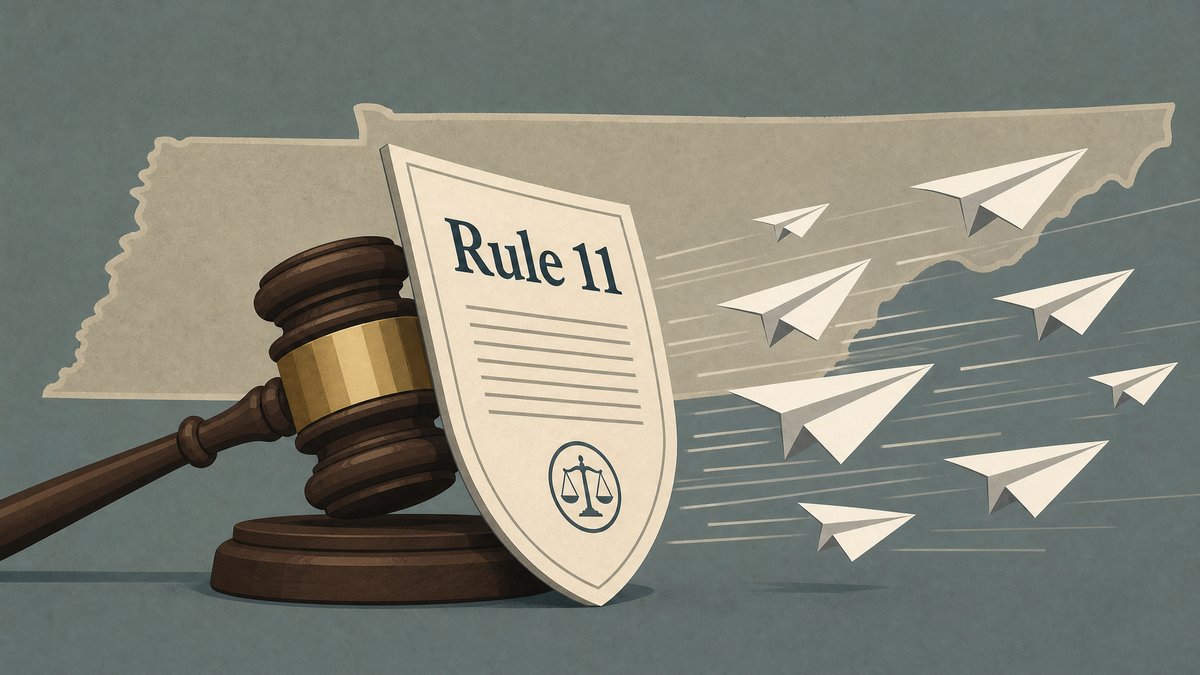
What Tennessee Rule 11 Can and Cannot Do About Frivolous Filings
In the intricate landscape of legal proceedings, the integrity of filings is paramount to ensuring fairness and efficiency. Tennessee Rule of Civil Procedure 11 serves as a critical mechanism designed to uphold this integrity by deterring frivolous lawsuits and filings. This explainer delves into the scope and limitations of Tennessee Rule 11, outlining its provisions and the types of sanctions available to address abuses of the legal process.

The Foundation: Signature and Certification Under Rule 11.01
At its core, Tennessee Rule of Civil Procedure 11 mandates accountability from all participants in the legal system. Specifically, Rule 11.01 requires every attorney or unrepresented party to sign all pleadings, motions, and other papers submitted to the court. This signature is not merely a formality; it constitutes a certification that the signatory has read the document and, to the best of their knowledge, information, and belief formed after reasonable inquiry, that the filing is:
- Well-grounded in fact: Meaning there is factual support for the claims or defenses presented.
- Warranted by existing law: Indicating that the legal arguments are supported by current statutes, precedents, or other authoritative legal principles.
- A good faith argument for the extension, modification, or reversal of existing law: Allowing for legitimate attempts to evolve legal principles, provided such arguments are made in good faith.
This certification process is crucial for maintaining the ethical standards of legal practice and ensuring that legal actions are pursued with a reasonable basis.

Prohibited Conduct: Improper Purpose Under Rule 11.02
Beyond factual and legal grounding, Rule 11.02 addresses the intent behind legal filings. It explicitly outlines representations to the court that prohibit filings presented for any improper purpose. Such improper purposes include, but are not limited to:
- Harassment: Using the legal system to annoy or distress another party.
- Causing unnecessary delay: Employing tactics solely to prolong litigation without legitimate reason.
- Needlessly increasing the cost of litigation: Engaging in actions that drive up expenses for other parties without justification.
This provision underscores the rule’s aim to prevent the misuse of legal procedures for strategic advantages unrelated to the merits of the case.

The Teeth of the Rule: Sanctions Under Rule 11.03
When a violation of Rule 11.02 occurs, Rule 11.03 empowers the court to impose appropriate sanctions. These sanctions are designed to deter future misconduct and can vary depending on the nature and severity of the violation. Available sanctions include:
- Nonmonetary directives: Such as reprimands, mandatory legal education, or other corrective actions.
- Penalties paid into court: Fines directed to the court rather than an opposing party.
- Payment of reasonable attorneys’ fees and expenses to the movant: Compensating the party that brought the Rule 11 motion for their costs incurred due to the frivolous filing.
However, Rule 11.03 also specifies important limitations on the imposition of monetary sanctions. Monetary sanctions cannot be awarded against a represented party for a violation of Rule 11.02(2), which pertains to the legal warrant of a filing. Furthermore, if the court initiates the sanction process on its own, monetary sanctions cannot be imposed unless an order to show cause is issued before a voluntary dismissal or settlement of the claims made by or against the party to be sanctioned. These limitations ensure that sanctions are applied judiciously and do not unduly penalize parties for their attorneys’ legal misjudgments or interfere with the resolution of disputes.

Scope and Limitations: What Rule 11 Can—and Cannot—Do
Tennessee Rule 11 is a powerful tool for promoting responsible litigation, but it has distinct boundaries:
- What it CAN do: Rule 11 effectively deters attorneys and parties from submitting filings that lack factual or legal basis or are intended for improper purposes. It provides a mechanism for courts to enforce professional conduct and ensure that legal resources are not wasted on meritless claims. The availability of sanctions, including the recovery of attorneys’ fees, offers a tangible disincentive against frivolous actions.
- What it CANNOT do: Rule 11 is not a panacea for all forms of litigation misconduct. It primarily targets issues related to the factual and legal sufficiency of filings and the intent behind them, rather than broader ethical violations or discovery abuses, which are addressed by other rules. Moreover, its limitations on monetary sanctions, particularly against represented parties for certain violations and in cases of voluntary dismissal or settlement, mean it cannot always fully compensate victims of frivolous litigation or be used as a punitive measure in every instance. It is a tool for maintaining the integrity of the papers filed, not a comprehensive solution for all litigation problems.
In conclusion, Tennessee Rule of Civil Procedure 11 plays a vital role in fostering a fair and efficient legal system by holding litigants and their attorneys accountable for the veracity and intent of their submissions. While robust in its ability to deter and sanction frivolous filings, understanding its specific scope and limitations is essential for both legal practitioners and the public.
Primary Sources
- Tennessee Rules of Civil Procedure, Rule 11.01: Signature
- Tennessee Rules of Civil Procedure, Rule 11.03: Sanctions
Note: This article provides public-interest journalism and general information about Tennessee legal processes. It is not legal advice. If you have a specific legal question, consult a qualified attorney.
Related reading: Tennessee TPPA and abuse-of-process guide.